



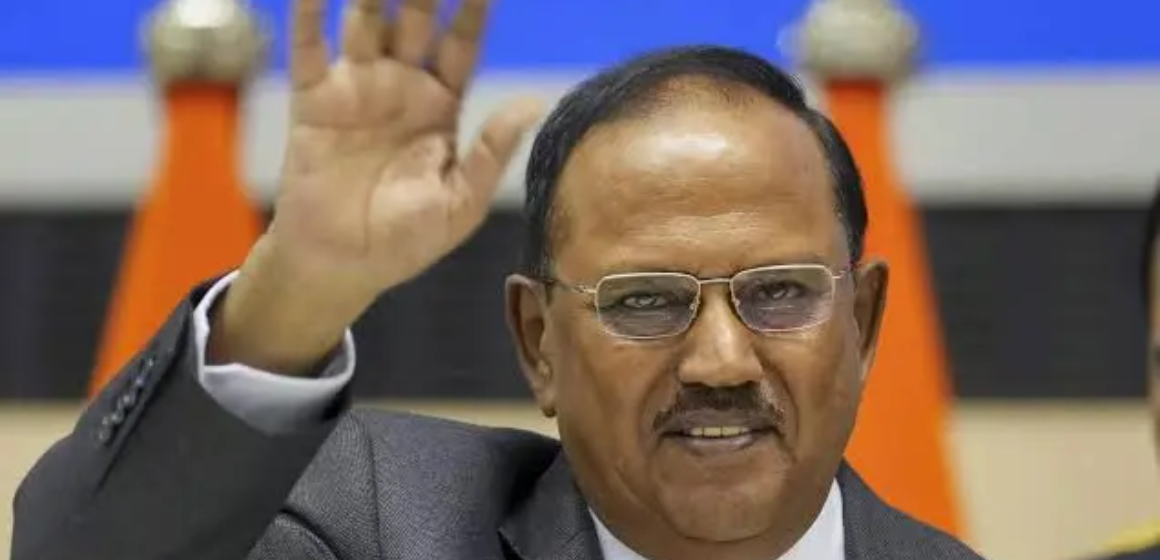
National Security Advisor Ajit Doval arrived in Beijing on August 24 for a two-day visit to hold the 25th round of Special Representatives talks with Chinese Foreign Minister Wang Yi on the India-China boundary issue.
The discussions come at an important time for relations between New Delhi and Beijing, with continued efforts underway to maintain stability along the border. The meeting also takes place ahead of the BRICS summit scheduled in India on September 12 and 13.
Doval and Wang are expected to discuss the long-standing boundary dispute, along with bilateral, regional and international issues. The Special Representatives mechanism, established in 2003, remains the main channel for high-level negotiations on the India-China boundary question.
China’s Foreign Ministry said the two sides would continue discussions in line with the understandings reached during the previous round of talks. The focus will remain on maintaining peace and tranquillity in border areas while exploring ways to manage broader bilateral relations.
Relations between India and China have remained sensitive since the Galwan Valley clash in 2020 and the prolonged military stand-off in eastern Ladakh. Although both countries have taken steps to stabilise the situation, the boundary dispute and differences over Arunachal Pradesh continue to affect ties.
During his visit, Doval is also expected to meet Chinese Vice President Han Zheng, according to the Ministry of External Affairs.
The talks come amid uncertainty over Chinese President Xi Jinping’s possible participation in the BRICS summit in New Delhi. China has not yet officially confirmed his visit, though his attendance could create an opportunity for a meeting with Prime Minister Narendra Modi on the sidelines of the summit.
External Affairs Minister S Jaishankar recently reiterated that peace and tranquillity along the border remain essential for improving overall relations with China. His remarks followed reports of increased Chinese military activity near Arunachal Pradesh.
India has consistently maintained that Arunachal Pradesh is an integral and inalienable part of the country. New Delhi has also rejected China’s objections to India’s naming of geographical locations in the state, saying such actions do not alter India’s sovereignty over the region.
The Doval-Wang meeting is expected to play an important role in assessing whether recent efforts to stabilise India-China relations can continue. With the BRICS summit approaching, progress in maintaining calm along the border could also influence wider diplomatic engagement between the two Asian powers.
Leave a Reply