Bank Strike Today: Why Employees Are Protesting and When More Strikes May Happen
Bank employees and officers are observing a nationwide strike over five-day banking, performance-linked incentives, pensions and other unresolved service issues. Another three-day strike is planned later this month.
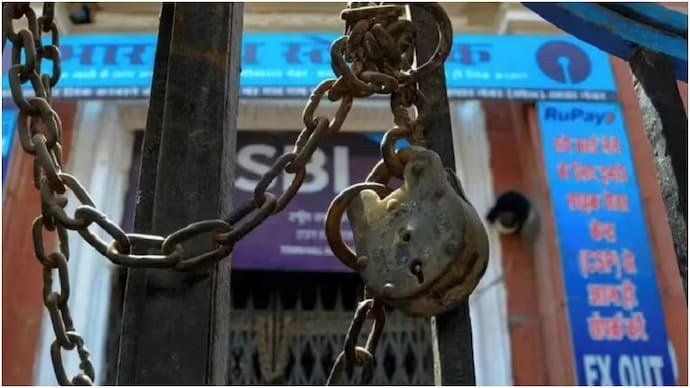
Banking services, particularly at public sector banks, were disrupted across India on Friday as employees and officers participated in a nationwide strike called by the United Forum of Bank Unions (UFBU). The one-day strike on September 11 is part of a wider dispute over the long-pending demand for a five-day banking week, performance-linked incentives and several service and pension-related issues.
The impact was reported across multiple states. In Madhya Pradesh, around 7,000 bank branches were affected, with nearly 42,000 employees participating in the strike. The day's disruption was estimated to affect banking business worth around Rs 5,500 crore in the state. Private sector banks, however, have largely continued to operate.
The five-day banking week is the unions' main demand. The UFBU says the Indian Banks' Association had already agreed to the proposal under the 12th Bipartite Settlement and 9th Joint Note signed on March 8, 2024. The arrangement would involve extending working hours from Monday to Friday by around 40 minutes, allowing Saturdays to become holidays.
The proposal was subsequently sent to the government for consideration, but unions say it has remained pending for more than two years. They argue that they are seeking implementation of an agreement already reached between employee representatives and the banking industry rather than asking for a new concession.
Bank unions have also linked the five-day week to employee welfare and work-life balance. They argue that longer working hours during weekdays could accommodate Saturday holidays while giving employees more time with their families. They have also pointed to the growing use of digital banking services, which has changed the nature of branch-based banking.
Another major point of contention is the performance-linked incentive, or PLI, scheme. The UFBU has objected to the revised structure, arguing that it could create a substantial difference in incentive payouts between senior officers and other bank employees.
Under the earlier understanding with the IBA, the unions said PLI was linked to the overall performance of a bank, with a uniform number of incentive days for employees and officers up to Scale VII. The government later introduced a different structure for senior officers.
Under the disputed arrangement, officers in Scale IV and above could receive PLI linked to individual performance, while employees and officers up to Scale III would face a lower ceiling. Unions argued that this could result in a significant disparity in payouts.
There has been some movement on the PLI issue ahead of the strike. The Department of Financial Services advised public sector banks to keep the PLI scheme for Scale IV to VIII officers in abeyance for 2025-26, with the matter to be discussed bilaterally between the unions and the IBA.
The UFBU welcomed the move but maintained that it was insufficient to withdraw the strike because the key demand for five-day banking remained unresolved. During a conciliation meeting on September 9, the government said the five-day work week was still under consideration and urged unions to defer the strike. The UFBU declined to withdraw its call without a clear development or timeline on the issue.
The unions have also raised several pension and service-related demands. These include updating pensions, adopting a uniform dearness allowance formula for pensioners, resolving pending pension issues and giving employees covered under the National Pension System an option to move to the old pension system.
The UFBU has also objected to proceeding with a fresh charter for the next wage revision while it believes outstanding issues from the previous settlement have not been resolved.
Friday's strike may not be the final disruption for customers. The UFBU has announced another three-day nationwide strike for September 28, 29 and 30. If the disputes remain unresolved, the unions have also threatened an indefinite nationwide strike from October 26.
State Bank of India has informed customers that its operations could be affected by the planned strikes, while saying that arrangements have been made to keep branches and offices functioning as far as possible.
The unions have described the action as a broader fight over working conditions, employee welfare and the future of the banking workforce. They have also said employees participating in the strike are giving up a day's salary and called for meaningful and timely negotiations to resolve their demands.
For customers, the immediate impact is expected to be strongest at branch-based services, particularly in public sector banks. Cash-related work, cheque processing, documentation, KYC services and loan-related activities could face delays depending on employee participation.
Digital banking services such as UPI, internet banking, mobile banking and ATMs are generally expected to remain available. However, transactions and services requiring branch staff or back-office intervention could still be delayed.
The extent of disruption will vary between banks because participation in the strike is not uniform. While Friday's action is a one-day stoppage, the unresolved demands mean customers could face further disruptions later in September and potentially a longer shutdown from October 26.