NASA Swift Telescope Resumes Science Operations Despite Falling Orbit
NASA's Swift Observatory is back studying cosmic explosions, but its declining orbit means the ageing telescope could end science operations within weeks.
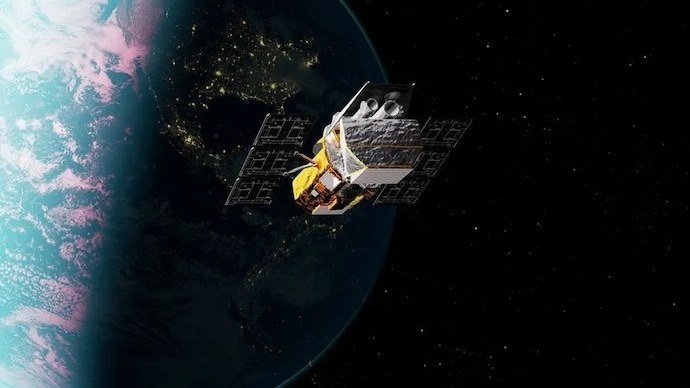
NASA's Neil Gehrels Swift Observatory has resumed scientific operations, but the ageing space telescope is expected to reach the end of its mission within weeks as its orbit continues to decay.
On September 25, NASA said Swift had reactivated its Burst Alert Telescope (BAT) and restored its ability to automatically point towards sudden flashes in the sky. The observatory was then around 325 kilometres above Earth, with science operations expected to become increasingly difficult once it falls below roughly 300 kilometres.
Swift has been observing the universe since November 2004, focusing on gamma-ray bursts and other high-energy cosmic events. Its three instruments work together to detect these explosions, study their X-ray emissions and observe their ultraviolet and visible-light aftermath.
The spacecraft's declining altitude is caused by atmospheric drag, which has been intensified by increased solar activity. NASA had suspended most science operations earlier this year while attempting to preserve the spacecraft and prepare for a possible orbit-boosting rescue.
That rescue effort ultimately failed. Katalyst Space's Link spacecraft developed technical problems and was unable to capture and raise Swift's orbit. Instead, the mission was scaled back to demonstrate rendezvous and proximity-operation technologies.
Swift's X-ray and ultraviolet/optical instruments restarted in August, followed by BAT and automated pointing capabilities in September.
The telescope is back doing science, but its remaining time is limited. Basically, Swift got one last comeback tour—with Earth's atmosphere already waiting for the finale.