Onion Prices Near Rs 70: Why Government’s Rs 35 Sale Isn’t Enough
Onion prices remain elevated despite government buffer-stock sales at Rs 35 per kg, with seasonal supply gaps, delayed sowing and distribution challenges keeping markets firm.
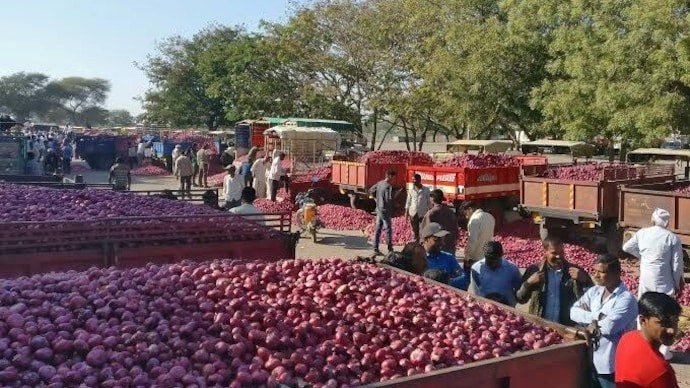
Onion prices remain elevated across India despite the government selling buffer-stock onions at Rs 35 per kg. The all-India average retail price reached Rs 53.84 per kg on September 16, nearly 94% higher than Rs 27.71 a year earlier, while the average wholesale price stood at Rs 45.65 per kg.
The government began releasing onions from its Price Stabilisation Fund buffer on August 24 through NCCF, NAFED, Kendriya Bhandar and mobile vans. Railway rakes and trucks are also being used to transport supplies from producing states to major consumption centres. The operation has since expanded to 19 cities.
However, the intervention has not fully closed the gap between government outlets and open markets. Onion prices typically rise during the transition from the rabi to kharif crop as stored winter onions decline before fresh supplies arrive. This year, delayed kharif sowing in parts of Maharashtra and Karnataka has added to supply concerns.
Weather conditions and speculative buying have also contributed to market uncertainty. Despite the price rise, the government says there is no overall shortage, with 2025-26 onion production estimated at 307.37 lakh tonnes, broadly similar to the previous year.
The government procured about 1.21 lakh tonnes of onions for the 2026-27 buffer against a target of 2 lakh tonnes and raised the procurement price to Rs 21.25 per kg.
Prices could ease as fresh kharif onions reach mandis in larger quantities. Until then, declining rabi stocks, delayed arrivals and uneven distribution of buffer supplies may keep retail prices high.