PM Modi Gifts Thirukkural to Putin: The Ancient Tamil Text’s Fascinating Russian Connection
Prime Minister Narendra Modi presented Vladimir Putin with a Russian translation of the Thirukkural ahead of the BRICS Summit, highlighting the ancient Tamil text’s lesser-known connection with Russia.
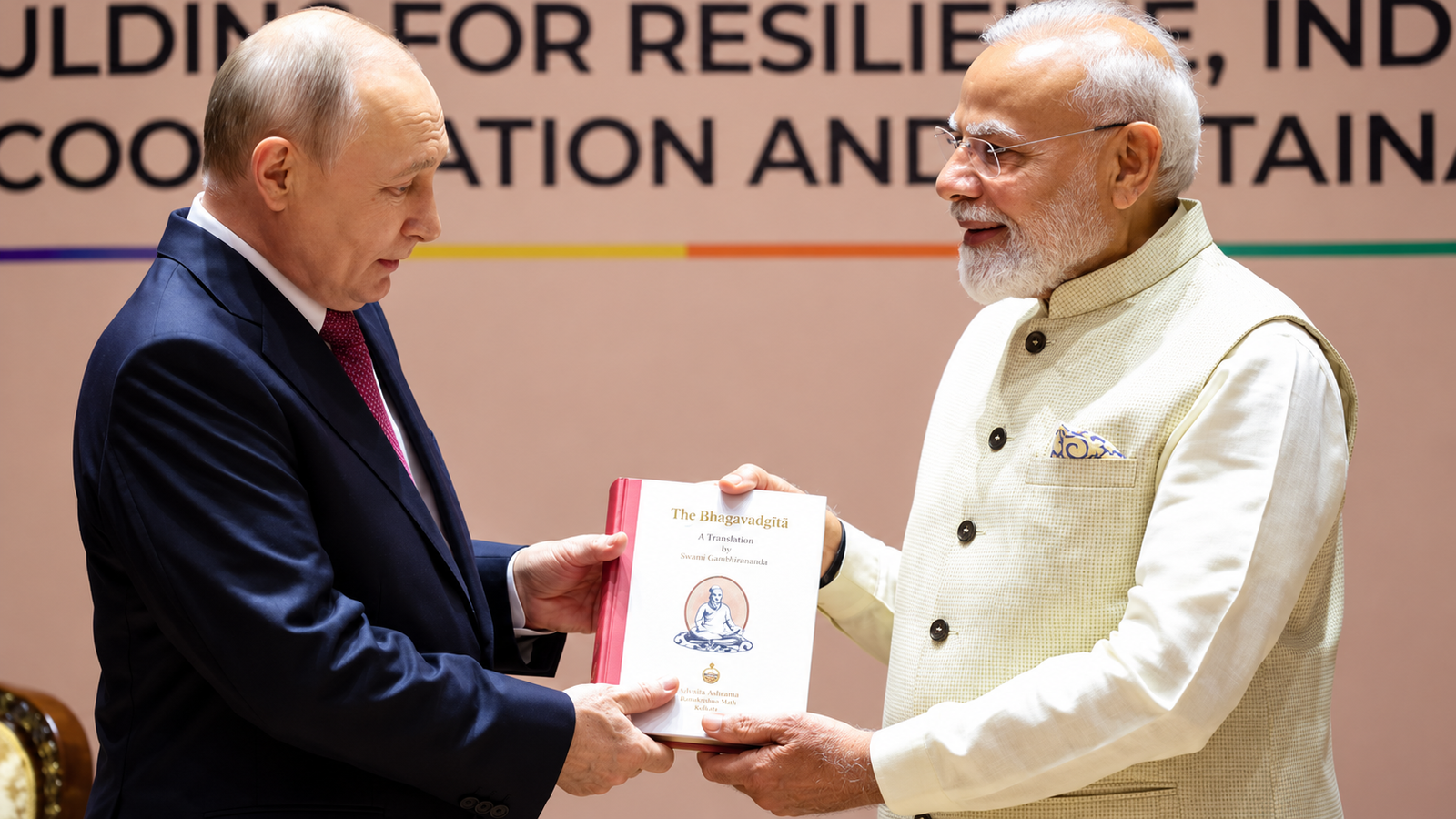
Prime Minister Narendra Modi presented Russian President Vladimir Putin with a Russian translation of the ancient Tamil classic Thirukkural during their meeting ahead of the BRICS Summit in New Delhi.
The choice of the book carried a deeper significance because the Thirukkural has a lesser-known history of engagement with Russian intellectual and literary circles. The new edition brings together the original Tamil verses, their transliteration and a Russian rendering by Naira Mkrtchyan.
Published by the Central Institute of Classical Tamil in 2026, the edition offers Russian readers access to the teachings of Thiruvalluvar, whose work has travelled across linguistic and cultural boundaries through translations.
The Russian connection to Indian philosophy and literature dates back several centuries. Interest in Indian thought in Russia can be traced to at least the 17th century, while the Thirukkural gained wider exposure among Russian scholars and literary figures through translations into European languages.
Russian literary giant Leo Tolstoy is also associated with the Thirukkural’s history in Russia. He is believed to have encountered the work through an early translation during the 19th century. The text’s emphasis on virtue, compassion and non-violence reportedly resonated with Tolstoy’s own philosophical interests.
There are also accounts connecting Tolstoy’s engagement with the Thirukkural to his correspondence with Mahatma Gandhi during the early 20th century. Some accounts suggest that Tolstoy recommended the work to Gandhi and that its teachings influenced Gandhi’s thinking on non-violence. However, historians have not conclusively established the extent of the Thirukkural’s influence on Gandhi through Tolstoy.
Modi’s decision to gift Putin a Russian-language edition therefore brought a centuries-old cultural connection into the context of contemporary India-Russia relations.
The Thirukkural was composed by Tamil poet and philosopher Thiruvalluvar and consists of 1,330 couplets arranged across 133 chapters. Its teachings are broadly divided into three major themes: Aram, Porul and Inbam.
Aram, or virtue and righteousness, covers the first 38 chapters and explores moral conduct, duty and domestic life. Porul, spanning chapters 39 to 108, deals with society, governance, economics, politics and statecraft. The final 25 chapters focus on Inbam, addressing love, affection and relationships.
The exact period of the Thirukkural’s composition remains debated, with scholars generally placing it in the early centuries of the Common Era. It is regarded as one of the most important works of classical Tamil literature.
Through translations into numerous languages, the Thirukkural has reached audiences well beyond Tamil Nadu. Its ideas on ethics, governance, human relationships and responsible conduct have helped establish it as a work with broad cross-cultural relevance, including in Russia.