Sanctions Are a Joke: How Indian Businesses Keep Trade Moving With Restricted Economies
Indian businessmen say sanctions create extra hurdles in banking, logistics and compliance but do not necessarily stop trade, with BRICS seen as a potential bridge for alternative economic channels.
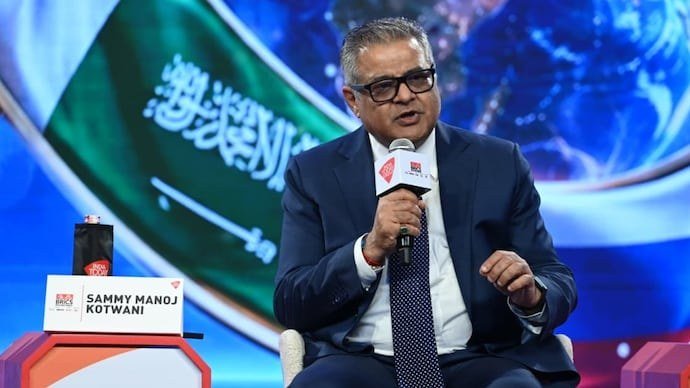
Indian businessmen and industrialists say sanctions imposed by the US and European countries can make international commerce more complicated, but they do not necessarily bring trade to a halt. Businesses operating in restricted markets often adapt by changing payment systems, logistics arrangements, documentation and production strategies.
Sammy Manoj Kotwani, an Indian businessman based in Russia, described sanctions as a hurdle rather than an absolute barrier to commerce. Speaking at the India Today BRICS Roundtable during a discussion on Indian businesses in sanctioned economies, he argued that restrictions can push companies to find alternative routes through third countries and other trading arrangements.
Kotwani distinguished between unilateral sanctions imposed by individual countries and sanctions adopted through the United Nations. From a business perspective, he said companies have to assess how to operate within restrictions instead of automatically abandoning markets affected by them.
Jameel Saidi, an industrialist with business interests in Iran and other West Asian markets, similarly said sanctions tend to change the way trade is conducted rather than eliminate demand for goods. According to him, restrictions can affect banking, insurance, transportation, documentation and other parts of the supply chain. He cited examples of oil trade continuing through alternative documentation and trading structures despite sanctions.
For Indian companies, this means the central challenge is often managing the additional costs, compliance requirements and risks associated with restricted markets. Saidi also argued that India should distinguish between unilateral sanctions and measures backed by the United Nations, recalling the position previously expressed by former external affairs minister Sushma Swaraj that India did not recognise unilateral sanctions.
The business opportunity in Russia, according to Kotwani, is also shifting away from simply exporting finished products. He said Indian companies could gain more by establishing manufacturing operations in Russia and using the country as a base to serve the wider Commonwealth of Independent States market.
Kotwani argued that Indian businesses need to move towards local production because the range of products that can be directly sold from India to Russia is limited. He said Russian companies could adopt a similar strategy by setting up manufacturing facilities in India rather than relying entirely on exports.
He also urged Indian businesses to view Russia as part of a much larger regional opportunity. The wider CIS market, he noted, represents a consumer base of more than 300 million people, making local manufacturing and regional partnerships potentially more attractive than traditional export models.
The discussion also highlighted the possible role of BRICS in creating alternative channels for trade as geopolitical tensions increasingly influence global commerce. Saidi said India could use its BRICS chairship to develop mechanisms for trade with countries such as Iran, including transactions in Indian rupees and barter arrangements.
He argued that demand for products does not disappear simply because sanctions are imposed and said BRICS could serve as a bridge between economies rather than functioning only as a political grouping. He also warned that sanctions can have consequences for ordinary citizens by affecting areas such as food, medicines, aviation, employment and broader trade.
India's relationships with Russia, Iran, Western economies and other emerging markets place it in a position to potentially support new trade and investment channels. The businessmen said companies would need to respond to increasing geopolitical fragmentation through trusted partnerships, local manufacturing and alternative commercial arrangements rather than simply withdrawing from difficult markets.
The discussion comes as India hosts the 18th BRICS Summit in New Delhi in September 2026, with India holding the group's chairship this year. India's BRICS agenda has focused on resilience, innovation, cooperation and sustainability, while economic and financial cooperation remain important areas of the grouping's work.