



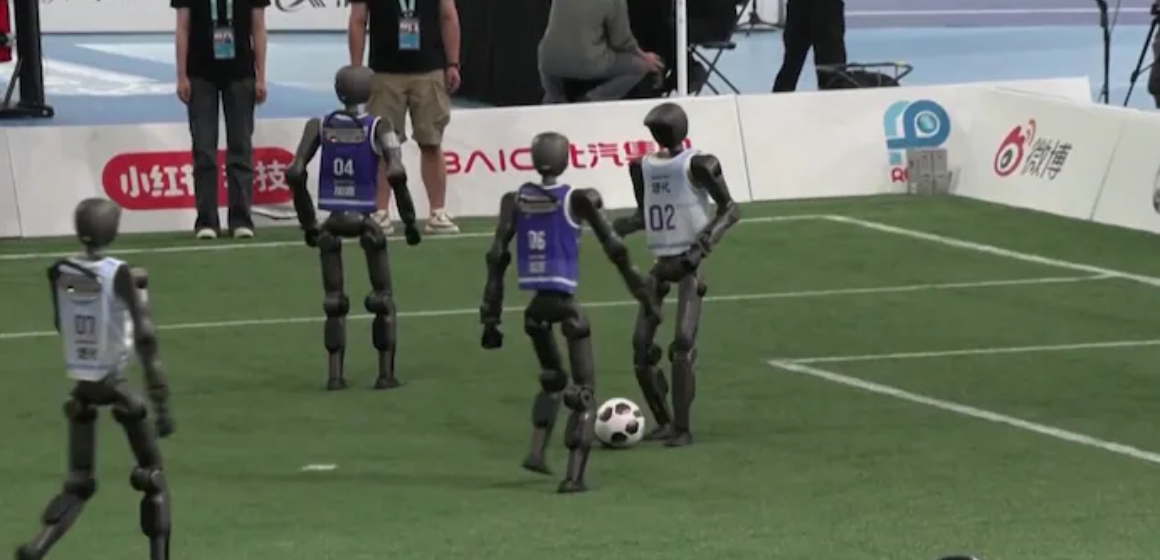
China is rapidly expanding the use of humanoid robots, bringing them from research labs and factories into sports, household work and everyday services. At major robotics events in Beijing, advanced machines were seen racing, playing football and tennis, sorting clothes and performing other practical tasks.
The World Humanoid Robot Games featured 666 teams and more than 2,000 humanoid robots competing across athletics, football, weightlifting, table tennis and other events. The competitions were designed to test speed, balance, coordination and the ability of robots to perform real-world tasks.
One of the most eye-catching demonstrations involved humanoid robots competing in running events. Robots were also tested on tennis courts, where they tracked balls, returned shots and recovered after falls. However, several machines still struggled with balance and mechanical reliability, showing that the technology has significant room for improvement.
Beyond sports, Chinese companies are increasingly focusing on practical applications. At the World Robot Conference, humanoid robots demonstrated household and workplace skills, including laundry handling, box sorting and clothing packing. A robot-operated coffee shop in Beijing also highlighted how automation could enter the service industry.
Battery life remains one of the biggest challenges for humanoid robots. Their motors and onboard AI systems consume substantial power. Some companies are addressing this by connecting robots to cloud-based AI platforms through high-speed networks, including 5G-Advanced technology.
China’s rapid progress in humanoid robotics is drawing global attention. As robots become more capable, the country is pushing toward a future where they could play a larger role in homes, workplaces and public services.
Leave a Reply