


- March 03, 2026
Currency Crash, ‘Massacre’, Trump’s Warning: Iran Protests Explained
Iran protests explained: currency crash, deadly crackdown, Trump’s warning and rising tensions as unrest challenges Tehran’s clerical rule.
- January 12, 2026
- in International
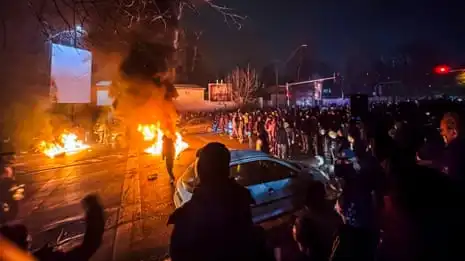
Iran is witnessing its most serious wave of unrest in more than three years as nationwide protests enter their second week, triggered by a collapsing currency, soaring prices and deep anger against the country’s clerical system. The demonstrations have drawn a violent crackdown, international outrage and sharp warnings from US President Donald Trump, pushing tensions between Tehran and Washington to new highs.
How the Iran protests began
The protests erupted on December 28 after the Iranian rial suffered a dramatic collapse, pushing prices of essential goods beyond the reach of ordinary citizens. The currency has plunged to over 1.4 million rials per US dollar, intensifying public frustration already fuelled by years of economic hardship and international sanctions.
What began as demonstrations over inflation and cost of living soon escalated into open calls against the political system that has governed Iran since the 1979 Islamic Revolution.
From economic anger to political revolt
Night-time protests have spread across major cities including Tehran and Mashhad, with demonstrators chanting slogans, clapping in unison and lighting up streets with mobile phone flashlights. Despite an internet blackout, videos believed to be shared via Starlink connections have surfaced online, showing large crowds, blocked roads and clashes with security forces.
According to rights organisations cited by international media, at least 544 people have been killed so far, most of them protesters. The figures cannot be independently verified due to tight information controls imposed by Iranian authorities. One verified video showed dozens of bodies outside a morgue in Kahrizak, south of Tehran, highlighting the scale of the violence. Rights groups have described the situation as a “massacre unfolding under an internet blackout”.
Iran government’s response
Iranian leaders have blamed the unrest on foreign interference, accusing the United States and Israel of instigating violence. President Masoud Pezeshkian claimed that “terrorists” backed by external powers were attacking mosques, banks and public property.
State media has announced nationwide rallies condemning what it calls “terrorist actions led by the United States and Israel”.
Meanwhile, parliament speaker Mohammad Baqer Qalibaf issued a stark warning, saying any attack on Iran would make US bases, ships and interests in the region “legitimate targets”.
Trump’s warning and US response
As the protests intensified, Donald Trump described the uprising as a “freedom movement” and issued sharp warnings to Tehran. Speaking aboard Air Force One, Trump said the US military was considering “very strong options” if Iran continued its crackdown.
“If they retaliate, we will hit them at levels they’ve never been hit before,” Trump said, adding that Iran had proposed negotiations following his warnings. US media reports say Trump is expected to meet senior advisers to discuss options ranging from tougher sanctions and cyber operations to potential military strikes. He also said he would speak to Elon Musk about restoring internet access in Iran via Starlink.
What happens next
Analysts say the situation represents one of the most serious challenges to Iran’s leadership in years. Any major military decision would rest with Supreme Leader Ayatollah Ali Khamenei, as Iran’s air defences remain weakened after last year’s brief conflict with Israel.
With protests continuing, international pressure mounting and Washington signalling possible intervention, Iran now stands at a dangerous crossroads — one that could reshape its domestic politics and regional stability.
you may also like

- March 02, 2026
Trump Says Iran Operations May Last 4–5 Weeks
- March 02, 2026
How Switzerland Became the World’s Most Nuclear-Ready Nation
- March 02, 2026
Middle East War Escalates; Oil, Air Travel Hit
- March 02, 2026