


- March 03, 2026
Epstein Files Revive Stanley Kubrick Death Conspiracy: Why ‘Eyes Wide Shut’ Is Being Treated Like a Confession
Epstein files have reignited claims that Stanley Kubrick was killed for exposing elites in Eyes Wide Shut. Here’s why the theory persists.
- February 03, 2026
- in International
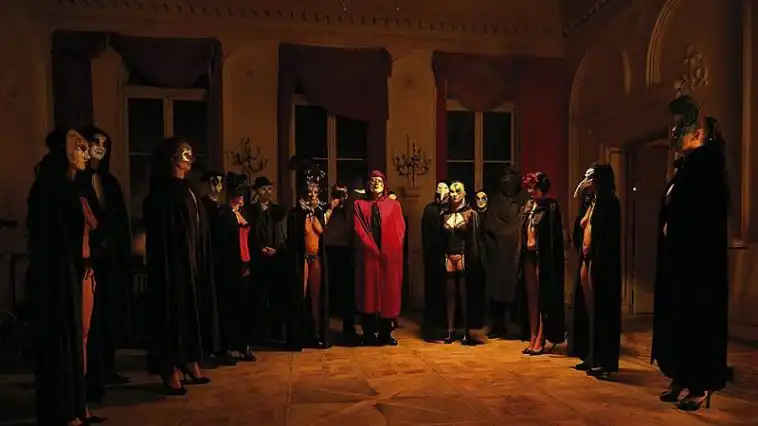
When Cinema Becomes “Evidence”: Epstein Files Bring Kubrick Back From the Dead—Again
Every few years, Stanley Kubrick dies again.
Not physically. Digitally.
This time, the resurrection comes courtesy of the Epstein files, a viral X thread, and a familiar clip from Eyes Wide Shut: masked elites, candlelit rituals, slow menace—and a caption doing all the work: They killed Kubrick.
No footnotes. No documents. No proof. Just implication, now officially upgraded to “evidence” in the post-Epstein internet era.
The Conspiracy in One Sentence
The theory claims that Stanley Kubrick was murdered after completing Eyes Wide Shut because the film allegedly exposed elite sexual rituals, trafficking networks, and hidden power structures—years before Jeffrey Epstein’s crimes became public.
It sounds cinematic. That’s the problem.
What Actually Happened
The verified facts are painfully ordinary:
-
Stanley Kubrick died of a heart attack on March 7, 1999, aged 70
-
His death occurred days after screening the final cut of Eyes Wide Shut
-
The film was released later that year after standard post-production
That is the entire factual spine of the story.
Everything else is architectural fantasy built on proximity, vibes, and suspicion.
A few days becomes too close.
A heart attack becomes convenient.
A final cut becomes unfinished truth.
Why Kubrick Is the Perfect Conspiracy Victim
Kubrick’s personality practically invites myth-making:
-
Secretive
-
Obsessive
-
Distrustful of studios
-
Meticulous to the point of paranoia
He doesn’t feel like a man who simply dies peacefully. He feels like someone who knows too much.
And the internet never forgives that feeling.
What Eyes Wide Shut Actually Is (Spoiler: Not a Documentary)
Strip away the conspiracy gloss and Eyes Wide Shut is classic Kubrick:
-
An erotic psychological drama
-
A study of class, access, humiliation, and power
-
A story about a privileged man discovering that privilege has limits
The masked ritual is allegory, not surveillance footage.
Kubrick wasn’t naming villains.
He was dissecting systems.
Power in the film isn’t loud or violent—it’s calm, polite, and absolutely certain that rules exist you’ll never see written down.
That subtlety is exactly what conspiracy culture cannot tolerate.
Epstein Changed Everything—But Not the Facts
The Kubrick theory existed long before Epstein.
Epstein didn’t create it. He supercharged it.
Once Epstein’s crimes became public, a psychological switch flipped:
-
Elite abuse stopped sounding impossible
-
Fiction started being reread as confession
-
Symbolism became prophecy
Suddenly, Eyes Wide Shut wasn’t metaphor—it was a leaked briefing.
The problem?
Epstein’s crimes are documented.
Eyes Wide Shut is based on a 1926 novella.
The overlap is emotional, not evidentiary.
Why the Parallels Feel Uncomfortable (and Why That’s Not Proof)
Yes, there are similarities—and they are unsettling:
-
Secluded spaces: mansions, private islands, invitation-only worlds
-
Hierarchy: masks, intermediaries, ranks, access
-
Silence: intimidation without overt violence
-
Illusion of choice: participation until the rules suddenly appear
But these are not Epstein-specific features.
They are how power historically behaves.
Kubrick didn’t predict Epstein.
He understood sociology.
How the Internet Turns Documents Into Verdicts
“The Epstein files” are not a single revelation. They are a debris field:
-
Court filings
-
Contact books
-
Flight logs
-
Depositions
-
Schedules
-
Uncontextualised names
Online, mention becomes guilt.
Address books become “client lists.”
Flights become crimes.
Proximity becomes participation.
The truth is less dramatic and more disturbing: Epstein thrived on networking, not orchestration. Influence, not omnipotence.
That nuance doesn’t go viral.
The Adrenochrome Shortcut
Once Epstein enters the chat, conspiracy narratives inevitably slide into:
-
Satanic rituals
-
Adrenochrome harvesting
-
Global cabals
At that point, Kubrick is no longer the subject.
He’s just the delivery mechanism.
Cinema becomes “evidence.”
Allegory becomes journalism.
And interpretation becomes accusation.
Why This Theory Refuses to Die
Because it flatters the audience.
If Kubrick was killed for revealing the truth, then watching a clip makes you brave.
If Kubrick was making art about power and desire, then watching a clip makes you… a viewer.
The internet prefers the heroic version.
Nation With Tea Take
There is no credible evidence that Stanley Kubrick was assassinated.
There is no proof that Eyes Wide Shut originally exposed a real trafficking ring.
And there is no need for any of that to be true for the film to remain disturbing.
Kubrick’s insight survives without martyrdom:
Power is opaque. Access is controlled. Silence is enforced politely.
That isn’t a secret cult.
That’s society.
you may also like

- March 02, 2026
Trump Says Iran Operations May Last 4–5 Weeks

- March 02, 2026
How Switzerland Became the World’s Most Nuclear-Ready Nation

- March 02, 2026
Middle East War Escalates; Oil, Air Travel Hit

- March 02, 2026