


- March 02, 2026
Ethical Non-Monogamy Gains Ground in Tamil Nadu
More married couples in Tamil Nadu are exploring ethical non-monogamy, balancing consent, communication and stigma in changing India.
- February 16, 2026
- in Lifestyle
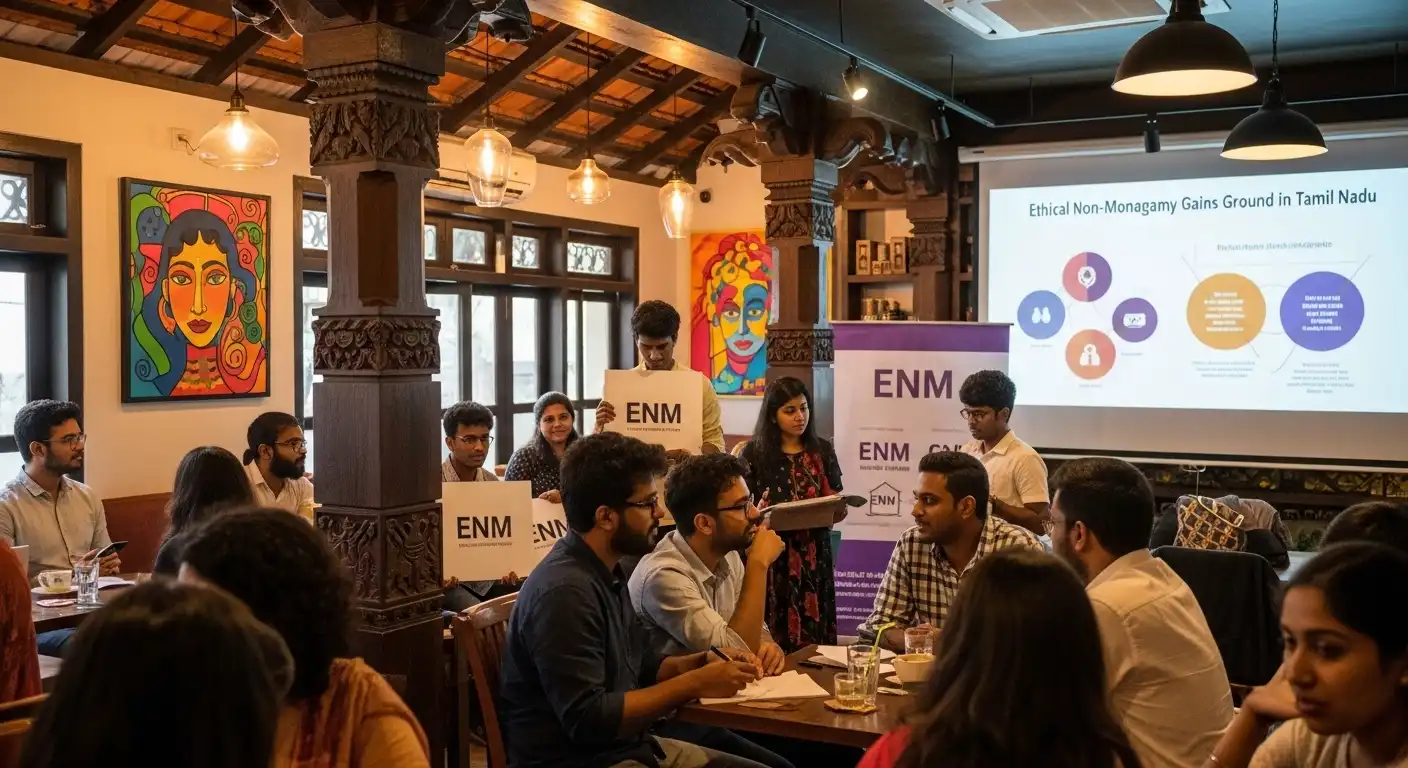
A growing number of married couples in Tamil Nadu are exploring ethical non-monogamy (ENM), a relationship model where partners, with mutual consent, open their marriage to other romantic or sexual connections.
Once considered rare and socially unacceptable, such arrangements are now quietly finding space not only in major metros but also in smaller cities like Salem, Madurai, Coimbatore and Tiruchi.
Ethical non-monogamy refers to a committed couple choosing to engage with other partners within clearly defined boundaries. Transparency, communication and agreed-upon rules are central to the arrangement. Couples may date separately, together, or follow hybrid structures depending on their comfort levels.
Some participants say ENM has helped strengthen trust and reduce stagnation in long-term marriages. A few married individuals interviewed for Sunday features in Tamil Nadu shared that opening their relationships, after years of monogamy, helped them rediscover connection and improve communication.
Marriage counsellors and therapists note that interest in non-monogamous arrangements has increased over the past decade. The COVID-19 pandemic, according to some experts, acted as a catalyst by encouraging self-reflection and conversations about emotional needs.
A 2022 survey by a dating app suggested that over half of single Indians were open to exploring non-monogamous relationships. A 2023 survey of married Indians found that a portion of respondents identified as being in open or non-monogamous relationships.
Mental health professionals caution, however, that such arrangements require emotional maturity and clear boundaries. Jealousy, insecurity and fear of rejection are common challenges. Therapists report that while some couples navigate ENM successfully, others seek help to manage complications that arise.
Experts say patriarchal dynamics continue to influence how ENM functions in smaller towns. In some cases, men appear more comfortable exploring additional relationships, while women may face greater social scrutiny or feel unequal freedom within the arrangement.
Stigma remains a significant barrier. Many couples prefer anonymity and avoid public acknowledgment of their relationship structure. Housing discrimination and workplace judgment are cited as concerns by those who practise ENM.
Despite legal changes such as the decriminalisation of adultery and Section 377, Indian law does not formally recognise polyamorous relationships. As a result, non-monogamous couples operate without legal protections.
Online communities and niche dating platforms have made it easier for like-minded individuals to connect. Apps now allow users to identify as non-monogamous, reducing awkward disclosures during dating.
Literature on polyamory in India has also grown. Authors and researchers describe it as one of the last major social taboos in contemporary Indian society. Some argue that younger, urban and educated Indians are increasingly open to redefining traditional ideas of romance and commitment.
Studies in psychology journals have explored mental well-being among polyamorous and monogamous individuals. One 2020 paper found that participants in consensual non-monogamous relationships reported comparable or, in some areas, better mental health outcomes.
However, therapists emphasise that success depends on strong communication skills and emotional grounding. Without these, alternative relationship models can create stress rather than fulfilment.
Post-pandemic growth in dating app usage reflects changing social attitudes. India has seen rapid expansion in digital platforms catering to open relationships, with user bases increasing significantly over the past few years.
While acceptance appears to be slowly rising, ENM remains largely underground in practice. Many couples describe their lifestyle as aspirational rather than mainstream.
As attitudes evolve, ethical non-monogamy in Tamil Nadu and across India exists in a paradox — gaining visibility through online platforms and research, yet constrained by cultural conservatism and social expectations.
you may also like


- March 02, 2026
iPhone 17e Launched in India at Rs 64,900

- March 02, 2026
Tea & Biscuits on Empty Stomach? Expert Warns

- March 02, 2026
