


- March 03, 2026
India-US Trade Deal Slashes Tariffs to 18%: Markets Cheer While Parliament Erupts Over ‘Missing Details’
India-US trade deal cuts tariffs to 18%, boosts markets and rupee, but political chaos erupts as details remain under wraps.
- February 03, 2026
- in International
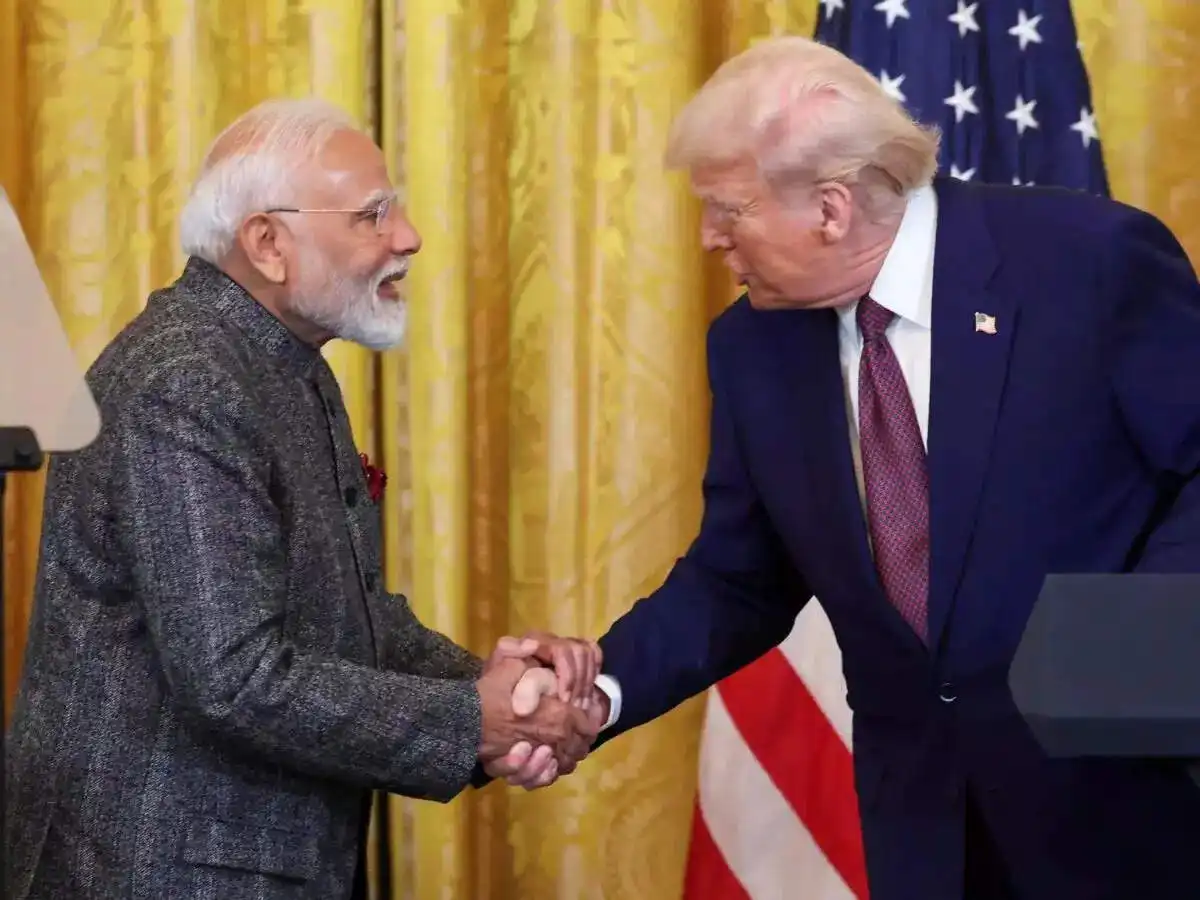
Markets Celebrate, Parliament Shouts
India’s long-awaited trade breakthrough with the United States arrived with fireworks in the stock market—and tear gas-level chaos in politics.
As Washington cut tariffs on Indian exports from 25% to 18%, Dalal Street erupted in celebration. The Sensex jumped thousands of points, the Nifty raced ahead, and the rupee strengthened sharply. Investors popped the champagne.
Inside Parliament, however, the mood was less Wall Street and more wrestling ring.
What the Deal Promises (So Far)
The agreement, announced first by US President Donald Trump and later confirmed by Prime Minister Narendra Modi, marks a major rollback of punitive tariffs imposed in 2025.
Key takeaways:
-
Tariffs on Indian goods cut to 18%
-
Relief for labour-intensive sectors like textiles, leather, gems, jewellery and marine exports
-
Positive signals for MSMEs and global supply chain integration
-
Renewed optimism for foreign investor inflows after months of selling pressure
On paper, it is exactly the kind of headline markets love.
The Rupee Smiles, Equities Roar
The immediate reaction was dramatic:
-
Sensex and Nifty surged over 2.5%
-
Rupee strengthened by over 1%
-
Export-linked stocks jumped as much as 20%
-
Bond yields softened as confidence returned
For investors, the message was simple: uncertainty is expensive, clarity is profitable—even partial clarity.
But Then Came the Fine Print… Or Lack of It
While the markets ran ahead, critics asked a quieter but sharper question:
Where are the full terms?
The government maintains that the deal is in the “final stages of detailing” and that a joint India-US statement will soon explain everything.
Until then, Parliament got slogans instead of spreadsheets.
Parliament vs Press Conference
With repeated adjournments and heated exchanges, the Commerce Minister addressed the media instead of lawmakers—blaming opposition disruptions for the detour.
The Opposition, meanwhile, raised uncomfortable questions:
-
Has India agreed to open its agriculture sector?
-
Are tariff barriers being reduced to zero, as claimed by the US side?
-
Did India commit to halting Russian oil purchases?
The government says sensitive sectors are protected.
The Opposition says trust requires transparency.
The public gets sound bites.
Mockery, Served Policy-Cold
In global trade diplomacy, there is a familiar pattern:
-
Big announcement first
-
Details later
-
Political credit immediately
The deal is being celebrated as historic, transformative, and future-defining—before anyone outside negotiating rooms has seen the full map.
It is a masterclass in optimism management.
Russia, Oil, and the Elephant in the Room
One of the loudest claims came from Washington: that India agreed to stop buying Russian oil.
New Delhi has not publicly confirmed this.
Even Moscow says it has received no such communication.
In other words, everyone agrees the deal is excellent—except on what exactly was agreed.
Why This Deal Still Matters
Despite the noise, the fundamentals are significant:
-
India secures a tariff rate lower than several competitors
-
Exporters regain lost ground in the US market
-
Supply chains diversify further away from China
-
Strategic India-US alignment deepens across trade, energy, and technology
This is not just a trade reset—it is a geopolitical signal.
Nation With Tea Take
The India-US trade deal is economically powerful and politically combustible.
Markets see opportunity.
Politicians see leverage.
Citizens see headlines—waiting for footnotes.
Until the joint statement arrives, this deal exists in a familiar Indian policy zone: celebrated loudly, debated fiercely, explained later.
you may also like

- March 02, 2026
Trump Says Iran Operations May Last 4–5 Weeks
- March 02, 2026
How Switzerland Became the World’s Most Nuclear-Ready Nation

- March 02, 2026
Middle East War Escalates; Oil, Air Travel Hit
- March 02, 2026