


- March 03, 2026
Iran Protests Explained: Why People Are Rising Against the Khamenei Regime
Iran faces major protests as economic crisis turns into political revolt, with citizens openly challenging the Khamenei regime.
- January 02, 2026
- in International
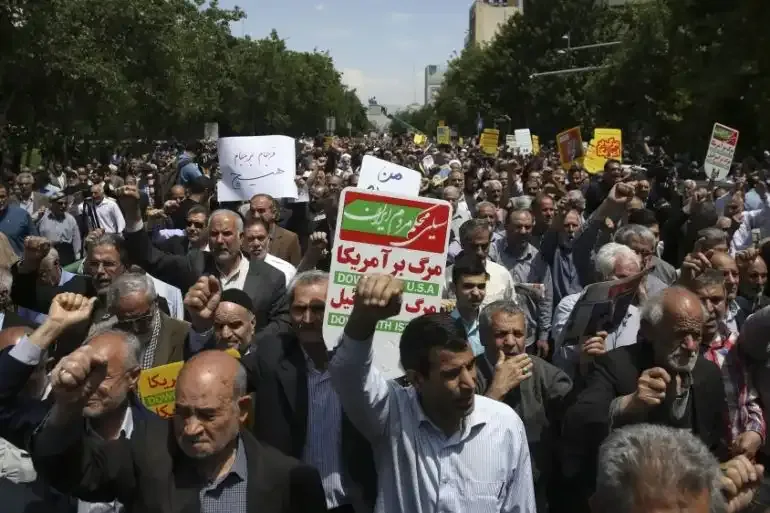
Iran is witnessing fresh and intense protests as people across several cities come out on the streets, openly demanding the end of clerical rule. What began as anger over economic hardship has now turned into a direct political challenge to the country’s top leadership.
Cities such as Tehran, Isfahan, and parts of western Iran have seen widespread demonstrations. Markets have shut down, universities are paralysed, and daily life has been disrupted. Protesters are chanting strong slogans like “Mullahs must leave” and “Death to dictatorship”, showing that public anger is no longer limited to prices or jobs.
The immediate trigger was a sharp fall in Iran’s currency, the rial. At one point, the value dropped to nearly 1.4 million rials per US dollar. This collapse has badly hit ordinary families, making food, fuel, and basic needs extremely expensive. Official figures show inflation above 50%, but many Iranians say real prices feel even higher.
As protests spread, clashes broke out between demonstrators and security forces. Reports from multiple regions suggest that several people have lost their lives, while many others have been injured or detained. Authorities have used tear gas, arrests, and strict policing to control the crowds. State media has described the protesters as “rioters”, a label often used during previous unrest.
From Economic Anger to Political Revolt
At first, shopkeepers and traders were the most visible protesters. Many closed their businesses after the currency crash wiped out their savings. Soon, students joined in, blocking roads and gathering on university campuses.
What makes this wave different is the clear political message. Protesters are directly blaming the Islamic Republic system and the supreme leader, Ayatollah Ali Khamenei. In earlier protests, people often targeted government ministers. This time, the focus is on the top of the power structure.
Some crowds have even called for free elections and major political change, demands that were once considered too risky to voice publicly.
Government Response and Public Doubt
President Masoud Pezeshkian has announced economic measures, including changes in central bank leadership and currency policies. He has admitted that public anger is real and has said the problem cannot simply be blamed on foreign pressure.
However, many Iranians remain unconvinced. People argue that economic fixes cannot solve deeper issues like long-standing corruption, lack of political freedom, international isolation, and powerful unelected institutions.
Even within Iran’s political class, there are disagreements. Some lawmakers have criticised the president’s decisions, saying they ignore public opinion and parliament’s role.
Why the Protests Matter Now
The protests come at a sensitive time. Ayatollah Khamenei is in his late 80s, and questions about leadership succession are already being discussed quietly. His absence from public appearances during the crisis has added to speculation and uncertainty.
Iran is also facing other pressures — water shortages, pollution, and environmental damage — which have increased public frustration. On the international front, tensions remain high over Iran’s nuclear programme and regional conflicts.
For now, the security forces appear strong enough to control the streets. But analysts say something important has changed: fear among the public seems to be fading.
you may also like

- March 02, 2026
Trump Says Iran Operations May Last 4–5 Weeks
- March 02, 2026
How Switzerland Became the World’s Most Nuclear-Ready Nation
- March 02, 2026
Middle East War Escalates; Oil, Air Travel Hit
- March 02, 2026