

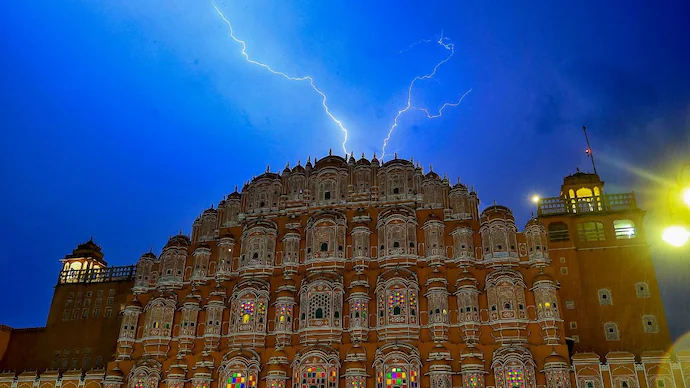
A temporary pause in monsoon rainfall across much of India has not reduced weather-related risks. Instead, the India Meteorological Department (IMD) has warned of widespread thunderstorms accompanied by lightning and gusty winds across several regions this week.
The advisory covers central, eastern, northeastern, northwestern, peninsular, western coastal, and western Himalayan regions, making lightning one of the most significant weather threats despite subdued rainfall.
IMD Forecasts Thunderstorms Across Most of India
While monsoon showers have weakened in many parts of the country, weather conditions remain favourable for the development of thunderstorms.
The IMD has predicted thunderstorms with lightning and strong winds over a large part of India during the week. Hot, humid conditions prevailing across several states are expected to create an environment that supports the formation of intense storm clouds capable of producing dangerous lightning strikes.
The forecast serves as a reminder that reduced rainfall does not necessarily mean safer weather conditions.
Why Lightning Activity Increases During a Monsoon Break
A normal active monsoon usually brings widespread, steady rainfall through large cloud systems.
During a monsoon break, however, prolonged sunshine heats the land while humidity remains high. This combination causes warm, moisture-rich air to rise rapidly into the atmosphere, forming towering thunderclouds that can extend several kilometres above the ground.
These rapidly developing storm clouds are highly favourable for lightning, even if widespread rainfall is absent.
How Lightning Forms Inside Storm Clouds
Lightning is produced when ice particles inside thunderclouds repeatedly collide as powerful air currents move them through different layers of the cloud.
These collisions gradually separate electrical charges, with positive charges accumulating near the top of the cloud and negative charges gathering below.
Once the electrical difference becomes strong enough, the energy is released in the form of a lightning bolt. The discharge heats the surrounding air to temperatures of nearly 30,000 degrees Celsius, making it several times hotter than the surface of the Sun for a brief moment.
Lightning Remains India’s Deadliest Weather Hazard
Lightning continues to claim more lives in India than any other weather-related event.
Research covering the period from 2002 to 2022 found that lightning accounted for 46% of all weather-related deaths in the country, surpassing fatalities caused by floods, cyclones, and heatwaves.
Another long-term analysis based on official crime records showed that more than 1,01,000 people lost their lives to lightning between 1967 and 2020, averaging nearly 1,900 deaths every year.
Experts believe rising temperatures and increased atmospheric moisture associated with climate change may be contributing to more frequent lightning-producing storms.
Farmers and Outdoor Workers Face the Highest Risk
Lightning fatalities are reported across the country, but central India records a significant share of the deaths.
States including Madhya Pradesh, Maharashtra, Uttar Pradesh, and Odisha have witnessed some of the highest numbers of lightning-related fatalities over the years.
People working outdoors, particularly farmers, agricultural labourers, construction workers, and others in open areas, remain among the most vulnerable during thunderstorms.
How to Stay Safe During a Lightning Storm
Weather experts advise people to take immediate precautions when thunderstorms develop.
Important safety measures include:
- Move indoors as soon as thunder is heard.
- Avoid taking shelter under isolated trees.
- Stay away from open fields and elevated locations.
- Do not stand in ponds, rivers, or other water bodies.
- Avoid leaning against concrete walls or lying on concrete floors during storms.
- Unplug electrical appliances if possible.
- Wait until the storm has completely passed before returning outdoors.
People are also encouraged to use weather alerts and lightning warning services to receive timely notifications about nearby lightning activity.
Stay Alert Even Without Heavy Rain
Thunderstorms can develop quickly during periods when rainfall is limited but humidity remains high. Many people mistakenly assume that the absence of continuous rain means weather conditions are safe, but lightning can strike several kilometres away from the main rain area.
Monitoring local weather forecasts and responding promptly to official advisories can significantly reduce the risk of injury.
Conclusion
Although monsoon rainfall has temporarily weakened across many parts of India, the threat from lightning has increased. With thunderstorms expected over much of the country, authorities are urging people to remain cautious and follow basic lightning safety measures. Staying indoors during storms and paying attention to weather alerts can help prevent avoidable tragedies during the monsoon season.
Frequently Asked Questions (FAQs)
1. Why is lightning increasing during the monsoon break?
Reduced rainfall combined with hot and humid weather creates ideal conditions for powerful thunderstorm clouds that produce lightning.
2. Which areas are expected to receive thunderstorms this week?
The IMD has forecast thunderstorms across central, eastern, northeastern, northwestern, peninsular, western coastal, and western Himalayan regions.
3. Is lightning more dangerous than floods in India?
Yes. Studies have shown that lightning accounts for a larger share of weather-related deaths in India than floods, cyclones, or heatwaves.
4. How does lightning form?
Lightning forms when electrical charges build up inside thunderclouds due to repeated collisions between ice particles before being released as a powerful electrical discharge.
5. Who is most at risk during lightning storms?
Farmers, labourers, construction workers, and anyone outdoors in open areas face the highest risk.
6. Can lightning strike without heavy rain?
Yes. Lightning can occur even when rainfall is light or absent, especially during thunderstorms.
7. Is it safe to stand under a tree during a thunderstorm?
No. Trees are among the most dangerous places during lightning storms and should never be used as shelter.
8. Should I avoid water during a lightning storm?
Yes. Leave ponds, lakes, rivers, and swimming pools immediately when thunderstorms approach.
9. Why is climate change linked to increased lightning?
Warmer air can hold more moisture, creating stronger thunderstorms that may produce more frequent lightning.
10. What is the safest place during a lightning storm?
A fully enclosed building or a hard-topped vehicle is generally the safest place to remain until the thunderstorm has completely passed.
Leave a Reply