


- March 03, 2026
MGNREGA vs VB–G RAM G Act: Is India Quietly Switching Off the Right to Work?
Critics warn the VB–G RAM G Act weakens India’s job guarantee by capping funds, centralising control and sidelining workers’ rights.
- January 27, 2026
- in National
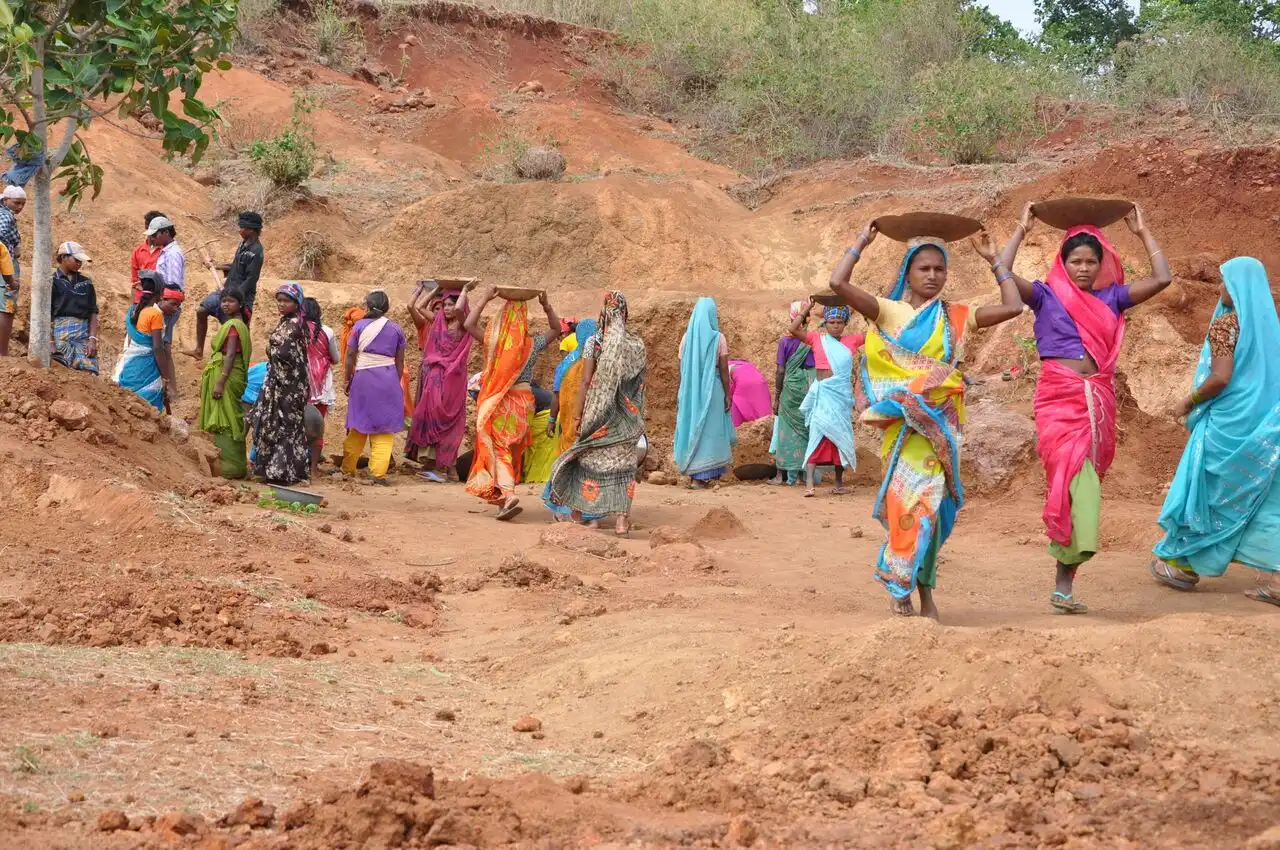
Playing Hide and Seek With the Right to Work
On paper, India’s rural job guarantee looks intact. In practice, critics say it is being quietly reframed, repackaged, and restricted.
The debate centres on the proposed Viksit Bharat – Guarantee for Rozgar and Ajeevika Mission (Gramin) Act (VB–G RAM G Act), which the Union government says will replace the Mahatma Gandhi National Rural Employment Guarantee Act (MGNREGA). Supporters call it reform. Critics call it a switch-off button disguised as an upgrade.
At the heart of the criticism is a simple question:
Can you call it a “guarantee” if the government decides where and when it applies?
What the Government Says
Union Rural Development Minister Shivraj Singh Chouhan has publicly argued that the new law is an expansion, not a rollback.
-
125 days of work, up from 100 under MGNREGA
-
Removal of so-called “disentitlement clauses”
-
Shift from “archaic demand-driven funding” to normative funding
-
Faster wage payments through deeper digitisation
☕ Nation With Tea translation:
Same tea, new cup, bigger label.
The Fine Print Critics Are Worried About
Economist and rights activist Jean Drèze and other experts argue that the real changes lie not in the headline promises, but in the control mechanisms.
1. The ‘Switch-Off’ Clause
The new Act states that the employment guarantee applies only in rural areas “as may be notified by the Central government.”
That single line changes everything.
A guarantee that depends on notification is not a guarantee — it is permission.
Under MGNREGA, any rural household could demand work by right. Under VB–G RAM G, critics say the Centre can effectively turn the guarantee on or off by geography.
2. Normative Funding = Budget Caps
MGNREGA is demand-driven: if people ask for work, funds must follow.
VB–G RAM G proposes normative allocations — fixed budgets decided in advance.
Supporters say this brings “discipline.”
Critics say it introduces de facto caps that poorer States may be unable to breach.
☕ Mockery, gently brewed:
When demand exceeds supply, just redefine demand.
3. The ‘Disentitlement’ Argument That Wasn’t
The government claims it removed provisions that denied workers their dues.
But critics point out:
-
The so-called “disentitlement clause” under MGNREGA was never actually used
-
It addressed a hypothetical problem of frivolous applications that never materialised
Removing a clause that never harmed anyone is not reform — it is spin.
Digital Fixes, Old Problems
VB–G RAM G doubles down on technology-first governance — biometric attendance, app-based monitoring, digitised payments.
But MGNREGA already tried this.
Past experience shows:
-
Wage delays due to technical failures
-
Payments diverted to incorrect wallets
-
Workers giving up due to repeated glitches
☕ Nation With Tea reality check:
When technology fails, corruption doesn’t disappear — it just changes shape.
Is This About Efficiency or Control?
Supporters argue the new law improves equity across States.
Critics counter that:
-
There is no strong correlation between poverty levels and MGNREGA usage across States
-
Well-run States use the scheme better — like many social programmes in India
-
The solution is better wages and capacity, not tighter caps
MGNREGA costs about 0.25% of India’s GDP — hardly a fiscal emergency.
The Bigger Pattern Critics See
Jean Drèze and others place VB–G RAM G in a broader trend:
-
Rename existing rights-based laws
-
Centralise discretion
-
Claim credit while shrinking entitlements
The National Food Security Act, critics note, underwent a similar makeover — repackaged into multiple Prime Minister-branded schemes.
☕ Nation With Tea mockery:
Same engine, different sticker, louder horn.
What Gets Lost in the Process
According to critics, what slips quietly into the back seat is:
-
Workers’ bargaining power
-
Legal enforceability of the right to work
-
State-level flexibility
-
Grassroots accountability
Employment guarantee, they argue, was never just a welfare scheme — it was a constitutional promise in spirit, aligned with the Directive Principles.
The Bottom Line
Supporters of the VB–G RAM G Act speak the language of reform, efficiency and modernisation. Critics hear something else: centralised control dressed up as innovation.
As Jean Drèze puts it, there is little substance in the case for replacing MGNREGA — and considerable risk that India’s most ambitious labour right is being quietly diluted, not openly repealed.
☕ Nation With Tea closing sip:
When a “guarantee” needs permission, it stops being a right — and starts becoming a favour.
you may also like


- March 03, 2026
Gulf Tensions Rise; Evacuation Flights Reach India

- March 03, 2026
Chhattisgarh Private Schools Announce RTE Protest
- March 02, 2026
India Rejects Report Linking Officials to Nijjar Killing
- March 02, 2026