


- March 03, 2026
Trump Reignites Greenland Takeover Push, Prompting Fears of Military Escalation
Donald Trump has renewed his demand for Greenland, citing security concerns, as the island warns of rising geopolitical risks.
- January 21, 2026
- in International
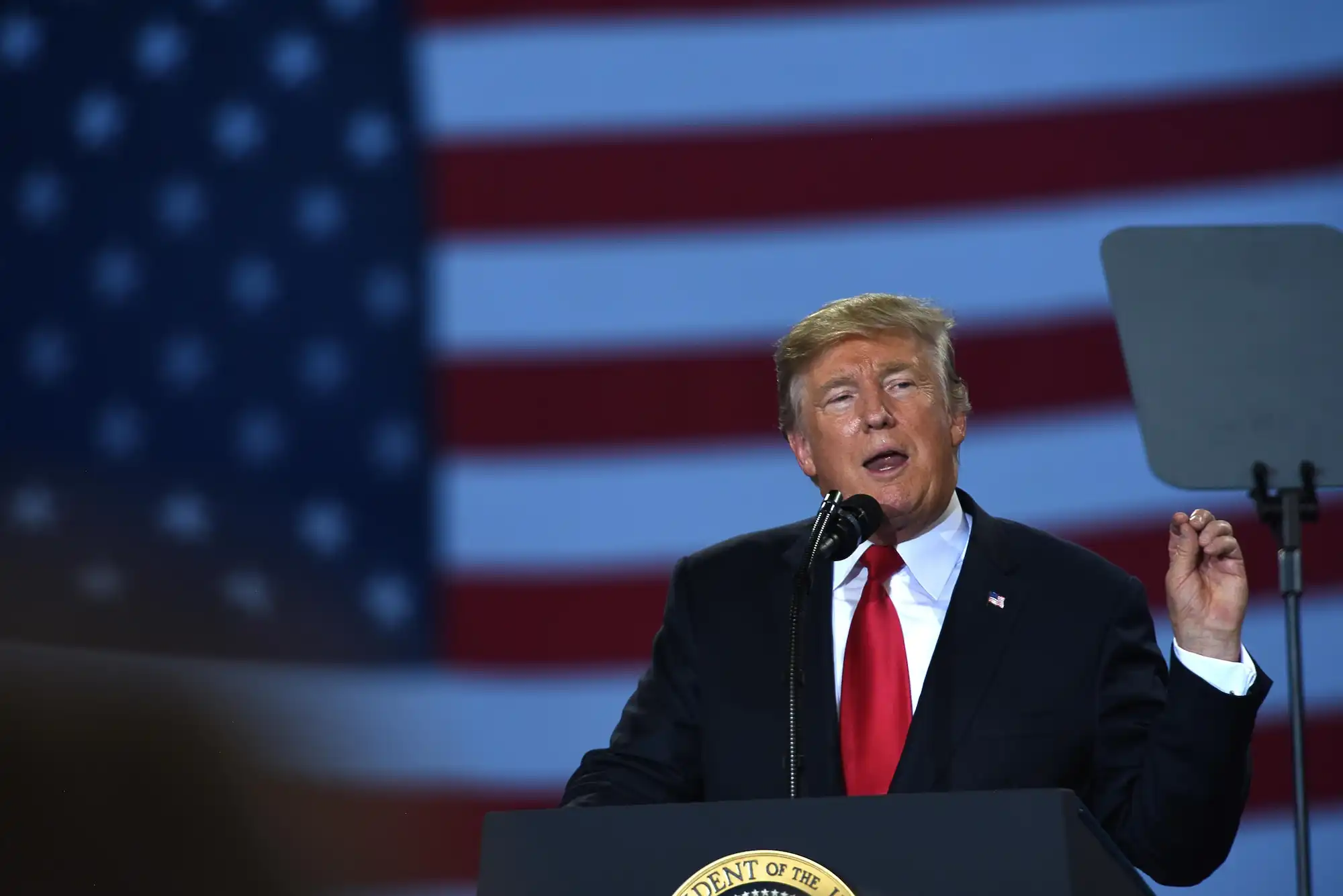
The geopolitical temperature around Greenland has risen sharply after Donald Trump once again doubled down on his long-standing ambition to bring the autonomous island under United States control. Framing the demand as a matter of “national and international security,” Trump’s remarks have reignited global concern over the return of power politics once thought to belong to another century.
Greenland, the world’s largest island and home to just under 60,000 people, has suddenly found itself at the centre of a strategic tug-of-war. Trump has argued that Greenland’s location makes it essential for missile defence and global security, even suggesting the construction of advanced defence infrastructure capable of neutralising threats from rivals such as Russia and China. The pitch, however, has landed less like a security briefing and more like a real-estate proposal scaled to continental size.
As rhetoric from Washington escalates, Greenland’s leadership has urged caution and preparedness. Authorities have acknowledged that while a military confrontation remains unlikely, it can no longer be ruled out entirely. Preparations, including the formation of a special task force, are being discussed — a notable step for a territory better known for ice caps than invasion scenarios.
International reaction has been swift and uneasy. European leaders have openly criticised what they see as a revival of imperial thinking, warning that global order cannot be governed by size, strength, or economic muscle alone. Speaking at the Davos summit, Emmanuel Macron described the moment as a dangerous drift toward a world where rules are optional and power speaks louder than law — a remark that resonated widely across diplomatic circles. Canada and several NATO allies have publicly reaffirmed their support for Denmark and Greenland, signalling that the island is not as geopolitically isolated as some might assume. Behind the diplomatic statements lies a broader anxiety: if territorial acquisition can be discussed so openly, what precedent does it set for the rest of the world?
Beyond security arguments, analysts point to Greenland’s vast reserves of rare-earth minerals as the unspoken driver of interest. These resources are critical for modern technology and defence systems, making the island strategically valuable far beyond its icy terrain. The concern, critics argue, is that strategic necessity is being used as a convenient headline for economic ambition.
What makes the situation particularly striking is the casual confidence with which the idea has been reintroduced. In an era shaped by international law and sovereignty, the suggestion that an autonomous territory could be acquired — rather than negotiated with — has unsettled allies and observers alike.
For Greenland, the message is clear: the island is no longer just a remote Arctic landmass. It is now a chessboard square in a global power game — one where geography, minerals, and military ambition intersect. Whether this standoff remains rhetorical or evolves into something more tangible will depend not just on Washington’s next move, but on how firmly the rest of the world chooses to respond.
you may also like

- March 02, 2026
Trump Says Iran Operations May Last 4–5 Weeks
- March 02, 2026
How Switzerland Became the World’s Most Nuclear-Ready Nation

- March 02, 2026
Middle East War Escalates; Oil, Air Travel Hit
- March 02, 2026