


- March 03, 2026
US-Venezuela Crisis: Maduro Pleads Not Guilty as Interim Govt Takes Charge
Venezuela
- January 06, 2026
- in International
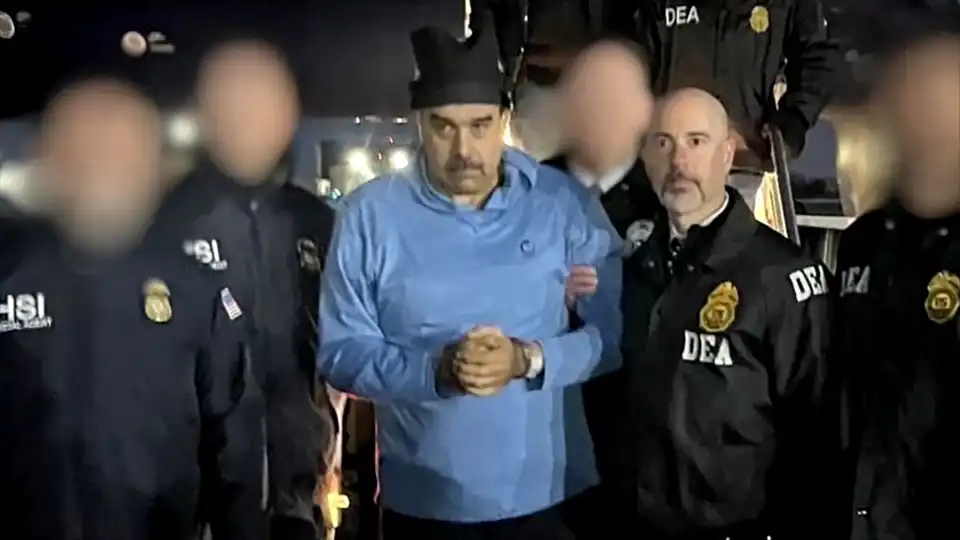
Tensions between the United States and Venezuela escalated sharply after ousted Venezuelan leader Nicolas Maduro pleaded not guilty to multiple federal charges in a New York court following his capture in a U.S. military operation.
Maduro, who was brought to the United States after a pre-dawn raid in Caracas, told the court he had been “kidnapped” and insisted that he remains the legitimate president of Venezuela. A U.S. federal judge has scheduled his next court hearing for March 17, 2026. His wife, Cilia Flores, has also pleaded not guilty in the case.
Interim leadership takes charge in Caracas
In Caracas, Delcy Rodríguez was sworn in as interim president, hours after Maduro’s removal from power. She announced the formation of a high-level commission tasked with seeking the release of Maduro and his wife, while asserting that Venezuela would continue to function independently despite external pressure.
Rodríguez struck a mixed tone, condemning the U.S. action while also signalling willingness to engage diplomatically. However, Donald Trump warned that further consequences could follow if Venezuela’s interim leadership fails to cooperate with Washington.
International reaction and legal concerns
The dramatic U.S. operation has drawn widespread global reaction. The United Nations raised concerns over regional instability and questioned whether the raid complied with international law. Several countries, including China, Russia, Mexico, and Türkiye, criticised the action as a violation of national sovereignty, while European leaders called for clarity and restraint.
Within Venezuela, lawmakers aligned with the ruling party reaffirmed support for Maduro, condemning his capture and warning that it sets a dangerous global precedent. Protests both supporting and opposing the former leader have been reported in Caracas and abroad.
Economic and geopolitical impact
Markets reacted cautiously to the unfolding crisis. Oil prices showed limited volatility despite Venezuela’s vast energy reserves, while gold and other safe-haven assets saw a modest rise. Analysts noted that any long-term impact on global energy markets would depend on political stability and future control of Venezuela’s oil sector.
As legal proceedings against Maduro move forward in the United States and diplomatic pressure mounts internationally, the crisis marks one of the most significant geopolitical flashpoints of 2026, with implications for global politics, energy markets, and international law.
you may also like

- March 02, 2026
Trump Says Iran Operations May Last 4–5 Weeks
- March 02, 2026
How Switzerland Became the World’s Most Nuclear-Ready Nation

- March 02, 2026
Middle East War Escalates; Oil, Air Travel Hit
- March 02, 2026