


- March 02, 2026
18% Tariffs, Protected Farms, Open Markets: Inside India’s Interim Trade Deal With the US
India’s interim trade deal with the US cuts tariffs to 18%, boosts exports, protects agriculture, and reshapes tech, MSMEs, and manufacturing.
- February 07, 2026
- in Business
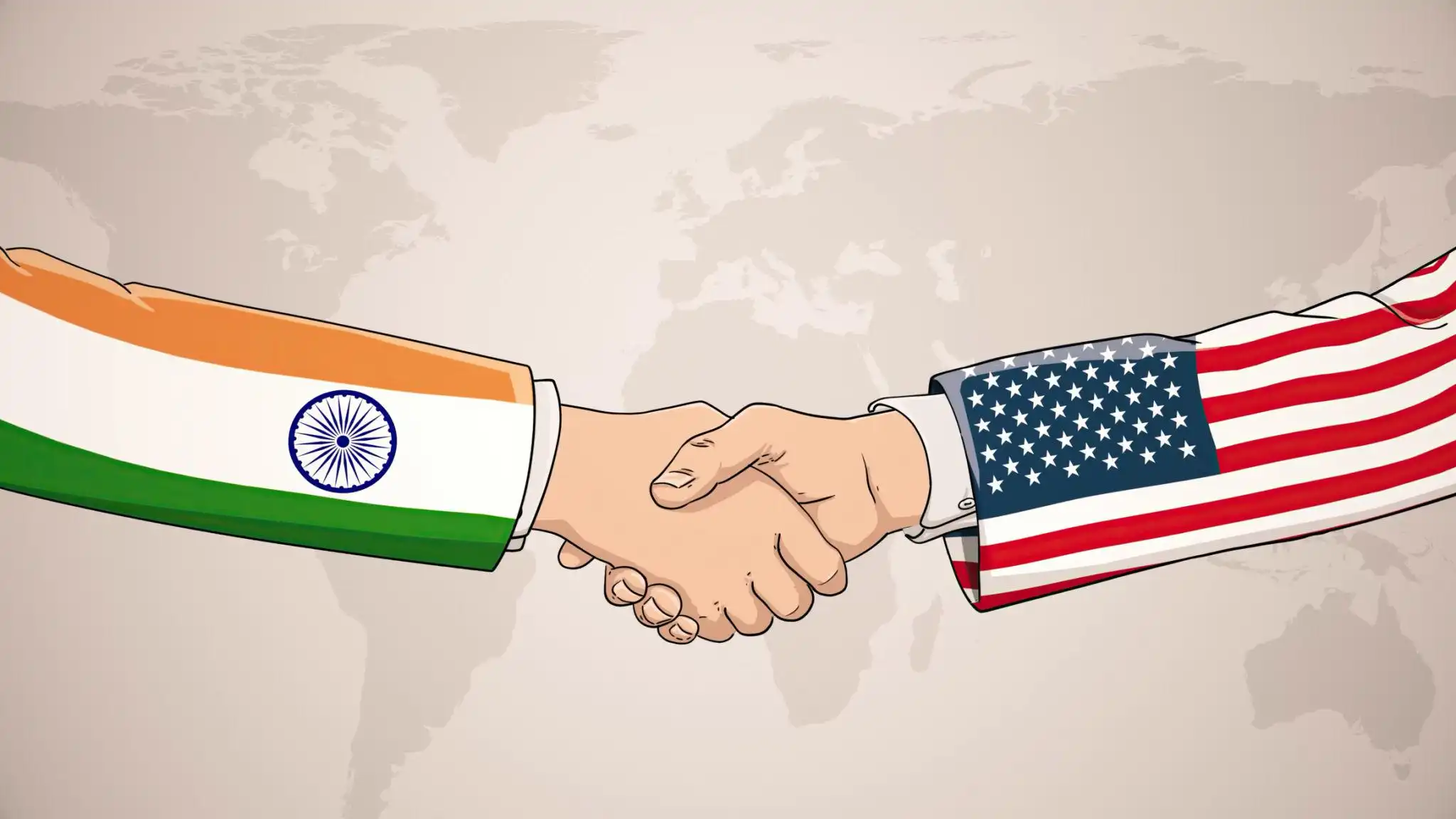
When Tariffs Fall but Borders Don’t
After months of negotiation, press briefings, and strategic patience, India and the United States have agreed on the framework of an interim trade deal—a document that does not scream revolution but quietly redraws the rules.
The headline number is clear:
India’s export tariff to the US drops to 18%.
The subtext is sharper:
India gets access.
The US gets supply chains.
And agriculture stays off the altar.
Why the 18% Number Matters
At 18%, India suddenly looks cheaper, faster, and more reliable than many of its export competitors.
Compared to regional peers, India now enjoys a tariff edge over:
-
China
-
Vietnam
-
Bangladesh
-
Thailand
-
Indonesia
-
Pakistan
More importantly, this is a steep rollback from the punitive 50% tariff imposed earlier, restoring predictability for exporters who had begun diverting shipments elsewhere.
In trade language, this is called “relief.”
In business language, it’s called breathing space.
Who Wins First: Labour, MSMEs, and Manufacturing
The biggest beneficiaries are sectors that employ people, not just balance sheets.
Labour-intensive exports getting a lift include:
-
Textiles and apparel
-
Leather and footwear
-
Gems and jewellery
-
Handicrafts and artisanal products
-
Plastics and rubber
-
Select machinery and auto components
Several products move to zero-duty access, including:
-
Gems and diamonds
-
Aircraft parts
-
Generic pharmaceuticals
This quietly strengthens the Make in India push—not through slogans, but through order books.
Technology: The Quiet Backbone of the Deal
Beyond tariffs, the agreement leans heavily into technology trade.
India gains faster access to:
-
GPUs
-
Data-centre equipment
-
Advanced electronics
-
Semiconductor-linked supply chains
This matters less for headlines and more for infrastructure. Lower costs, fewer certifications, and quicker approvals mean India’s digital and AI ambitions don’t get stuck in customs paperwork.
The deal doesn’t shout “tech revolution.”
It simply removes the friction that slows one down.
Agriculture: The Red Line That Didn’t Move
If there was one sector watching this deal nervously, it was agriculture. And if there’s one sector that emerged intact, it’s the same one.
Fully protected products include:
-
Milk and dairy
-
Wheat, rice, maize
-
Soya and poultry
-
Ethanol (fuel)
-
Tobacco
-
Key vegetables and meats
Limited access is allowed only for non-sensitive or premium products, such as:
-
Tree nuts
-
Soybean oil
-
Animal feed
-
Wine and spirits
-
Select fruits
In short: staple crops and farmer livelihoods stay shielded, while controlled imports support animal husbandry and ethanol blending needs.
This is not free trade.
This is filtered trade.
Trade Math That Favors India
The US remains India’s largest trading partner:
-
~18% of India’s exports
-
~6% of imports
-
Bilateral trade around $186 billion
India continues to run a healthy trade surplus, which has steadily grown year-on-year.
The interim deal doesn’t erase imbalances—but it prevents them from becoming pressure points.
The Fine Print Everyone Will Read Later
Not all experts are celebrating without caution.
Some point out that while reciprocal tariffs have eased, baseline MFN tariffs remain unchanged, meaning this is relief—not liberalisation.
Others underline that implementation will decide whether promises turn into shipments or paperwork.
Which, in trade history, is always the real test.
Nation With Tea Take
This is not a flashy deal.
It’s a functional one.
India secures market access without sacrificing farmers.
Exporters regain competitiveness without policy whiplash.
Technology flows faster without ideological speeches.
In a world addicted to trade wars, this agreement does something radical: it works quietly.
you may also like
- March 02, 2026
Middle East Tensions: Impact on India Trade & Oil
- March 02, 2026
Intel CEO Warns of Huawei’s Chip Talent Push

- February 28, 2026
Amazon to Invest $50B in OpenAI, Expands AWS Tie-Up
- February 28, 2026