


- March 02, 2026
Middle East Tensions: Impact on India Trade & Oil
Rising Middle East tensions after Ayatollah Ali Khamenei’s death may disrupt Strait of Hormuz shipping, impacting India’s crude oil, LPG supply and exports.
- March 02, 2026
- in Business
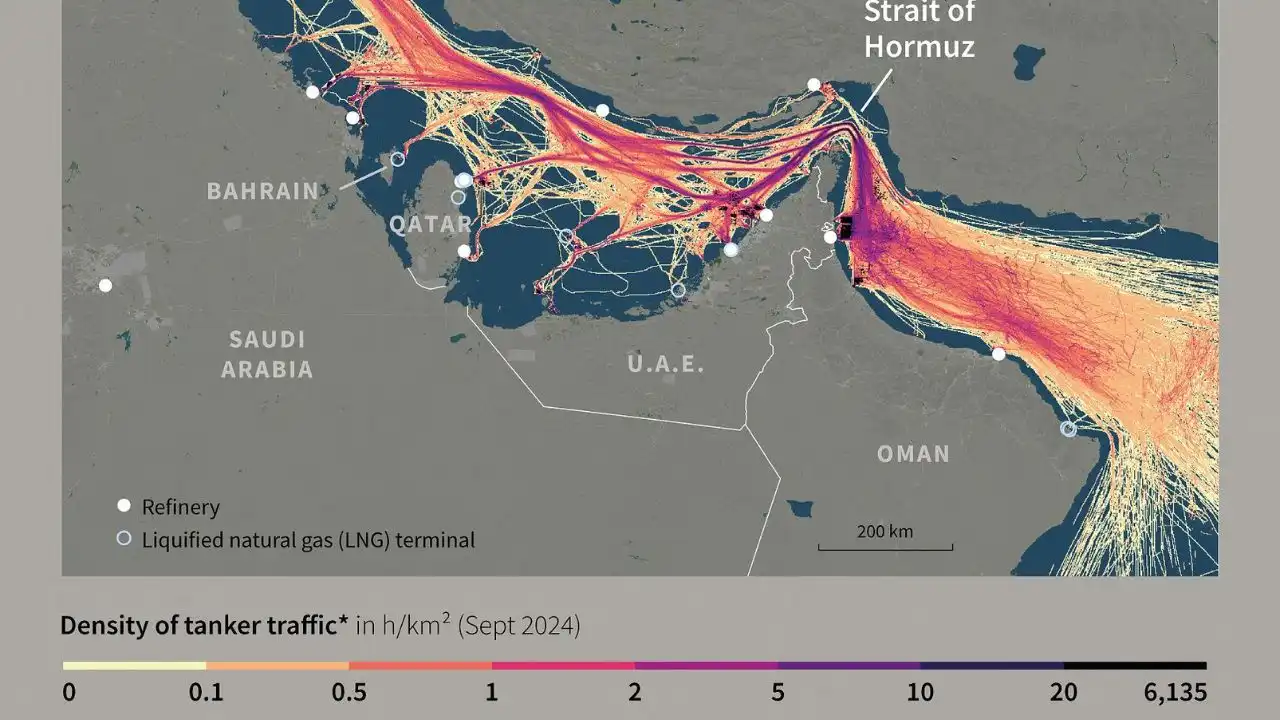
Rising geopolitical tensions in West Asia following the reported death of Ayatollah Ali Khamenei have raised fresh concerns for India’s trade, energy imports and export logistics.
Industry experts warn that any prolonged disruption in key maritime routes could push up crude oil prices, increase freight and insurance costs, and affect LPG supply chains.
Why Strait of Hormuz Matters
The Strait of Hormuz is a narrow passage linking the Persian Gulf with the Arabian Sea. A significant share of global oil and LNG trade moves through this corridor.
Estimates suggest that roughly 35–50% of India’s crude oil imports and a large portion of its LNG supplies transit through this route. Major suppliers include Iraq, Saudi Arabia, the UAE and Kuwait.
If traffic through Hormuz is restricted, India may need to source more oil from Russia, the United States, West Africa or Latin America. However, such alternatives involve longer shipping times and higher transportation costs.
Crude Oil Price Risks
Analysts say global oil prices could rise sharply if supply disruptions intensify. Even limited instability may add several dollars per barrel to crude prices.
A sustained spike could widen India’s current account deficit and increase domestic fuel prices, adding to inflationary pressures.
India imports more than 80% of its crude oil needs, making it sensitive to international price movements.
LPG and LNG More Vulnerable
Experts note that LPG supplies may be more vulnerable than crude oil.
India imports around 80–85% of its LPG requirements, with most shipments originating in Gulf countries and passing through Hormuz. Unlike crude oil, India does not maintain large strategic reserves of LPG, increasing exposure to logistical disruptions.
LNG shipments used for power and industrial consumption could also face delays if maritime security concerns escalate.
Trade and Export Concerns
Exporters have flagged risks to cargo movement through both the Strait of Hormuz and the Bab-el-Mandeb Strait, which connects the Red Sea to the Indian Ocean.
These routes are crucial for India’s exports to Europe and North America. If vessels are forced to reroute around the Cape of Good Hope, transit times could increase by 15–20 days, raising freight charges and insurance premiums.
The Federation of Indian Export Organisations has said the uncertainty is already affecting global logistics networks, with airlines modifying flight paths and shipping companies reviewing routes.
Limited Direct Trade with Iran
India’s direct trade with Iran remains relatively modest due to long-standing US sanctions.
However, broader instability in West Asia could disrupt exports to other Gulf nations, which are key buyers of Indian goods, including agricultural products such as rice.
Five major Basmati rice markets — Saudi Arabia, Iran, Iraq, the UAE and Yemen — are located in the region and account for a substantial share of India’s shipments.
Government Review
The Commerce Ministry has scheduled discussions with exporters, shipping companies and other stakeholders to assess the evolving situation.
Officials are expected to evaluate freight availability, insurance coverage, alternative routing options and potential support measures if disruptions persist.
Broader Economic Impact
Beyond trade and oil, prolonged instability could affect remittances from the nearly 10 million Indians working across Gulf Cooperation Council (GCC) countries.
India has free trade arrangements with the UAE and recently concluded a pact with Oman. Ongoing negotiations with the GCC bloc could also face delays if regional tensions continue.
For now, experts say the situation remains fluid. While India has diversified its crude sources in recent years, its heavy dependence on Gulf energy supplies means that developments in the region will be closely watched by policymakers and markets alike.
you may also like

- March 02, 2026
Intel CEO Warns of Huawei’s Chip Talent Push

- February 28, 2026
Amazon to Invest $50B in OpenAI, Expands AWS Tie-Up
- February 28, 2026
New GDP Series Lifts FY26 Growth Estimate to 7.6%
- February 28, 2026