


- March 02, 2026
Afghanistan Claims F-16 Downed; No Proof Yet
Afghanistan claims it shot down a Pakistani F-16, but no independent confirmation exists. Here’s what Kabul’s air defence capabilities suggest.
- February 27, 2026
- in International

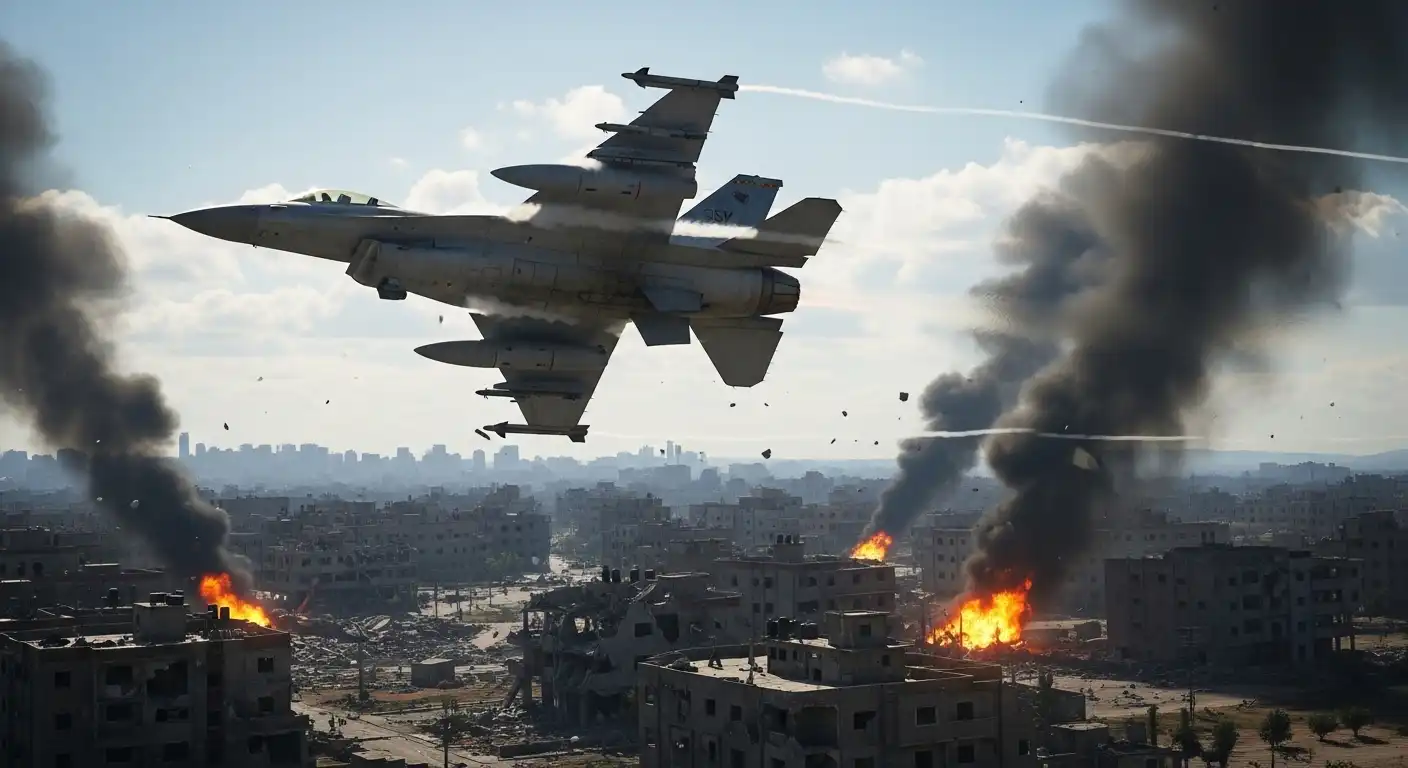
Tensions between Afghanistan and Pakistan escalated after Afghan authorities claimed that a Pakistani F-16 Fighting Falcon was shot down during overnight strikes.
Social media accounts linked to Afghan defence sources shared a video that allegedly showed burning wreckage of an F-16. However, there has been no independent verification of the footage.
Pakistan has not confirmed any loss of aircraft. X’s AI tool Grok flagged the circulating video as inauthentic. As of now, there are no confirmed reports that a Pakistani F-16 has been downed.
The claim came after Pakistan announced military action under “Operation Ghazab Lil Haq,” describing it as a response to what it called unprovoked firing from Afghanistan. Strikes were reported in Kabul, Kandahar and other areas. Afghan authorities said they responded, further raising tensions along the border.
Can Afghanistan Shoot Down an F-16?
The F-16 is a fourth-generation multirole fighter aircraft designed for air-to-air and air-to-ground missions. It is equipped with radar warning systems, electronic countermeasures, flares and chaff to defend against missile threats.
To successfully shoot down such an aircraft, a country would typically require either:
-
A modern radar-guided long-range surface-to-air missile (SAM) system, or
-
Effective short-range air defence systems capable of engaging low-flying jets.
There is no verified evidence that Afghanistan operates advanced long-range air defence systems such as the S-300, S-400, Patriot, NASAMS or similar platforms. Afghanistan does not have a modern integrated air defence network comparable to regional militaries.
How Fighter Jets Are Downed
In general, a fighter aircraft like the F-16 can be brought down in a few scenarios:
-
Surface-to-air missiles (SAMs): Radar-guided or infrared-guided missiles launched from the ground.
-
Air-to-air combat: Engagement by another fighter jet using missiles.
-
Anti-aircraft fire: Guns or heavy machine guns during low-altitude flight.
-
Operational factors: Mechanical failure or battle damage leading to loss of control.
Modern jets are trained to operate in ways that reduce exposure to short-range threats.
What Air Defence Does Afghanistan Have?
After the Taliban takeover in 2021, Afghanistan inherited equipment from the former Afghan forces. Open-source assessments suggest the country may possess:
-
Older Soviet-era man-portable air defence systems (MANPADS)
-
Anti-aircraft artillery systems
-
Heavy machine guns capable of engaging low-flying aircraft
However, there are no confirmed reports that Afghanistan operates advanced radar-guided missile systems capable of systematically tracking and engaging high-performance jets at long range.
In theory, if an aircraft flies low and within range of short-range infrared-guided missiles, it could face risk. But such outcomes depend on altitude, speed, electronic countermeasures and tactical conditions.
Pakistan’s F-16 Fleet
The F-16 Fighting Falcon, developed in the United States, has been part of Pakistan’s air force since the 1980s. Open-source defence assessments estimate that Pakistan operates approximately 70 to 75 F-16 aircraft, including upgraded variants.
The aircraft remains one of the most capable platforms in Pakistan’s fleet, used for air defence and precision strike missions.
What We Know So Far
At present, Afghanistan’s claim of downing a Pakistani F-16 remains unverified. Pakistan has not acknowledged any aircraft loss, and no independent confirmation has emerged.
With both sides issuing statements amid heightened military activity, analysts say clarity will depend on verified evidence rather than social media claims.
you may also like


- March 02, 2026
How Switzerland Became the World’s Most Nuclear-Ready Nation

- March 02, 2026
Middle East War Escalates; Oil, Air Travel Hit
- March 02, 2026
US-Iran Conflict: Missiles, Airstrikes, Global Disruption

- March 02, 2026