Delhi-NCR Weather: Why Heavy Rain and Gusty Winds Hit the Region Suddenly
Heavy rain and thunderstorms swept across Delhi-NCR on Monday after overnight showers and gusty winds. The India Meteorological Department linked the sudden downpour to a Western Disturbance affecting northwestern India.
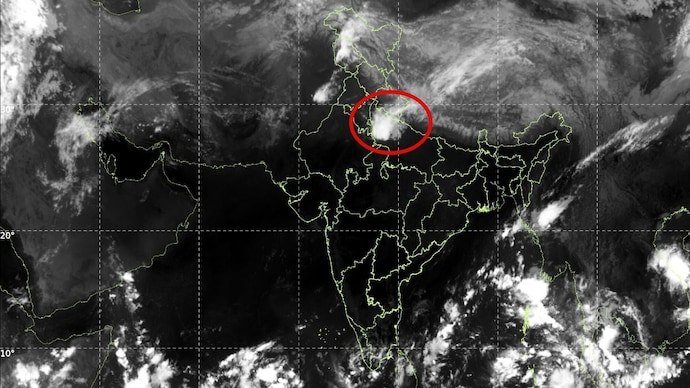
Delhi-NCR witnessed heavy rain and thunderstorms on Monday, October 12, after gusty winds and showers began late Sunday night. Delhi, Gurugram, Noida, Faridabad and Ghaziabad experienced a sudden change in weather, with further thundershowers expected in several areas.
According to available weather data, Safdarjung, Delhi’s primary weather observatory, recorded 40 mm of rainfall up to 5.30 am. The India Meteorological Department (IMD) had warned of heavy rain, thunderstorms and gusty winds across parts of northwestern India.
The primary reason behind the downpour was a Western Disturbance, a weather system that moves eastwards from the west and often brings rain, thunderstorms and hail to northern India.
The IMD’s October 11 bulletin identified a cyclonic circulation over Himachal Pradesh, along with atmospheric troughs extending across parts of northwestern and central India. These systems can trigger rising air currents and cloud formation when moisture and atmospheric instability are sufficient.
Satellite imagery from INSAT-3DS also showed extensive cloud cover over northern India, including areas near the Himalayan region and adjoining plains. Cold cloud tops can indicate deep clouds associated with thunderstorms, although satellite imagery alone cannot establish rainfall intensity at a specific location.
The downpour could lead to waterlogging, traffic delays and reduced visibility across the region.
The episode also highlights that rainfall can continue after the southwest monsoon withdraws. Western Disturbances and other atmospheric systems can still trigger significant rain during the post-monsoon season.