IIIT Ranchi Students Protest After First-Year Student’s Death, Demand Director’s Resignation
Nearly 1,000 students at IIIT Ranchi have protested following the death of first-year student Aditya Singh. They have raised concerns about hostel facilities, emergency medical arrangements and administrative accountability, while demanding the director’s resignation.
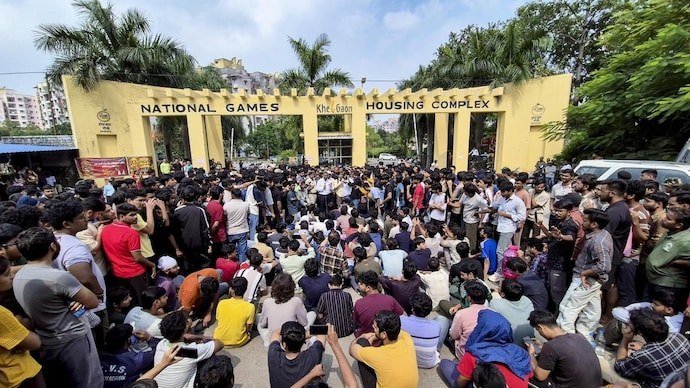
Nearly 1,000 students of the Indian Institute of Information Technology (IIIT), Ranchi, have staged a protest following the death of first-year student Aditya Singh. Students from BTech, MTech and PhD programmes are demanding answers from the administration over alleged lapses in basic facilities and emergency medical support.
The protesters gathered on the road connecting Khelgaon to Tatisilwai, raising concerns about hostel conditions and the institute’s response to medical emergencies.
Students alleged that hostel food was unhygienic and that several emergency arrangements were inadequate when Aditya needed hospital care. According to their claims, the hostel lift was not working, the ambulance driver was absent and the vehicle lacked essential equipment, including an oxygen mask.
The students have also levelled corruption allegations against institute director Rajeev Srivastava and demanded his resignation. These allegations have not been independently established.
Institute chairman Lieutenant General A. K. Bhatt met the protesters and assured them that a detailed inquiry would examine the circumstances surrounding the student’s death. He said action would follow against anyone found responsible.
On the demand for the director’s immediate removal, Bhatt said the appointment process involved approval at the level of the President of India, making an immediate decision difficult.
Police later cleared the road, but the students continued their agitation.
The inquiry is expected to examine the circumstances of Aditya Singh’s death and the allegations concerning hostel facilities, emergency medical arrangements and administrative accountability. Students are seeking transparency and concrete action from the institute’s leadership.