IIT Student Suicides: Can Wellness Programmes Really Solve the Mental Health Crisis?
Repeated student deaths at premier institutes have raised serious questions about campus mental-health systems. Experts say wellness can build resilience, but cannot replace professional psychiatric and psychological care.
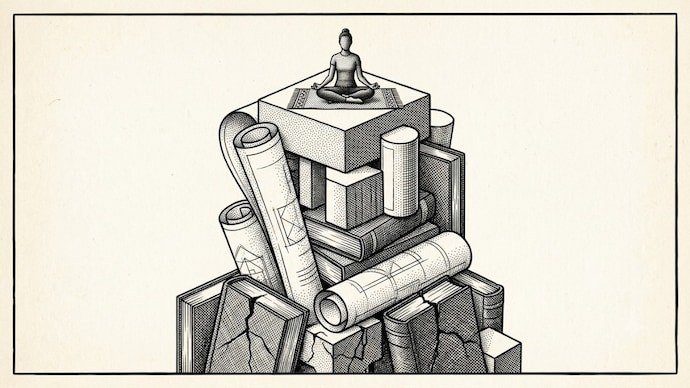
The question is not whether meditation, yoga or mindfulness can benefit students. They can. Wellness activities, peer support and spiritual practices may help young people manage stress, build resilience and develop healthier coping mechanisms. But the situation changes when a student develops severe depression, stops sleeping or eating, withdraws from others, stops attending classes or begins experiencing suicidal thoughts.
That distinction has gained renewed attention after IIT Kanpur's now-cancelled memorandum of understanding with ISKCON for voluntary wellness programmes. The proposed two-year collaboration covered areas such as self-management, personal development, stress management, self-esteem and wellness. The announcement was later withdrawn following criticism from students, alumni and others over the involvement of a religious organisation in student well-being at a premier science and technology institution.
The controversy, however, raises a broader question for campuses across India: can wellness programmes address a problem once ordinary academic stress has developed into a serious mental-health crisis?
Student deaths at premier institutions have repeatedly brought this issue into focus. IIT Kanpur had recorded eight student suicides over two years by January 2026. In August, students at IIT Delhi protested following the death of a 31-year-old MSc Physics student and called for greater accountability and changes in the handling of student welfare and mental-health concerns. The institute subsequently formed an external five-member inquiry committee. IIT Delhi had also reported another student death in March.
At IISc Bengaluru, two student deaths were reported within roughly 15 days in August, while IIT Bombay and IIT Kharagpur have also reported student deaths this year. On September 1, an IIT Mandi PhD student was found dead in rented accommodation near the campus after reportedly experiencing distress following the announcement of his PhD comprehensive test results.
Individual cases can have different circumstances, and investigations continue. They do not establish one common cause. But repeated deaths across premier campuses have intensified questions about whether existing systems are identifying and treating students in distress early enough.
The wider national figures add urgency to the discussion. India recorded 14,488 student suicides in 2024, compared with 13,892 in 2023 and 8,068 in 2014. Over the 2014-2024 period, about 55% of student suicide deaths involved those below 18, while around 42% involved people aged 18 to 30, an age group that includes a significant portion of India's college-going population.
Mental-health experts say one of the first problems is the tendency to treat mental wellness, mental health and mental illness as interchangeable concepts. Dr Divya Ganesh Nallur, Clinical Director and Psychiatrist at Amaha Mental Health Hospital in Bengaluru, says wellness interventions such as meditation, yoga and spirituality can contribute meaningfully to mental well-being, but they have limits.
Wellness programmes are designed to support and maintain good health, she explains. They are not a substitute for treatment once a mental illness develops. At that point, psychiatrists, clinical psychologists and trained counsellors become necessary parts of care for conditions including depression, anxiety and psychosis.
The distinction is similar to physical health. Exercise, nutritious food and healthy habits can support a person with a medical condition, but they do not automatically replace medical treatment. Mental-health care requires the same recognition of when supportive practices are no longer sufficient.
Identifying that point can be difficult because students experiencing serious distress may not openly ask for psychiatric help. According to Dr Nallur, changes in normal behaviour can be important warning signs. These can include disrupted sleep or appetite, weight loss, social withdrawal or suddenly stopping attendance in classes.
Any significant physical, psychological or social change in a student's behaviour should prompt institutions to consider whether an assessment or intervention is needed. This is particularly important because someone experiencing depression may not have the motivation or ability to seek help independently. People around them may have to notice the warning signs first.
That means a campus mental-health system cannot depend entirely on students voluntarily approaching a counselling centre. Institutions need mechanisms that allow faculty, hostel staff, peers and other members of the campus community to recognise distress and connect students with appropriate support.
Ankit Agrawal, Founder and Counsellor at Aatman, a mental-being initiative at VidyaGyan School in Sitapur, says students may initially show problems such as poor concentration, difficulty retaining information, emotional difficulties or disrupted sleep. When these concerns begin interfering with everyday functioning and overall well-being, psychological support and, where necessary, professional treatment from a psychologist or psychiatrist may be required.
But he also points to a larger issue: counselling cannot be viewed in isolation from the environment in which students live and study. IIT students face intense academic expectations, and emotional and social support are also essential.
If the academic environment and expectations remain unchanged, counselling alone may not be sufficient. Institutions therefore need to examine not only how students are coping but also whether the pressures placed on them are contributing to their distress.
Wellness practices still have a role. Dr Manmit Kumarr, Founder of the Academy of Tantra and a spiritual guru, says meditation, yoga, breathwork and spiritual practices can help young people develop emotional awareness, resilience and healthier responses to stress.
However, she also draws a clear boundary. A student dealing with severe depression, psychiatric illness or suicidal thoughts requires professional assessment and, when necessary, evidence-based psychological and psychiatric intervention. Spiritual practices and wellness initiatives should never be presented as replacements for clinical care.
The two approaches can work alongside each other, but the danger begins when supportive wellness measures are mistaken for treatment.
A strong IIT mental-health system therefore needs multiple layers of support. Wellness activities, social groups, clubs, peer networks, mindfulness and yoga can form part of preventive care. Alongside these, campuses need qualified psychologists, clinical psychologists and counsellors who are easily accessible for individual sessions.
Peer support can also help students, but peer supporters need professional supervision and backing. Serious cases require access to psychiatric services, either through on-campus professionals or reliable external arrangements. Counsellors and psychologists should have clear procedures for escalating cases that involve serious mental illness or suicidal risk.
Crisis intervention is particularly important. When a student expresses suicidal thoughts or faces an immediate safety concern, institutions need clear protocols that establish who responds, how the risk is assessed and how professional help is accessed without delay.
IIT Kanpur has said it has been strengthening its mental-health infrastructure. Its May 2026 publication stated that the institute had increased psychiatric availability to three psychiatrists, with four psychiatric outpatient departments each week. It had also added another empanelled psychiatric hospital, conducted sensitisation programmes for faculty and staff, and introduced regular hostel visits aimed at early identification and intervention.
The larger issue, therefore, is not simply whether IITs have mental-health or wellness programmes. The more important questions are whether students trust those systems, whether warning signs are identified early, whether professional support is readily available and whether institutions respond effectively when preventive measures are no longer enough.
Wellness can sometimes appear to be an attractive institutional solution because activities such as meditation sessions and yoga classes are comparatively easy to introduce and highly visible. But they cannot address every aspect of a mental-health crisis.
A meditation session cannot by itself treat severe depression, just as a yoga class cannot automatically resolve trauma. Telling a person in serious psychological distress to simply remain positive can also create additional guilt instead of addressing the underlying problem.
Campuses therefore need to examine deeper structural questions. Are students facing excessive academic pressure? Can they access qualified mental-health professionals without unnecessary barriers? Is there stigma attached to seeking help? Are changes in behaviour being recognised early? And are institutions equipped to respond when a student's situation becomes an emergency?
These questions go beyond the controversy surrounding the IIT Kanpur-ISKCON collaboration. Students can benefit from meditation, yoga, peer support and other wellness practices. But those measures should form one layer of a broader system rather than become a substitute for clinical care.
When a student is healthy, wellness programmes can help build resilience. When a student is struggling, counselling and psychological support can help. When serious mental illness is present, qualified mental-health professionals must become involved. When there is suicidal risk, the response must be immediate and clinically appropriate.
Academic performance cannot be the only measure of a student's well-being or success. On campuses defined by grades, rankings, research output and intense competition, recognising that principle requires more than a wellness session.
For institutions confronting repeated student deaths, the priority must be a comprehensive system that combines prevention, early identification, accessible professional care, crisis intervention and institutional accountability. Wellness can be part of that solution, but it cannot be the entire answer.