


- March 02, 2026
Budget 2026: How Resilient Logistics Is Powering India’s Long-Term Export Growth
Budget 2026 focuses on infrastructure, multimodal logistics and MSMEs to strengthen India’s export competitiveness sustainably.
- February 10, 2026
- in Business
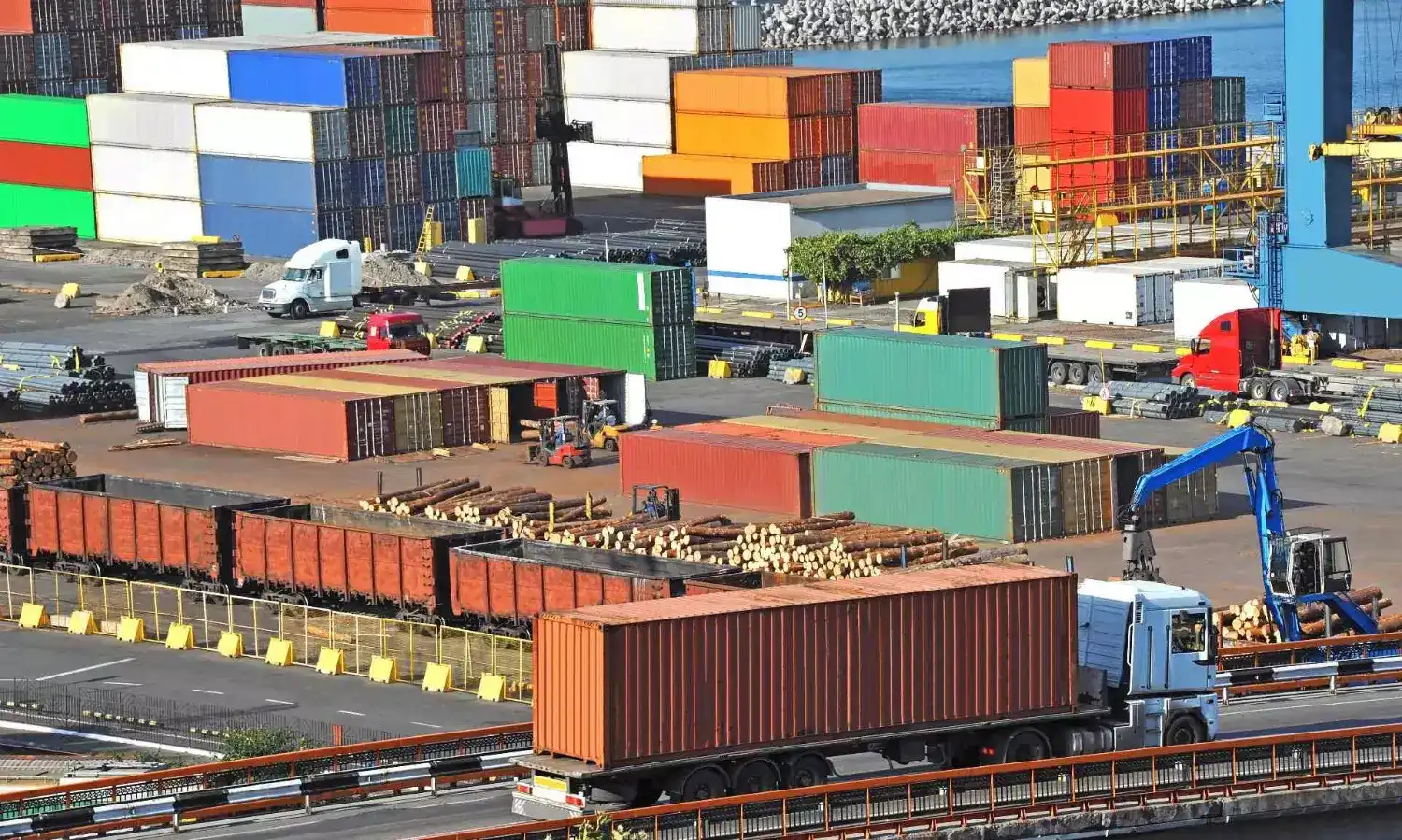
India’s Union Budget 2026 makes one thing unmistakably clear: export competitiveness will not be built through shortcuts or sudden policy shocks, but through patient, infrastructure-led strengthening of logistics and supply chains.
At a time when global trade is being reshaped by geopolitical tension, supply-chain fragmentation, and climate constraints, the Budget signals a deliberate choice — resilience over risk, continuity over disruption.
From the perspective of logistics, shipping, and supply-chain operators, this is not a headline-grabbing Budget. It is something arguably more valuable: a structurally enabling one.
A Conservative Budget With Strategic Intent
Finance Minister Nirmala Sitharaman, presenting her ninth Union Budget, resisted the temptation of sweeping reforms. Instead, Budget 2026 reinforces the economic base through layered interventions aligned with the government’s long-term Viksit Bharat 2047 vision.
In an era of slowing global growth, trade realignments, and fragile geopolitics, this measured stance reflects a recognition that logistics efficiency — not policy theatrics — ultimately determines export success.
Capital Expenditure: The Backbone of Export Readiness
The standout signal for logistics and trade comes from capital expenditure crossing ₹12 trillion, roughly 4.4% of GDP, the highest level in over a decade.
For logistics players, this sustained public investment delivers three critical advantages:
-
Long-term visibility for capacity planning
-
Predictability for network expansion
-
Confidence for private capital deployment
Infrastructure investment remains the government’s preferred growth lever — and logistics sits at the centre of that lever.
Multimodal Infrastructure: Reducing Cost, Time, and Volatility
Budget 2026 strengthens India’s shift toward multimodal logistics, a prerequisite for competing in global value chains.
Key interventions include:
-
New Dedicated Freight Corridors, including the proposed Dankuni–Surat corridor, designed to rebalance freight movement and decongest existing routes
-
Operationalisation of 20 national waterways over five years, offering cost-efficient, low-carbon freight alternatives
-
Seven high-speed rail corridors positioned as regional “growth connectors” rather than standalone passenger projects
Together, these moves aim to reduce India’s logistics cost — still estimated at 13–14% of GDP — closer to global benchmarks.
For exporters, this translates into lower transit variability, improved reliability, and better delivery predictability.
Inland Waterways and Coastal Shipping: A Quiet Structural Shift
One of the most consequential — yet understated — elements of the Budget is the renewed focus on inland waterways and coastal cargo.
The government has set an ambitious target: doubling the modal share of inland and coastal shipping from 6% to 12% over the next two decades.
Supporting measures include:
-
Development of ship repair hubs at Varanasi and Patna
-
Launch of a Coastal Cargo Promotion Scheme
-
Establishment of regional training institutes for waterways logistics
This shift is not merely about cost efficiency. It is also about sustainability, fuel savings, and long-term capacity creation in an era where carbon intensity increasingly affects trade access.
Champion MSMEs: Strengthening the Export Supply Base
Budget 2026’s push to create “Champion MSMEs” directly impacts logistics demand and export depth.
Key enablers include:
-
A ₹10,000 crore MSME growth fund
-
Liquidity support and sector-specific incentives for textiles, electronics, biopharma, and labour-intensive manufacturing
-
Formalisation of supply chains in Tier-2 and Tier-3 markets
Perhaps the most practical reform is the removal of the ₹10 lakh value cap per export consignment, unlocking global market access for small exporters, artisans, and cross-border ecommerce sellers.
For logistics providers, this widens the exporter base and diversifies shipment profiles beyond large industrial consignments.
Customs, Tariffs, and Trade Facilitation
The Budget also addresses friction points that have long undermined export efficiency:
-
Rationalisation of customs and excise duties
-
Simplified tariff structures
-
Correction of duty inversion issues
Equally important are technology-enabled solutions for handling rejected and returned consignments, an often-ignored pain point for MSMEs operating in international markets.
Reducing procedural uncertainty is as critical as building physical infrastructure — and Budget 2026 acknowledges this operational reality.
Aviation and Express Logistics: Supporting Time-Critical Trade
The exemption of customs duty on aviation parts, components, and manufacturing inputs is a targeted move with outsized impact on express logistics.
Aircraft availability and uptime directly influence:
-
Time-definite exports
-
E-commerce cross-border flows
-
High-value and perishable shipments
For integrated logistics providers, this improves reliability and strengthens India’s position in fast-moving global trade segments.
Skill Development: Preparing for the Next Logistics Cycle
Infrastructure alone does not move goods — people do.
Budget 2026’s proposal to establish Regional Centres of Excellence for logistics and waterways skill development reflects a long-term understanding of workforce needs.
By linking skill development to inland shipping, coastal cargo, and multimodal logistics, the government is addressing a bottleneck that could otherwise stall future capacity utilisation.
The Bigger Picture: Logistics as Export Strategy
Taken together, Budget 2026 does not attempt to manufacture export competitiveness overnight. Instead, it focuses on:
-
Infrastructure depth
-
Modal diversification
-
MSME integration
-
Process simplification
-
Workforce readiness
This is how durable export growth is built — not through incentives alone, but through systems that reduce cost, risk, and uncertainty.
For logistics providers, the message is clear: the next phase of growth will reward those who scale responsibly, integrate technology, and align with India’s evolving trade architecture.
Conclusion
Budget 2026 may lack dramatic announcements, but its logistics-centric design lays a strong foundation for India’s export ambitions.
By reinforcing infrastructure momentum, empowering MSMEs, simplifying trade processes, and aligning sustainability with scale, the Budget positions logistics not as a support function — but as a strategic pillar of India’s long-term economic growth.
This is slow policy. But it is strong policy.
you may also like
- March 02, 2026
Middle East Tensions: Impact on India Trade & Oil

- March 02, 2026
Intel CEO Warns of Huawei’s Chip Talent Push

- February 28, 2026
Amazon to Invest $50B in OpenAI, Expands AWS Tie-Up
- February 28, 2026