


- March 03, 2026
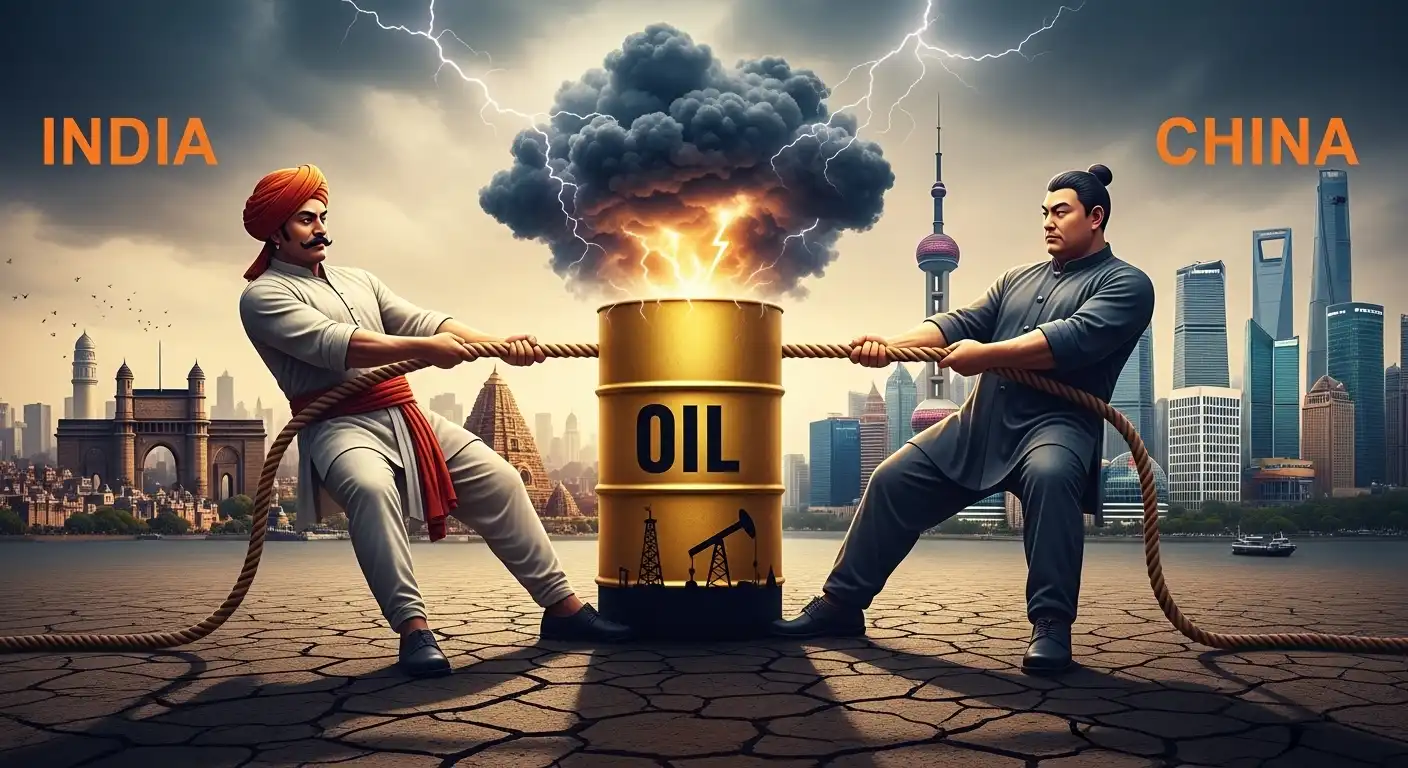
India vs China: Who Faces Bigger Oil Risk?
Middle East tensions raise crude supply concerns. Analysts say India may be more vulnerable than China due to lower oil reserves.
- March 03, 2026
- in Business
Rising tensions in West Asia following military strikes involving the United States, Israel, and Iran have renewed fears of prolonged disruptions in global oil supplies.
With the Strait of Hormuz emerging as a critical flashpoint, analysts say India could be more exposed than China if the crisis drags on.
Why the Strait Matters
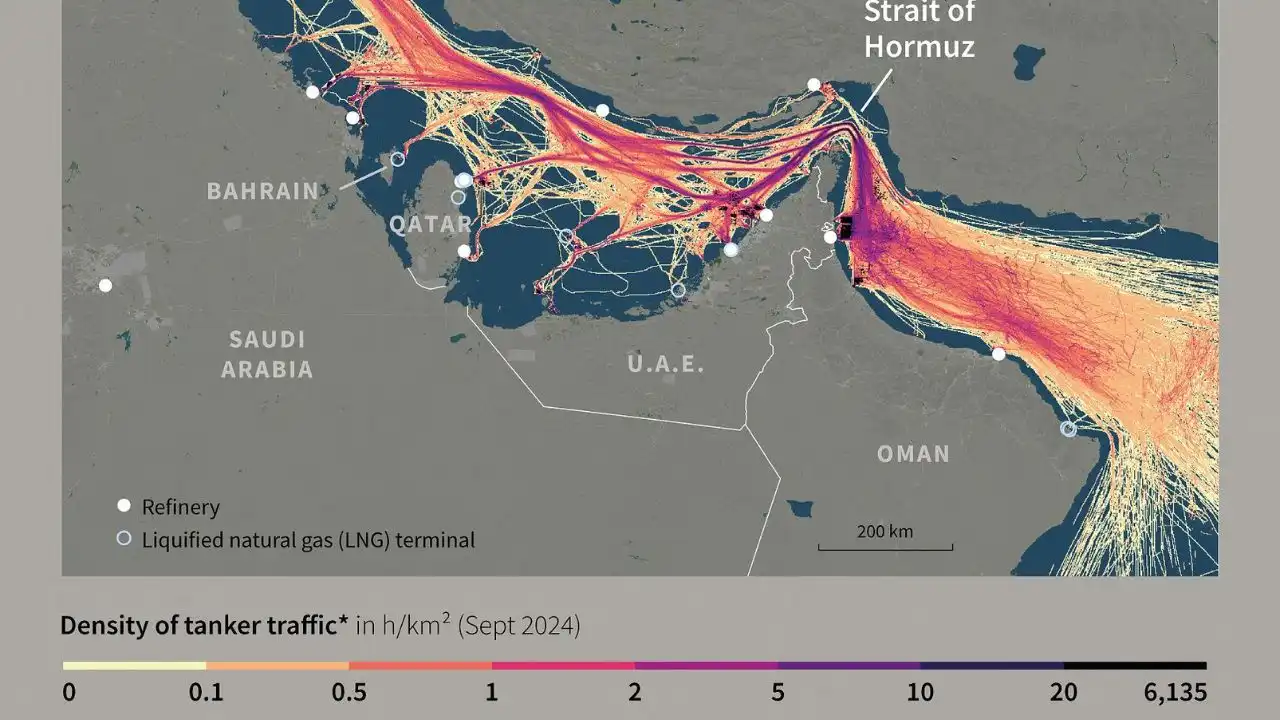
The Strait of Hormuz handles roughly one-fifth of global oil shipments. Any sustained disruption in this narrow maritime corridor can significantly impact energy-importing economies, particularly in Asia.
Nearly 90% of Middle Eastern oil exports are shipped to Asian countries. India and China are among the largest buyers.
India’s Exposure
India imports about 55% of its crude oil from the Middle East. Around half of these supplies pass through the Strait of Hormuz.
As of January, India was importing approximately 2.74 million barrels per day from the region. The share has risen in recent months after Indian refiners reduced purchases of Russian crude.
India’s oil minister Hardeep Singh Puri recently stated that the country has sufficient crude and fuel stocks to meet demand for around 74 days.
However, analysts note that India’s strategic reserves are significantly smaller compared to China’s.
China’s Buffer Advantage
China is believed to have crude oil reserves that can cover at least six months of consumption, according to industry analysts cited in international reports.
This larger buffer gives China greater flexibility in the event of prolonged supply disruptions or price spikes.
In comparison, India’s relatively limited storage capacity makes it more vulnerable to sudden shocks.
Wider Asian Context
Japan and South Korea are even more dependent on Middle Eastern oil, sourcing roughly 95% and 70% of their crude from the region, respectively. However, both maintain larger stockpiles than India.
Japan reportedly holds oil reserves sufficient for over 250 days, while South Korea’s reserves cover more than 200 days.
Global Ripple Effects
Even countries that do not directly rely heavily on Middle Eastern crude could feel the impact through higher global oil prices.
If the Strait of Hormuz remains disrupted for an extended period, analysts warn that countries worldwide may compete for limited supplies, pushing prices higher.
Higher crude prices can fuel inflation, widen trade deficits, and strain fiscal balances in import-dependent economies.
What Lies Ahead?
India’s government has stated that it will take necessary measures to ensure fuel availability and manage prices.
In case of prolonged disruption, India may need to diversify sourcing further, potentially increasing imports from alternative suppliers.
While both India and China face risks from an extended Middle East conflict, experts suggest that India’s comparatively thinner reserve cushion makes it more sensitive to immediate supply shocks.
The trajectory of the conflict and the status of the Strait of Hormuz will remain key factors shaping energy markets in the coming weeks.
you may also like

- March 03, 2026
Gold vs Silver ETFs: What Should Investors Do?
- March 02, 2026
West Asia Crisis May Raise India’s Trade Costs
- March 02, 2026
Middle East Tensions: Impact on India Trade & Oil

- March 02, 2026