


- March 09, 2026
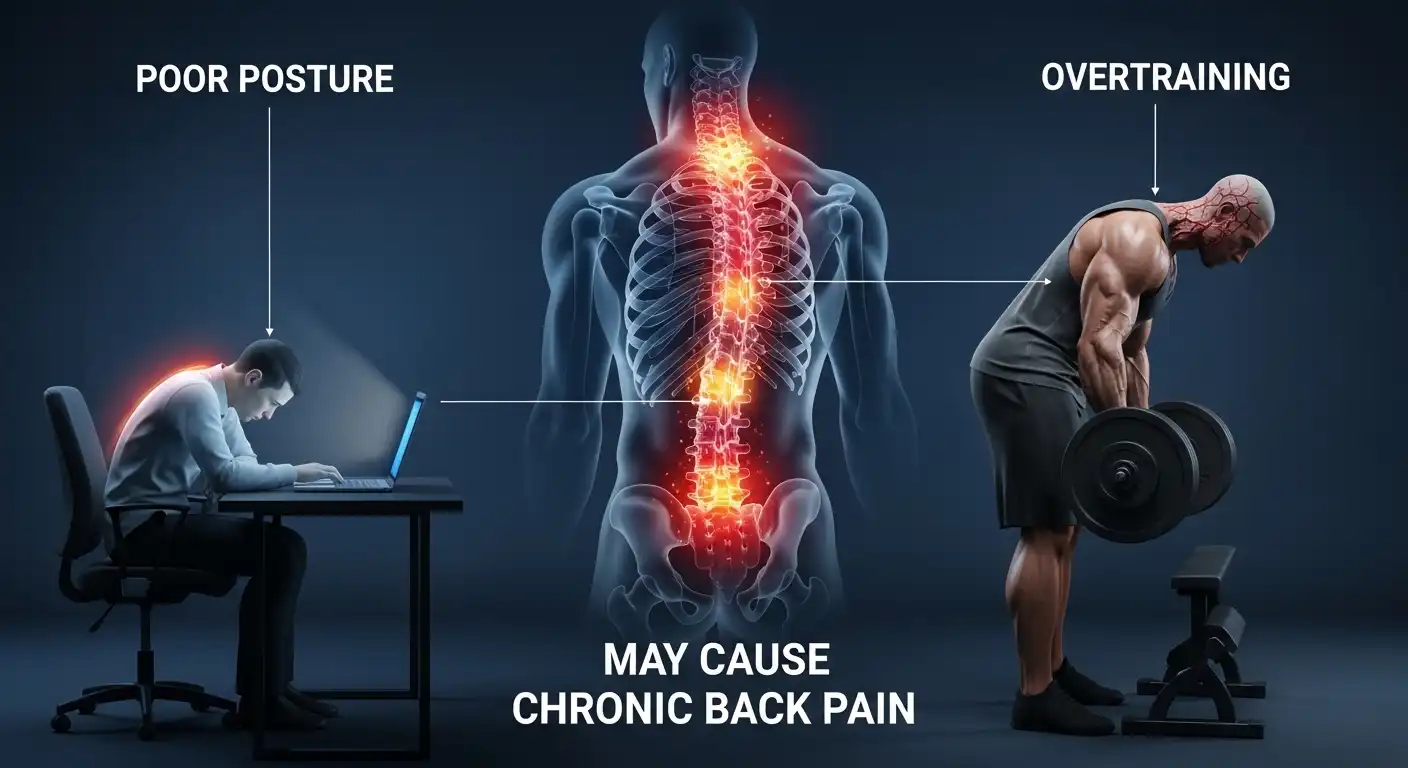
Poor Posture, Overtraining May Cause Chronic Back Pain
Spine surgeon Dr Nikhil Jain explains how poor posture and excessive gym training can damage spinal discs and lead to chronic back pain.
- March 08, 2026
- in Lifestyle
Advertisement

Back pain is increasingly affecting young and physically active individuals, even those who regularly exercise. According to Dr Nikhil Jain, poor posture combined with excessive or improper training can contribute to long-term spinal problems.
The doctor explained that lifestyle habits such as sitting for long hours with a hunched posture and lifting heavy weights without proper technique can gradually strain the spine.
How Posture and Exercise Affect the Spine
Dr Jain noted that spinal discs, which act as cushions between the bones of the spine, can become damaged over time due to constant pressure.
He explained that sitting in a bent position for extended periods, followed by heavy gym workouts with tired muscles or incorrect form, may lead to disc problems. In some cases, this can cause bulging discs and persistent back pain.
According to the specialist, rest alone may not always resolve these issues if the underlying pressure on the spine continues.
Early Warning Signs
Spinal problems often begin with subtle symptoms that people may ignore. Dr Jain highlighted several warning signs that may indicate a developing spinal issue.
One common sign is tingling or numbness in the arms or legs, which can occur if a nerve becomes compressed. Another warning symptom is sharp, localised pain during movements such as bending or twisting.
He also said that weakness in the hands or feet, or difficulty controlling movements, may signal nerve involvement. Additionally, if pain worsens while sitting compared with moving around, it could indicate increased pressure on spinal discs.
Treatment Options
Treatment usually begins with methods that reduce strain on the spine and support natural healing.
Dr Jain said that physical therapy is often recommended to strengthen the muscles that support the spine. These deep muscles help stabilise the back and reduce pressure on spinal discs.
For patients with more severe disc damage pressing on nerves, a minor surgical procedure known as microdiscectomy may be considered. The procedure removes a small part of the affected disc through a small incision and generally involves a shorter recovery period.
In many cases, doctors may also recommend specific stretching exercises and anti-inflammatory treatment to help the disc settle naturally.
Advice for Gym Enthusiasts
Dr Jain emphasised that maintaining good posture throughout the day is just as important as exercising correctly.
He advised people who sit for long hours to take regular breaks to stand and stretch, which can reduce pressure on the spine.
In the gym, he recommended prioritising correct lifting technique and manageable weights rather than attempting heavier lifts that could increase injury risk.
According to the specialist, paying attention to early signs of pain and maintaining proper posture can help people stay active while protecting long-term spinal health.
Note: This article is for informational purposes only and should not replace professional medical advice.
Advertisement
you may also like


- March 09, 2026
ENT doctor shares 60/60 rule for safe earphone use

- March 09, 2026
Why feet swell during pregnancy, doctor explains

- March 09, 2026
Ghee myths explained: Doctor on safe daily intake

- March 08, 2026