


- March 01, 2026
Why ISRO’s Next Big Test Is Scaling Success on an Industrial Level
After landmark missions, ISRO’s biggest challenge is achieving consistent, industrial-scale execution across launches, governance and manufacturing.
- January 06, 2026
- in Education
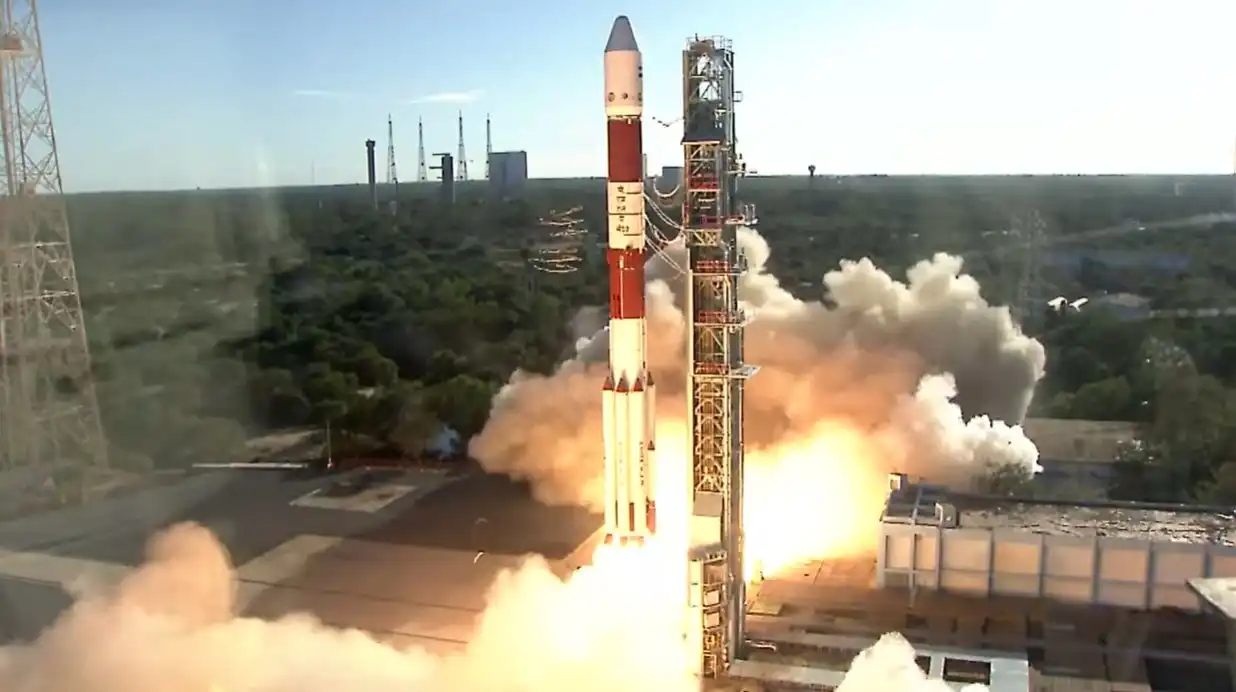
After a decade marked by landmark missions and technological milestones, the Indian Space Research Organisation is entering a decisive phase where sustained, industrial-scale performance may matter more than individual breakthroughs.
ISRO’s recent record is among the most diverse globally for a space agency operating within modest budgets. Its Polar Satellite Launch Vehicle has delivered reliable access to orbit for years, while newer missions have expanded India’s scientific and strategic footprint in space.
The successful soft landing of Chandrayaan-3 in August 2023 placed India among a select group of nations with proven lunar-landing capability. This was followed by the insertion of Aditya-L1 into a halo orbit around the Sun–Earth L1 point in early 2024, and the launch of the NISAR mission in 2025 — a major international collaboration for climate and hazard monitoring.
The Cost of Consistent Success
Such sustained achievements, however, raise expectations. Success at scale changes what comes next. With missions like Gaganyaan, Chandrayaan-4, and the Next Generation Launch Vehicle in development, ISRO now faces structural challenges that go beyond engineering.
One major constraint is execution bandwidth. Preparing human spaceflight, advanced science missions, satellite replenishment and a new heavy-lift rocket in parallel has exposed bottlenecks in launch cadence, testing infrastructure and project timelines. A low number of launches in 2025 underscored how delays in one mission can cascade across programmes. Experts note that ISRO still acts as designer, integrator and operational bottleneck simultaneously — a model that limits scalability. Addressing this will require greater industrial participation, expanded testing capacity, stronger supply chains for avionics and structures, and internal prioritisation frameworks that prevent unrelated missions from stalling when setbacks occur.
Governance in a Liberalised Space Sector
Another challenge lies in governance. Since India opened its space sector in 2020, new institutions such as IN-SPACe and New Space India Limited were created to separate regulation, promotion and commercialisation from ISRO’s research role.
However, the absence of a comprehensive national space law continues to blur responsibilities. Without clear statutory authority on licensing, liability, insurance and dispute resolution, ISRO risks being pulled into regulatory and commercial issues by default, rather than focusing on frontier technologies.
A national space law would not only support private startups but also protect ISRO from ad hoc demands, ensuring institutional continuity beyond political cycles.
From Missions to Manufacturing
ISRO’s competitiveness is increasingly tied to ecosystem maturity. Globally, the space sector is moving toward frequent launches, partial reusability and rapid satellite production. India’s future ambitions — including lifting up to 30 tonnes to low Earth orbit and reusable first stages — demand deeper manufacturing capability, advanced qualification facilities and significantly more capital.
While investment in India’s space sector dipped in 2024, initiatives like technology adoption funds aim to bridge the gap between prototypes and scalable products. Still, long-term success will depend on aligning engineering ambition with industrial depth and financial resilience. ISRO’s legacy has earned it public trust and political capital. The next phase will test whether the Indian space programme can move from delivering extraordinary missions to operating as a robust industrial system — where launches, innovation and governance function smoothly, routinely and at scale.
you may also like


- February 27, 2026
MR Round Table 2026 Focuses on Academic Excellence
- February 27, 2026
IIM Indore Launches AI Programme for Professionals

- February 26, 2026
Why IPAG’s DBA Is Emerging as a Strategic Leadership Degree

- February 24, 2026