


- March 01, 2026
Why ‘Indian Accent’ Questions Still Haunt Northeast Students on Campuses Across India
Northeast students across Indian campuses speak out on accent bias, racial microaggressions, and everyday discrimination in higher education.
- January 06, 2026
- in Education
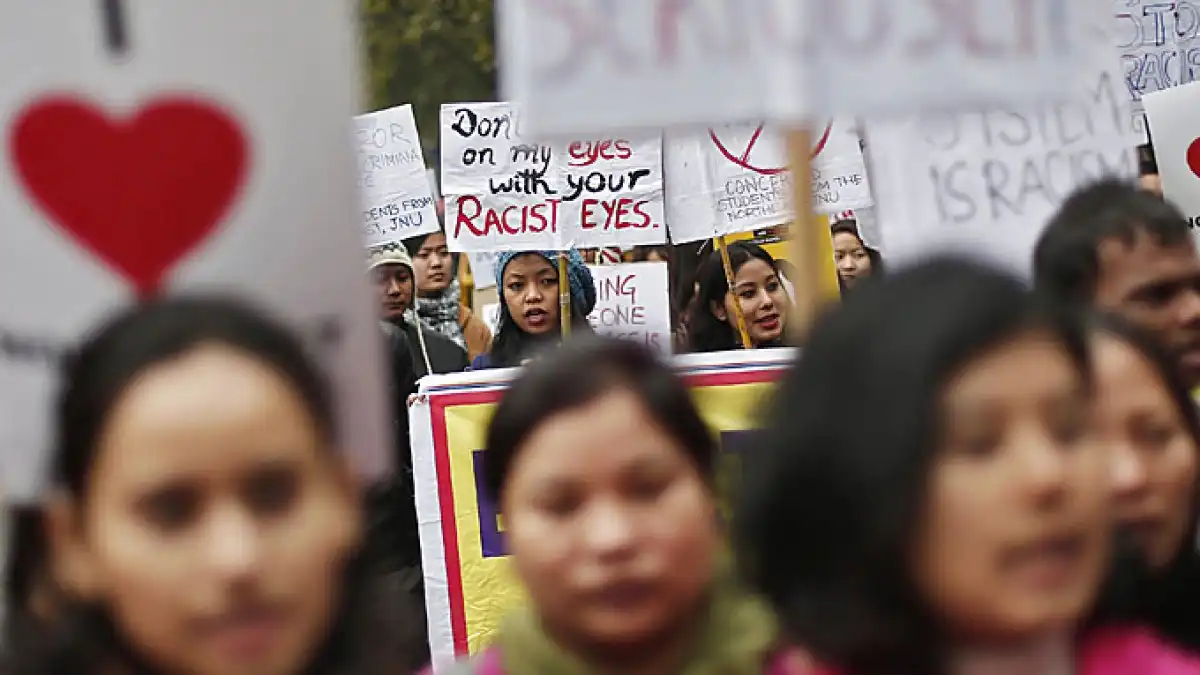
In the wake of the death of Anjel Chakma, students from India’s Northeastern states studying across the country have once again highlighted the persistent, everyday discrimination they face on university campuses. From intrusive questions about accents to being mistaken for foreigners, these experiences, though often dismissed as harmless jokes, continue to shape their academic and social lives.
Many students from the Northeast describe a constant sense of vigilance in spaces meant to feel safe and ordinary—college campuses, hostels, rental homes, and public transport. Remarks such as “Why don’t you speak in an Indian accent?” or assumptions about nationality based solely on appearance are reported as common occurrences. While such interactions rarely escalate into physical violence, their cumulative impact fosters insecurity and isolation.
Students recount being labelled as “outsiders” due to facial features, language, or cultural practices. Casual slurs, often normalised as humour, contribute to an environment where silence becomes a coping mechanism. Several students admit choosing not to confront such remarks for fear of social exclusion, instead restricting their interactions to familiar circles that offer emotional safety.
Academic institutions in metropolitan cities are often perceived as more inclusive, yet subtle forms of racial bias continue to surface. Some campuses may witness fewer overt incidents, but everyday microaggressions—being ignored in shops, questioned about one’s origin, or stereotyped in social conversations—remain widespread. These experiences reinforce the feeling that students from the Northeast are still viewed through a lens of difference rather than belonging.
A recurring concern raised by students is the lack of awareness about Northeastern states among peers, including highly educated scholars. Misconceptions about geography, culture, and language reflect a broader gap in mainstream understanding. For many, these interactions reveal how deeply ingrained assumptions define who is considered “Indian” and whose identity is treated as the norm.
Despite institutional guidelines on inclusivity and sensitivity, students argue that attention to Northeastern issues often emerges only after extreme incidents. Everyday discrimination, they say, rarely triggers sustained dialogue or action. While moments of solidarity do surface following major events, long-term engagement with concerns from the region remains limited. As conversations around diversity and inclusion gain momentum, students from the Northeast continue to call for recognition of everyday bias—not just headline-grabbing violence. They stress that meaningful change begins with acknowledging microaggressions as part of a larger pattern that affects mental well-being, academic confidence, and a sense of belonging within India’s higher education spaces.
you may also like

- February 27, 2026
MR Round Table 2026 Focuses on Academic Excellence
- February 27, 2026
IIM Indore Launches AI Programme for Professionals
- February 26, 2026
Why IPAG’s DBA Is Emerging as a Strategic Leadership Degree
- February 24, 2026