Climate Change Is Disrupting How India Produces Salt
Erratic rainfall, extreme weather and changing monsoon patterns are disrupting India’s solar salt production, particularly in Gujarat.
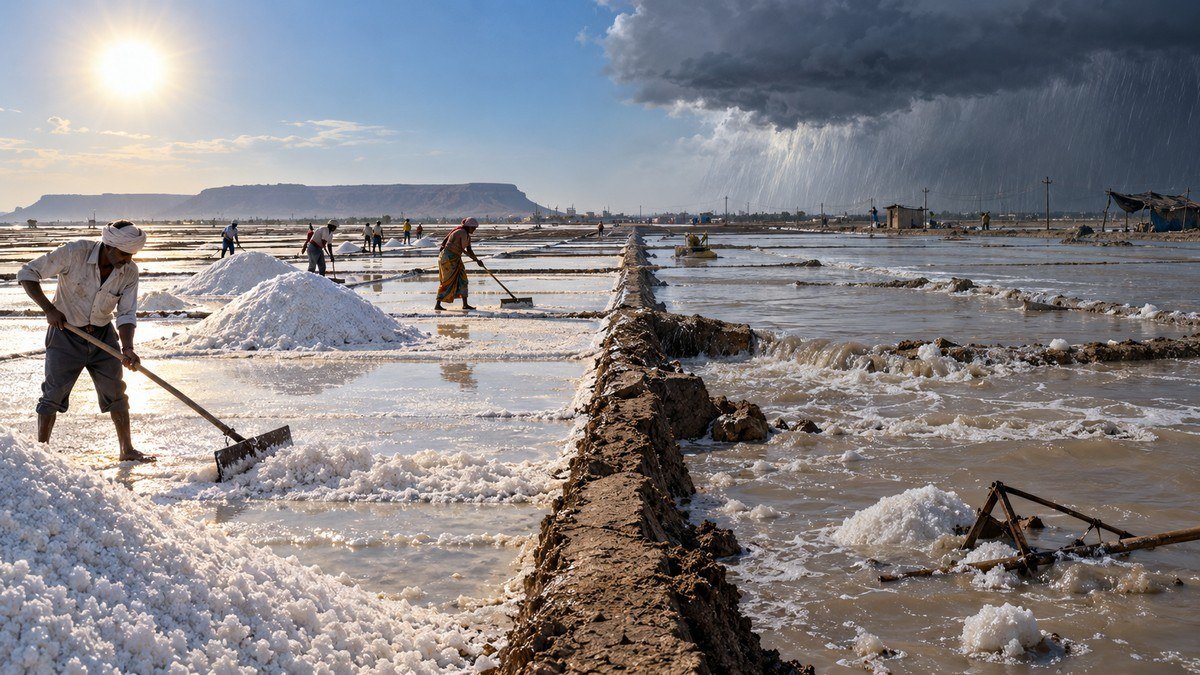
Salt production in India largely depends on a natural process powered by sunlight. Saline groundwater or seawater is pumped into shallow ponds, where evaporation gradually concentrates the brine until sodium chloride crystallises and can be harvested. However, this process requires extended dry weather, adequate sunlight and limited rainfall, conditions that are becoming harder to predict as climate patterns change.
India is the world’s third-largest salt producer, producing around 30.7 million tonnes annually. Gujarat contributes as much as 85% of the country’s salt output, making disruptions in the state particularly significant for the industry.
Erratic and prolonged rainfall can dilute concentrated brine, interrupt evaporation and wash away salt crystals that have already formed. In Gujarat’s Little Rann of Kutch, changing rainfall patterns and extreme weather have been linked to production challenges. Delayed monsoons or persistent downpours can also postpone the start of the salt-making season, forcing producers to build mud embankments to keep freshwater out of their pans.
Rising temperatures alone do not necessarily benefit salt production. While heat can accelerate evaporation, climate change is also altering rainfall patterns and increasing the risk of intense storms and cyclones, particularly along Gujarat’s coast.
Researchers are working on technologies designed to improve evaporation and increase salt yields during unfavourable weather. However, whether these solutions can be deployed on a large scale remains uncertain. As climate change makes weather increasingly unpredictable, even a basic kitchen ingredient is becoming more vulnerable to environmental disruption.