Why Do Power Banks Catch Fire on Flights? The Science Behind Lithium-Ion Battery Risks
An IndiGo flight from Delhi to Chennai was diverted to Hyderabad after smoke was detected from a passenger’s electronic device. The incident has renewed concerns about lithium-ion battery fires and the safety rules governing power banks on aircraft.
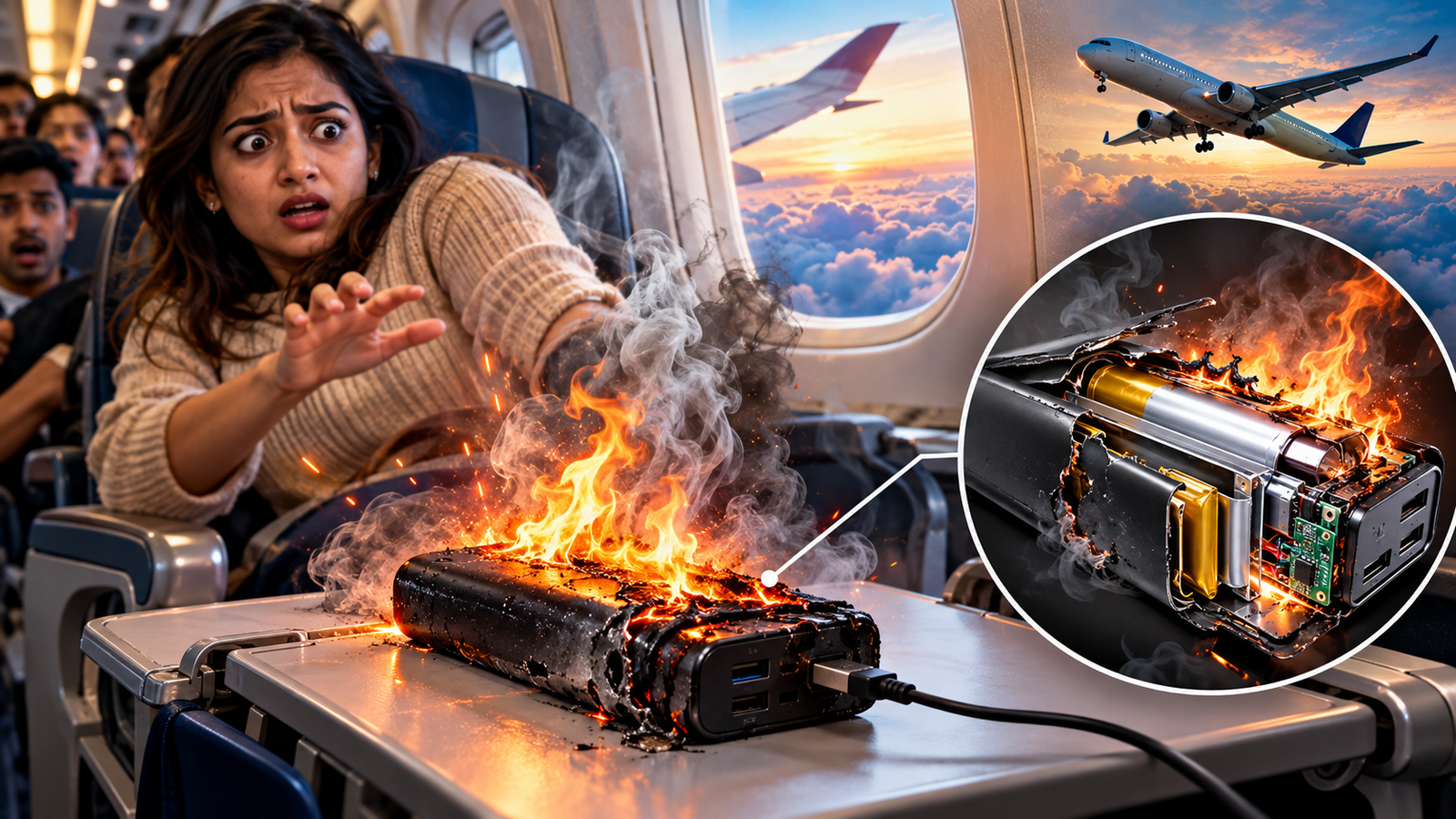
An IndiGo flight from Delhi to Chennai was diverted to Hyderabad on October 11 after smoke was detected from a passenger’s electronic device. The incident highlighted the risks posed by lithium-ion batteries during air travel.
Most power banks use lithium-ion or lithium-polymer cells to store energy. These batteries are generally safe, but internal defects, physical damage, overcharging or short circuits can cause overheating.
A major risk is thermal runaway, a chain reaction in which rising temperatures accelerate chemical processes inside a battery. The cell can release flammable gases, produce smoke and catch fire. Heat may also spread to neighbouring cells, making the incident harder to control.
Manufacturing flaws, damaged internal separators and poor-quality materials can trigger such failures, sometimes without obvious warning signs.
Why are power banks restricted in checked baggage?
A battery fire in an aircraft’s cargo hold may take longer to detect and address. Carrying spare power banks in the cabin allows crew members to respond more quickly if smoke or overheating occurs. Passengers should follow their airline’s rules on battery capacity and carriage.
Cabin altitude is not the primary cause of battery fires. Although aircraft cabins operate at lower pressure than sea level, battery defects, damage and overheating remain the main concerns.
How can passengers reduce the risk?
Carry power banks in cabin baggage, as required by applicable rules.
Protect batteries from crushing, punctures and other damage.
Avoid using swollen, damaged or unusually hot power banks.
Follow airline restrictions on battery capacity and use.
A compact power bank can become a serious aviation hazard if its battery fails. Proper handling and compliance with airline safety rules help reduce the risk.