


- March 02, 2026
Budget 2026 Focused on Capex, Not Populism: PM
PM Modi says Budget 2026-27 avoids populism, boosts capital expenditure to ₹12.2 lakh crore for infrastructure, jobs and long-term growth.
- February 16, 2026
- in Business
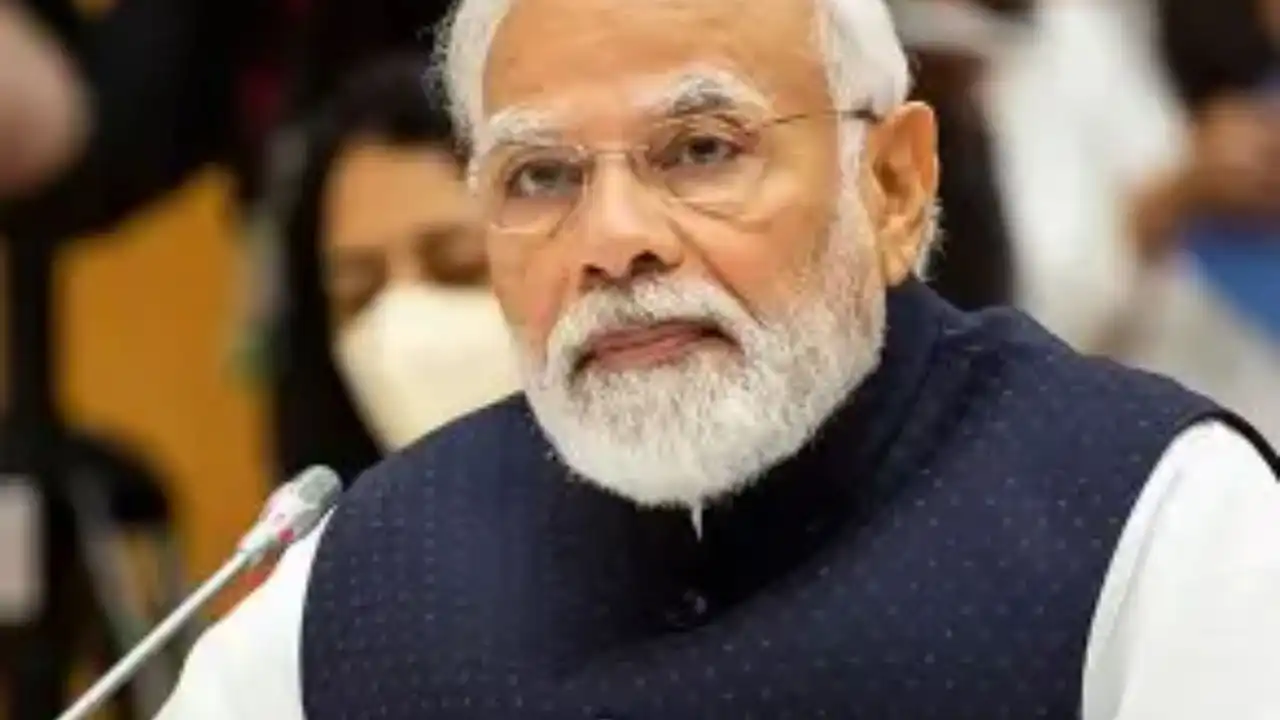
Prime Minister Narendra Modi has said that the Union Budget 2026-27 avoided short-term populist measures and instead focused on higher capital expenditure to drive long-term economic growth.
In an interview with news agency PTI, the Prime Minister described productive spending as a defining feature of his government’s approach. He said the latest Budget reflects a strategy aimed at strengthening infrastructure, creating jobs and preparing India for future opportunities.
According to him, the Budget marks the “next level” in India’s reform journey. He stated that the government has worked to address structural gaps, push reforms and lay the foundation for a developed India.
The Budget for the financial year beginning April 1 has allocated ₹12.2 lakh crore towards capital expenditure. This represents a significant increase compared to levels seen a decade ago. The government’s focus remains on infrastructure development, logistics expansion and investment in emerging sectors.
PM Modi said high capital outlay is central to ensuring long-term growth. He emphasised that the government has chosen to invest in assets that generate productivity and employment, rather than adopting short-term populist policies.
The Budget outlines spending on railways, roads, digital infrastructure and energy projects. It also includes measures aimed at easing compliance norms and improving credit flow to support businesses and job creation.
Citing the pre-Budget Economic Survey, the Prime Minister said that capital accumulation, labour formalisation and digital public infrastructure have helped raise India’s potential growth rate to around 7 percent.
On infrastructure, PM Modi highlighted progress over the past decade. He said the number of airports has doubled and that several cities now have metro rail services. Rural roads and internet connectivity have also expanded significantly.
The Budget has earmarked nearly ₹3 lakh crore for Indian Railways. The allocation focuses on high-speed connectivity, freight capacity and passenger safety. Plans include new high-speed rail corridors and expansion of dedicated freight corridors to reduce logistics costs.
Allocations for national highways have also increased sharply compared to a decade ago, according to official figures cited in the interview.
Beyond infrastructure, the Budget proposes investments in emerging areas such as biopharma, semiconductors, electronics manufacturing, rare earth corridors and chemical parks. The Prime Minister said these sectors could generate new employment opportunities and strengthen India’s position in global supply chains.
He also underlined governance reforms as a key feature of the Budget. According to him, the government is reducing paperwork, decriminalising certain offences and simplifying compliance processes. He described this as a shift towards trust-based governance, where the state acts as an enabler.
PM Modi linked the Budget to his broader vision of “Viksit Bharat” by 2047. He said the decisions being taken today are intended to shape India’s long-term development path.
He added that India is operating in a changing global environment, with growing interest from other countries in partnerships related to trade, innovation and supply chains. He highlighted the country’s young population and focus on maintaining macroeconomic stability.
Framing the Budget in historical terms, the Prime Minister said it should not be seen as just an annual financial exercise. Instead, he described it as part of a longer journey toward economic transformation in the coming decades.
The government is expected to begin implementing the Budget proposals from April 1, as Parliament continues discussions on fiscal priorities and sectoral allocations.
you may also like


- March 02, 2026
Middle East Tensions: Impact on India Trade & Oil
- March 02, 2026
Intel CEO Warns of Huawei’s Chip Talent Push

- February 28, 2026
Amazon to Invest $50B in OpenAI, Expands AWS Tie-Up
- February 28, 2026