


- March 02, 2026
Economic Survey 2025–26 Pushes Urea Price Reform, Warns of Soil Damage and Farm Income Stress
Economic Survey 2025–26 seeks a modest urea price hike with direct cash transfer to farmers to curb misuse and protect incomes.
- January 29, 2026
- in Business
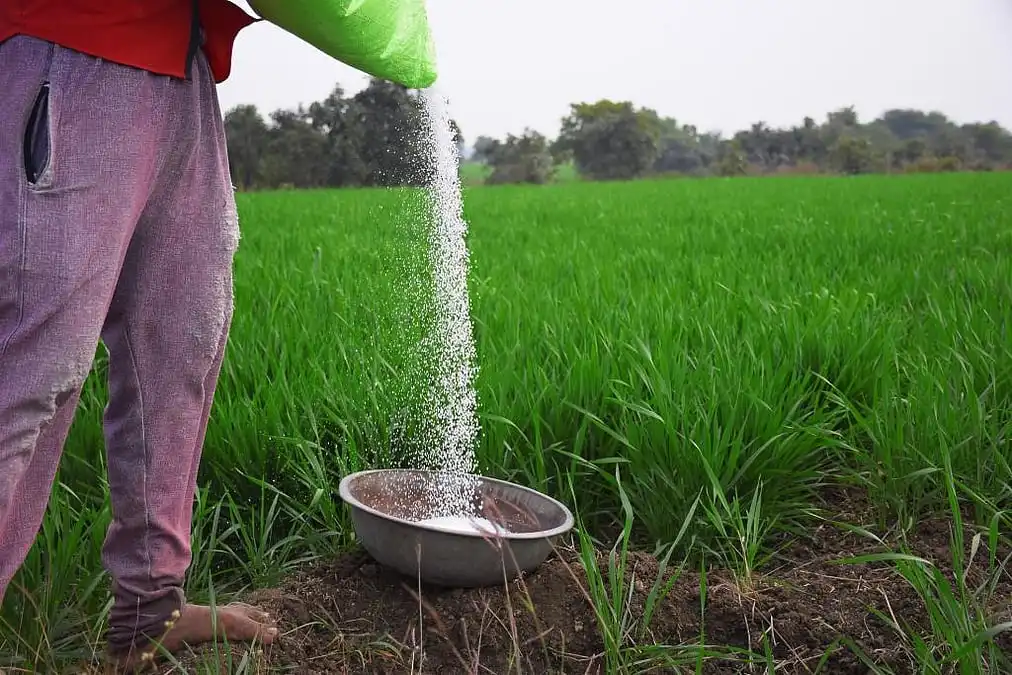
The Economic Survey of India 2025–26, tabled in Parliament ahead of Budget 2026, has proposed a carefully calibrated increase in the retail price of urea, paired with a direct cash transfer to farmers, in an attempt to correct decades-old distortions in fertiliser use while safeguarding farm incomes.
The Survey makes it clear that the objective is behavioural correction, not withdrawal of support. Farmers would continue to receive the same effective benefit, but the pricing signal would change to discourage excessive nitrogen use that has damaged soil health across large parts of the country.
Why urea is at the centre of the problem
Urea has remained the cheapest fertiliser in India for more than a decade, while prices of phosphatic and potassic fertilisers have risen. This price imbalance has structurally encouraged farmers to overuse nitrogen, leading to:
-
Severe nutrient imbalance in soils
-
Declining long-term productivity
-
Higher environmental stress
-
Rising fiscal burden on the government
The Survey notes that as long as one nutrient remains artificially cheaper than others, overuse becomes embedded, regardless of monitoring or enforcement.
The proposed solution: price hike + cash transfer
Instead of removing subsidies, the Survey suggests separating income support from fertiliser purchase. Under the proposed model:
Retail urea prices would see a modest increase
-
Farmers would receive an equivalent direct benefit transfer (DBT) into their bank accounts on a per-acre basis
-
Overall purchasing power of farmers would remain unchanged
-
Nutrient prices would better reflect agronomic scarcity
“This changes behaviour in a predictable way,” the Survey notes, arguing that farmers would be nudged towards balanced fertilisation rather than excessive nitrogen use.
Winners, incentives and behavioural shift
According to the Survey:
-
Efficient fertiliser users would gain, as they would receive the full cash transfer while spending less on inputs
-
Over-users would face a clear economic incentive to reduce excess application
-
Adoption of soil testing, nano-urea, liquid fertilisers and organic inputs would increase
This, the Survey argues, would restore soil health while improving productivity over time.
Digital agriculture makes reform possible
A key reason this reform is considered feasible now is India’s expanding digital agriculture infrastructure. With land records, farmer databases and bank linkages improving, targeted transfers can be implemented with minimal leakage.On concerns regarding tenant farmers, the Survey acknowledges the challenge but suggests that rental markets would adjust over time. It also proposes pilot rollouts in tenancy-heavy districts before scaling up nationwide.
Subsidy burden at unsustainable levels
The Survey flags that India’s fertiliser subsidy has ballooned sharply because urea prices have not been revised for years.
-
Fertiliser subsidy is projected to exceed ₹1.91 trillion in FY26
-
This is significantly higher than the Budget estimate of ₹1.67 trillion
-
Urea consumption is expected to hit a record 40 million tonnes, driven by excess demand
The Survey warns that without reform, both fiscal sustainability and soil health will continue to deteriorate.
Agriculture growth: steady but structurally constrained
While agriculture and allied services are estimated to grow 3.1 per cent in FY26, this remains below the long-term average of 4.5 per cent.
The Survey highlights deep-rooted challenges affecting farm incomes and productivity:
-
Fragmented landholdings
-
Weak marketing and storage infrastructure
-
Limited access to quality inputs
-
Low private investment
-
Uneven extension services
Crop-sector growth, which contributes more than half of agricultural GVA, remains volatile, indicating limited productivity gains.
Allied sectors offer stability
In contrast, livestock and fisheries have shown relatively stable growth of 5–6 per cent, gradually increasing their share in agricultural GVA. As a result, overall agricultural growth increasingly reflects a mix of volatile crop output and steady allied-sector expansion.
Terms of trade and rural demand
The Survey notes that agriculture has enjoyed favourable terms of trade in recent years, with agricultural prices rising faster than those in industry and services.
However, it cautions that declining relative prices for manufacturing could compress margins and deter investment if the trend continues—underscoring the need for integrated farm-to-fork policies that reduce inefficiencies across supply chains.
Technology-led PDS reforms
The Survey also highlights technology-driven reforms in the Public Distribution System (PDS), particularly Route Optimisation in the PDS (RO-PDS).
Using optimisation algorithms developed by IIT Delhi in collaboration with the UN World Food Programme, the initiative has:
Optimised routes between warehouses and fair-price shops
-
Reduced transport costs
-
Improved delivery efficiency
-
Generated estimated annual savings of ₹250 crore across 31 states and UTs
you may also like

- March 02, 2026
Middle East Tensions: Impact on India Trade & Oil

- March 02, 2026
Intel CEO Warns of Huawei’s Chip Talent Push

- February 28, 2026
Amazon to Invest $50B in OpenAI, Expands AWS Tie-Up
- February 28, 2026