


- March 03, 2026
Epstein Fallout Rocks UK Politics: Could Shabana Mahmood Replace Keir Starmer as PM?
Epstein revelations reignite pressure on Keir Starmer, fuelling speculation over Shabana Mahmood becoming the UK’s first Muslim PM.
- February 09, 2026
- in International
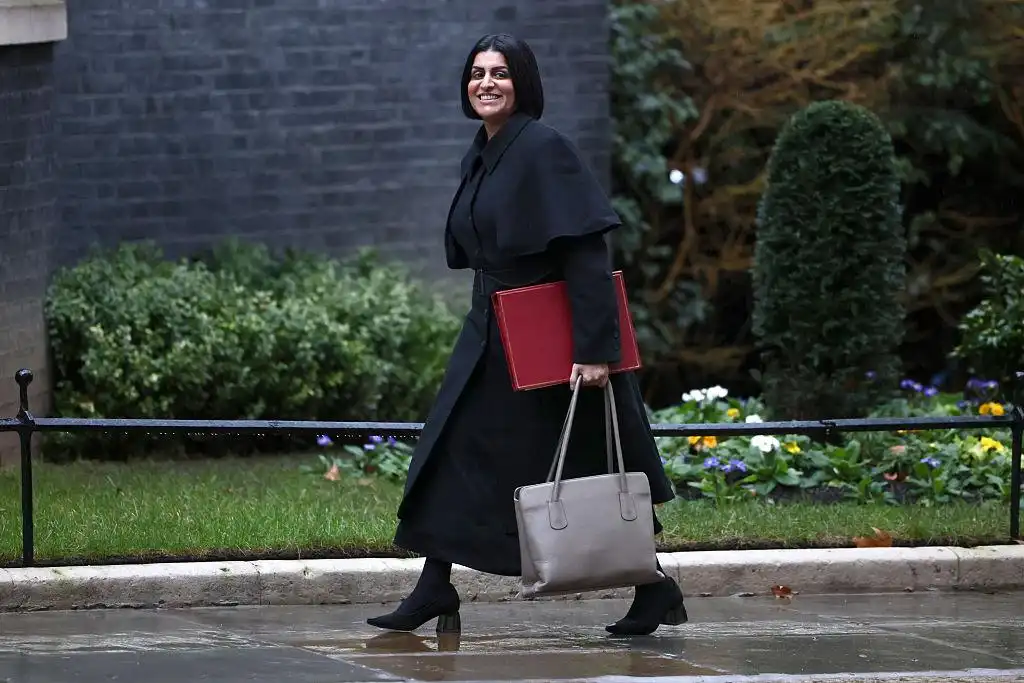
British prime ministers are rarely undone by what they say. More often, they are undone by what they fail to read in time.
That is the dilemma now facing Keir Starmer, whose leadership has come under mounting pressure amid the resurfacing of the Epstein files—not because of any personal allegation, but because of a political judgement call that collided with a volatile public mood.
The decision to re-embrace veteran power broker Peter Mandelson within Labour’s inner circle has become the fault line. In a political climate hypersensitive to elite proximity, secrecy, and unchecked influence, Mandelson’s return has reignited anxieties that many voters believed the post-Brexit, post-pandemic era had buried.
No accusation has been levelled against Starmer. No wrongdoing has been proven against Mandelson. Yet modern British politics is not governed by court thresholds alone—it runs on perception, instinct, and timing. And on all three counts, Labour’s judgement is now being questioned.
Why Epstein’s shadow matters—again
The renewed attention on Epstein has reopened a broader discomfort about elite networks operating close to power. Even indirect associations, old meetings, or symbolic proximity now carry political cost. In that atmosphere, Mandelson has become less an asset of experience and more a reminder of a political class many voters distrust.
For Labour MPs, the unease is not about facts alone. It is about whether Starmer misread the moment. His response—measured, procedural, legally correct—has been criticised as politically insufficient in a climate demanding visible distance and moral clarity.
In Westminster, once a leader’s judgement is questioned, authority erodes faster than poll numbers.
Mandelson as the pressure point
Mandelson is not merely a former adviser. He is the embodiment of New Labour, a survivor of multiple political storms and a symbol of an era increasingly viewed as insulated from consequence.
Starmer’s reliance on Mandelson was meant to signal seriousness and institutional competence. Instead, it has reopened unresolved public resentment about privilege, access, and political immunity. Within Labour ranks, the debate has quietly shifted from Mandelson’s conduct to Starmer’s instincts.
In British politics, that shift is often the beginning of an exit ramp.
If Starmer stumbles, succession becomes unavoidable
Labour’s leadership rules are designed to protect incumbents—but not leaders who lose the confidence of their parliamentary party. If Starmer were to step aside or be pushed out, the transition would likely be swift and pragmatic.
That has brought renewed focus to a small pool of senior figures seen as immediately viable: Angela Rayner, Wes Streeting, and increasingly, Shabana Mahmood.
This is no longer fringe speculation. Betting markets and prediction platforms have begun assigning real probability to the scenario. Mahmood is not the frontrunner, but she consistently appears in the second tier—priced as plausible rather than symbolic.
Reading the odds, not the headlines
Current prediction markets place Mahmood at a high single-digit probability of becoming prime minister—well behind Rayner and Streeting, but far ahead of long-shot names. Bookmakers do not trade in symbolism; they trade in structure, seniority, and parliamentary arithmetic.
Her placement signals one thing clearly: the route exists.
What a Shabana Mahmood premiership would mean
If Mahmood were to ascend to Number 10, Britain would have its first Muslim prime minister. It would be a historic milestone—but not one framed through identity politics.
Mahmood has never positioned herself as a cultural symbol. Her career has been defined by administrative competence, caution, and institutional trust. Any history made would be incidental, not ideological—the result of numbers, not narratives.
That quietness may be precisely her strength.
Who Shabana Mahmood really is
As Home Secretary, Mahmood controls one of the most punishing offices of state—responsible for borders, policing, security, protest, and public order. It is a department that rewards control and punishes miscalculation.
An MP since 2010 for Birmingham Ladywood, she has built a reputation as methodical, tough-minded, and detail-driven. She does not chase spectacle. She does not dominate headlines. Within government, she is viewed as reliable rather than charismatic—a trait often undervalued until crisis hits.
Her positions align with Labour’s governing instincts: firmer frameworks on immigration, emphasis on public order, comfort with a technologically capable state. She may not inspire fervour, but she commands trust.
Why she could win—and why she might not
Mahmood’s case is stability. She is senior, scandal-free, and already running a pressure-heavy department. In a post-Epstein, post-Mandelson recalibration, her low-drama profile could appeal to MPs seeking consolidation over experimentation.
Yet leadership contests are not decided on competence alone. They hinge on alliances, momentum, and narrative control. Mahmood lacks a visible factional machine, and her caution—so valuable in office—may limit her reach in a fast-moving contest.
For now, this future remains hypothetical. Starmer is still prime minister. Until that changes, all succession talk remains conditional.
The quiet irony of British history
If Epstein’s shadow and a misjudged political return were to end Starmer’s premiership—and if that collapse were to elevate Shabana Mahmood—British politics would complete a remarkable historical loop.
A system that once presided over the religious partition of the subcontinent would, within a single decade, have produced a Hindu prime minister in Rishi Sunak and potentially a Muslim one as well.
History, it seems, has a sense of irony that empire never anticipated.
Nation With Tea takeaway
This is not a scandal story. It is a story about judgement, timing, and how power shifts when perception hardens. In Britain today, leaders are not toppled by proof alone—but by moments they fail to read.
And sometimes, history waits quietly for those moments.
you may also like


- March 02, 2026
Trump Says Iran Operations May Last 4–5 Weeks

- March 02, 2026
How Switzerland Became the World’s Most Nuclear-Ready Nation

- March 02, 2026
Middle East War Escalates; Oil, Air Travel Hit

- March 02, 2026