


- March 02, 2026
Gold May Surge to $6,000 in 2026 as Global Risks, Central Bank Buying Intensify: Analysts
Gold prices may climb to $6,000 in 2026 as global risks, central bank buying and ETF inflows fuel strong safe-haven demand.
- January 26, 2026
- in Business
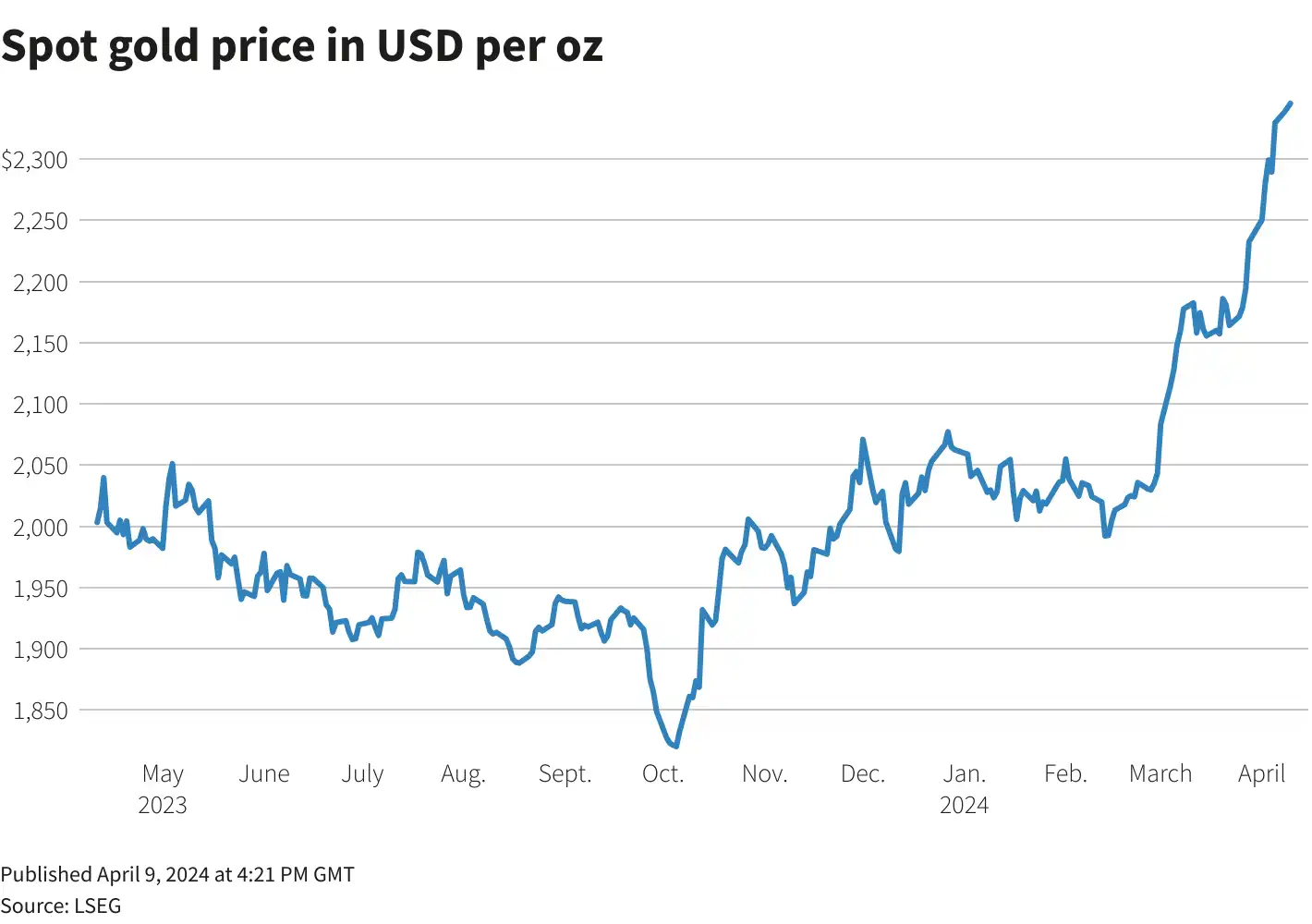
Gold prices, already at historic highs, could be headed for an even bigger rally in 2026, with analysts projecting the precious metal to climb toward $6,000 per ounce — and potentially even higher — as geopolitical tensions, central bank demand, and investor anxiety continue to dominate global markets.
After crossing the $5,000-per-ounce milestone for the first time this week, spot gold briefly touched levels above $5,090, extending a powerful rally that has seen the metal rise more than 17% so far this year, following a massive 64% surge in 2025. Market experts say the forces driving gold’s rise remain firmly in place.
📊 Bold forecasts from global analysts
According to the annual precious metals survey conducted by the London Bullion Market Association, analysts expect gold to average around $4,742 in 2026, with bullish projections stretching as high as $7,150 per ounce under extreme risk scenarios.
Major financial institutions are also revising their outlooks upward. Goldman Sachs recently raised its December 2026 gold price forecast to $5,400, citing sustained central bank demand and structural shifts in global reserve management.
Independent market analysts have gone even further. Some expect gold to test $6,400 this year, arguing that uncertainty has become the defining feature of the global economy. As one analyst put it, “The only certainty right now is uncertainty — and that plays directly into gold’s strengths.”
🌍 Geopolitical tensions fuel safe-haven demand
Gold’s latest rally has been powered by a combination of geopolitical flashpoints and policy instability. Ongoing trade disputes, tensions between the US and its allies, tariff threats, and concerns over political interference in monetary policy have all shaken investor confidence.
With the US midterm elections approaching, analysts warn that political volatility could increase further. At the same time, richly valued equity markets are prompting institutional investors to diversify portfolios, driving fresh inflows into gold as a hedge against downside risk.
🏦 Central banks double down on gold
Central bank buying — one of the strongest pillars of gold’s rally in recent years — is expected to remain robust. Analysts estimate that emerging-market central banks could continue purchasing around 60 metric tonnes of gold per month, as nations look to diversify reserves away from the US dollar.
Several countries have already signalled aggressive accumulation plans. Poland’s central bank, for example, aims to significantly increase its gold holdings over the coming years. Meanwhile, China has continued adding to its reserves for over a year, reinforcing the narrative of gradual de-dollarisation.
Market watchers say this shift reflects a growing preference among central banks for assets that are politically neutral and insulated from sanctions or currency risk.
📈 ETF inflows and retail demand stay strong
Gold-backed exchange-traded funds (ETFs) are also playing a critical role in supporting prices. Expectations of further US interest rate cuts have lowered the opportunity cost of holding non-yielding assets like gold, encouraging investors to increase exposure.
Data from the World Gold Council shows that gold ETFs recorded record inflows in 2025, with investments surging to nearly $89 billion — the highest level since 2020. North American funds led the charge, reflecting growing demand from institutional investors.
While jewellery demand has softened due to elevated prices, this has been largely offset by strong buying of gold bars and coins, particularly in countries like India. Similar trends are emerging across parts of Europe, where investors are increasingly turning to physical gold despite some profit-taking at higher levels.
🔮 What could slow the rally?
Analysts caution that short-term corrections are possible. A sharp rebound in the US dollar, reduced expectations of rate cuts, or easing geopolitical tensions could temporarily cool prices. However, most believe any pullback would be brief and viewed as a buying opportunity.
“A sustained decline would require a return to global economic and political stability,” analysts noted — a scenario that currently appears unlikely.
For now, gold’s momentum remains intact, with investors increasingly viewing the metal not just as a hedge, but as a long-term store of confidence in an unpredictable world.
you may also like


- March 02, 2026
Middle East Tensions: Impact on India Trade & Oil

- March 02, 2026
Intel CEO Warns of Huawei’s Chip Talent Push

- February 28, 2026
Amazon to Invest $50B in OpenAI, Expands AWS Tie-Up
- February 28, 2026