


- March 07, 2026
How Lowe’s India Is Using AI to Transform Retail
Lowe’s India is using AI, data analytics, and digital platforms to improve retail operations, customer experience, and supply chain efficiency.
- March 07, 2026
- in Business
Advertisement

Lowe’s India, the global capability centre of Lowe’s Companies Inc., is expanding its role in the retail technology space by using artificial intelligence, digital platforms, and data analytics to improve customer experiences and operational efficiency.
The company supports several core business functions, including enterprise architecture, supply chain management, merchandising, marketing, financial planning, and data science. Its technology initiatives aim to help the organisation adapt to the rapidly changing retail environment while improving how customers interact with stores and digital platforms.
AI at the Core of Retail Operations
Artificial intelligence plays a major role in Lowe’s India’s technology strategy. According to Amit Kapur, who leads Applied AI and Data Analytics at the company, Lowe’s currently uses around 50 AI models to support various retail functions.
These AI systems are designed to assist with product search, personalised recommendations, demand forecasting, pricing strategies, and sourcing decisions. The goal is to improve both customer convenience and business efficiency.
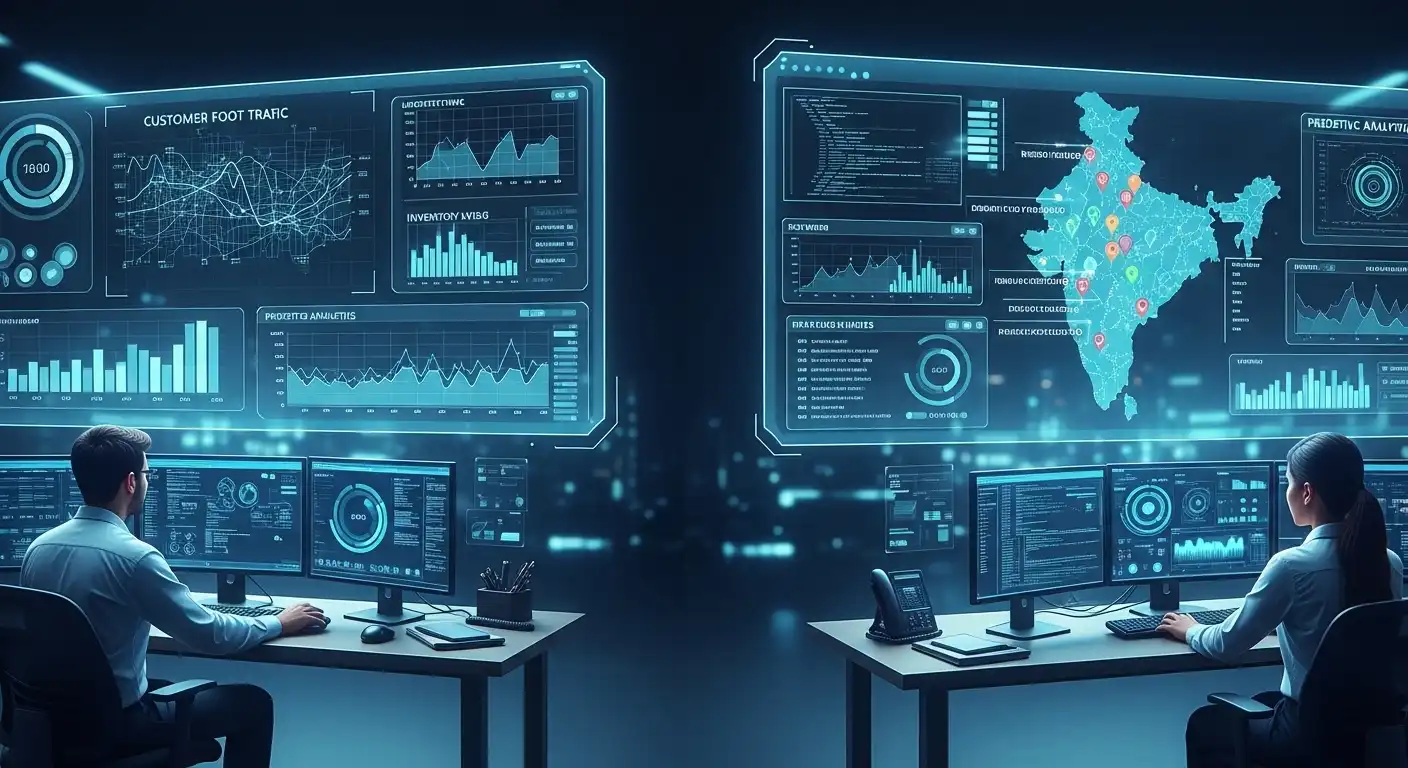
Some tools also use computer vision technology to help detect potential theft and identify high-traffic areas within stores. Other AI systems analyse sales patterns and customer movement to help managers understand store performance.
Smarter Inventory and Supply Chain Management
Lowe’s India also uses machine learning models to improve inventory planning. These systems help determine optimal stock levels and reduce supply chain disruptions.
By analysing data across thousands of products, predictive tools can recommend how store space should be allocated. This ensures that high-demand items receive appropriate shelf space while maintaining overall efficiency.
To support these efforts, the company has built dashboards and visual analytics tools that help teams monitor space productivity and identify areas that may need adjustments.
Internal Platform for AI Experimentation
Kapur said the company has also developed an internal experimentation platform known as an AI foundry. This system allows engineering and data science teams to test new AI ideas quickly.
The platform enables teams to create proof-of-concept models using contextual data, reusable prompts, and application programming interfaces (APIs). By experimenting internally before launching full-scale products, Lowe’s aims to shorten development cycles and refine solutions more efficiently.
In-House Self-Checkout Technology
One example of Lowe’s technology innovation is its home-grown self-checkout system, which has been deployed across thousands of checkout counters in more than 1,700 Lowe’s stores in the United States.
The system combines proprietary software with standard hardware and integrates computer vision tools to improve checkout speed and store efficiency.
The technology is part of a broader initiative called Lowe’s Meridius, which focuses on creating modular retail technology solutions that can support both physical and digital commerce.
Collaboration Across Business Teams
Reena Sofiya, Vice President of Merchandising and Supply Chain at Lowe’s India, emphasised the importance of collaboration between different teams.
According to Sofiya, innovation often emerges where disciplines intersect. For example, combining supply chain analytics with merchandising insights can help businesses make more informed decisions about inventory placement and product availability.
She noted that encouraging teams to ask questions and explore connections across departments helps create stronger partnerships and more effective solutions.
Future of AI in Retail
Looking ahead, Lowe’s India believes artificial intelligence will play a central role in shaping the future of retail.
Sofiya said AI could eventually allow stores to anticipate customer preferences and deliver highly personalised shopping experiences. The aim is to use technology not only to improve operational efficiency but also to make shopping more intuitive for customers.
Industry experts believe such technologies could enable retailers to better understand consumer behaviour, optimise supply chains, and improve decision-making in real time.
As the retail sector becomes increasingly digital, companies like Lowe’s are investing heavily in data-driven technologies to stay competitive and deliver more seamless customer experiences.
Advertisement
you may also like
- March 07, 2026
Infosys Expands Four-Day Office Rule for Managers

- March 06, 2026
Sensex, Nifty Fall 3% as Oil Surge Hits Markets
- March 06, 2026
RBI Deploys $12 Billion to Stabilise Rupee Amid War

- March 06, 2026