India Tells UN It Will Not Bow to Pakistan’s Nuclear Blackmail
India used its Right of Reply at the UN General Assembly to reject Pakistan’s remarks on Jammu and Kashmir, defend its security posture and warn against the use of nuclear threats to deter responses to terrorism.
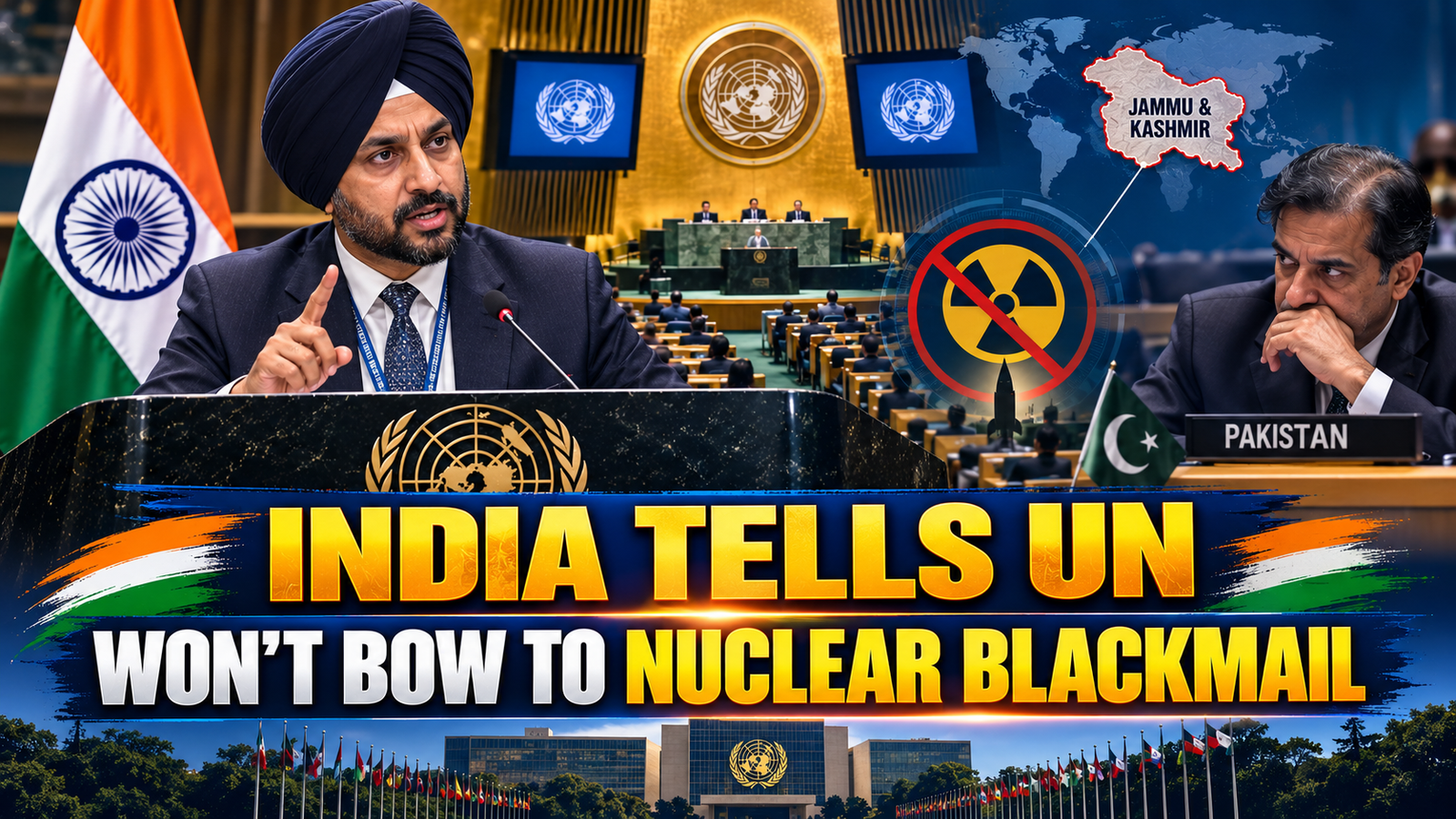
India has told the United Nations that it will not bow to nuclear blackmail, while reiterating its position on Jammu and Kashmir and its right to respond to terrorism.
Speaking during the UN General Assembly’s First Committee session on disarmament and international security, Anmol Sher Singh Bedi, a senior Indian diplomat, responded after Pakistan raised the Kashmir issue.
Bedi said India’s military capabilities were defensive and shaped by its security environment. He warned that nuclear weapons should not become routine instruments of statecraft, arguing that using nuclear threats to limit responses to terrorist activities could increase the risk of escalation.
He also said India’s right to self-defence remained intact and that states could not avoid responsibility for violence carried out through non-state actors.
Bedi outlined three principles guiding India’s position: terrorist attacks against the country would receive an appropriate response, India would not yield to nuclear blackmail, and those who sponsor terrorism would be held accountable alongside its masterminds.
He cited the April 2025 Pahalgam terror attack, which killed 26 civilians, and described India’s subsequent Operation Sindoor as measured and targeted. The operation was launched in May 2025 against what India identified as terrorist infrastructure in Pakistan and Pakistan-occupied Kashmir.
Bedi also referred to the Indus Waters Treaty, saying trust and cooperation were essential to the agreement. India placed the treaty in abeyance after the Pahalgam attack, linking its position to Pakistan ending support for cross-border terrorism.
India further urged countries and suppliers to remain vigilant against nuclear proliferation, citing concerns linked to the AQ Khan network.