NASA Tracks Earth’s Centre of Mass as Water and Ice Shift
NASA scientists have developed a more precise method to measure millimetre-scale seasonal shifts in Earth’s centre of mass caused by moving water, ice and air.
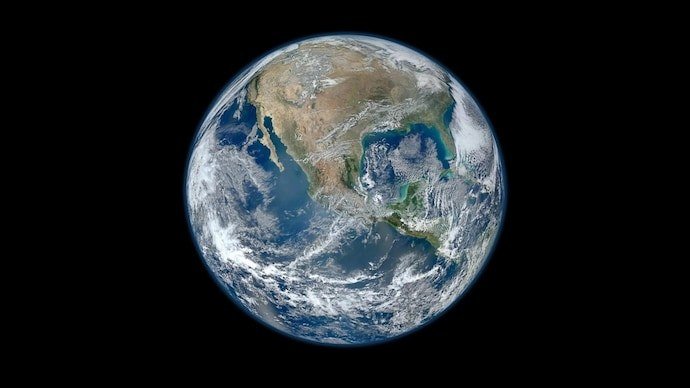
NASA scientists have developed a more precise method to track tiny seasonal movements in Earth’s centre of mass, or geocentre, caused by the redistribution of water, ice and air across the planet. The geocentre shifts by only a few millimetres relative to Earth’s geometric centre, but accurately measuring these changes is important for satellite navigation, mapping and elevation systems.
The new technique, led by geoscientist Donald Argus at NASA’s Jet Propulsion Laboratory, combines GPS observations with orbital measurements from several low-Earth-orbit satellites. It also accounts for changes in Earth’s crust caused by shifting loads of water and ice.
Researchers found that oceans, atmospheric changes and water stored on land—including snow, glaciers, lakes, rivers, soil moisture and groundwater—are the main drivers of seasonal geocentre movement.
Snow accumulation across North America and Eurasia around March can shift the centre of mass roughly 3 millimetres toward the North Pole. In April, water stored in the Amazon basin can move it about 2.2 millimetres toward South America. Later in the year, melting ice and increased rainfall add water to the oceans, with the Pacific having the strongest influence.
Seasonal changes in atmospheric mass also contribute to these shifts.
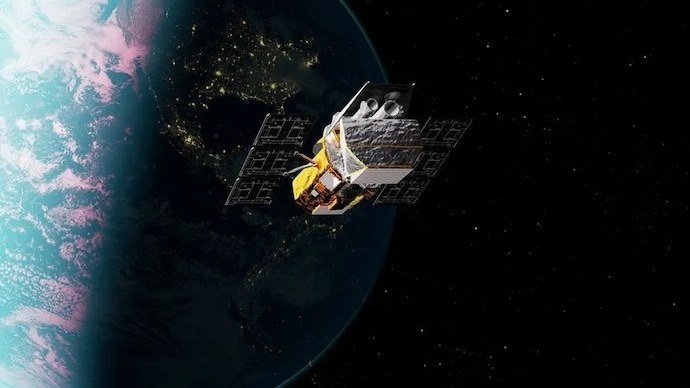
The findings align with observations from NASA and Germany’s GRACE-FO mission, which tracks changes in Earth’s gravitational field caused by moving water. NASA plans to continue the measurements through the GRACE-C mission, targeted for launch in late 2028.