


- March 07, 2026
IRIS Dena Sinking Raises Questions Over India’s Silence
The sinking of Iran’s IRIS Dena near Sri Lanka has sparked debate over India’s response and its role in maintaining security in the Indian Ocean.
- March 06, 2026
- in National
Advertisement

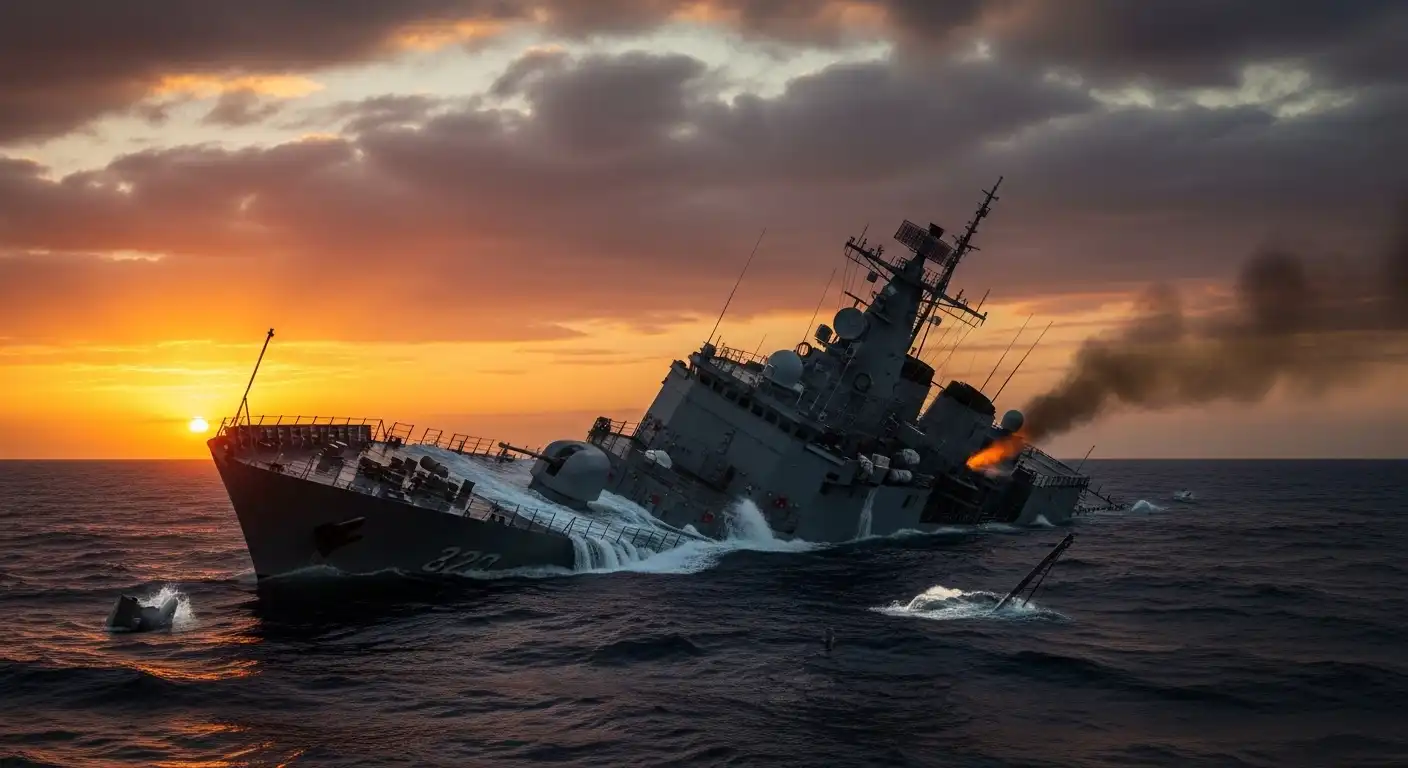
The sinking of the Iranian naval vessel IRIS Dena in waters near Sri Lanka has triggered discussion in India about the country’s role in maintaining security in the Indian Ocean.
The frigate had recently visited India to participate in the International Fleet Review and the multilateral naval exercise MILAN-2026 held in Visakhapatnam. The event brought together naval forces from several countries and aimed to strengthen maritime cooperation.
Iranian Ship Visited India Before Incident
According to reports, the Iranian warship arrived at Visakhapatnam on February 16 and was welcomed by the Eastern Naval Command as part of the international naval event. The exercise concluded on February 25, after which the ship began its return journey.
Days later, the vessel was reportedly torpedoed and sunk by a United States submarine in international waters near Sri Lanka’s Exclusive Economic Zone (EEZ). Reports suggest that more than 80 sailors may have died in the incident.
India Sent Naval Assets for Rescue Efforts
Following the sinking, India dispatched naval assets to assist with rescue operations in the surrounding waters. However, the Indian government has not issued a formal public condemnation or strong diplomatic statement regarding the incident.
This has led to political reactions within India, with opposition parties questioning whether New Delhi had any prior information about the military action.
Analysts Highlight Legal Context
Legal and strategic analysts have cautioned against drawing quick conclusions about the incident.
Experts note that the attack reportedly occurred outside India’s EEZ and search-and-rescue jurisdiction. They also pointed out that agreements such as the Logistics Exchange Memorandum of Agreement (LEMOA) require explicit approval on a case-by-case basis.
Under the laws of armed conflict, analysts say a military vessel operating in international waters may be considered a legitimate target during wartime conditions.
Strategic Questions Remain
Beyond legal arguments, the incident has also raised broader questions about India’s maritime role in the region.
In recent years, Indian naval leadership has emphasised the country’s growing ability to monitor activity across the Indian Ocean. Officials have previously stated that India maintains awareness of maritime movements in the region.
The sinking of a vessel that had recently departed from an Indian port has therefore sparked debate among observers about how India should respond when international conflicts spill into waters near its strategic zone.
India’s Role in Regional Security
India has increasingly positioned itself as a key security provider in the Indian Ocean region. Through naval exercises, maritime partnerships and surveillance capabilities, the country aims to ensure stability across vital sea lanes.
The IRIS Dena incident has now added a new dimension to discussions about how India should balance diplomacy, legal frameworks and strategic interests when conflicts involving other powers unfold in nearby waters.
As tensions in the wider Middle East continue, analysts say such incidents could influence future debates about India’s maritime doctrine and its role in managing security challenges in the Indian Ocean.
Advertisement
you may also like


- March 07, 2026
Delhi Holi Clash Leaves One Dead in Uttam Nagar
- March 07, 2026
Bihar Woman Climbs Mobile Tower Seeking Lover’s Release

- March 07, 2026
High Court Acquits Ram Rahim in Journalist Murder Case

- March 07, 2026