


- March 07, 2026
Israel-Iran Conflict Escalates With Fresh Strikes
Israel launches new strikes in Iran as missile attacks continue across the Middle East. Rising casualties and oil supply concerns deepen global impact.
- March 06, 2026
- in International
Advertisement

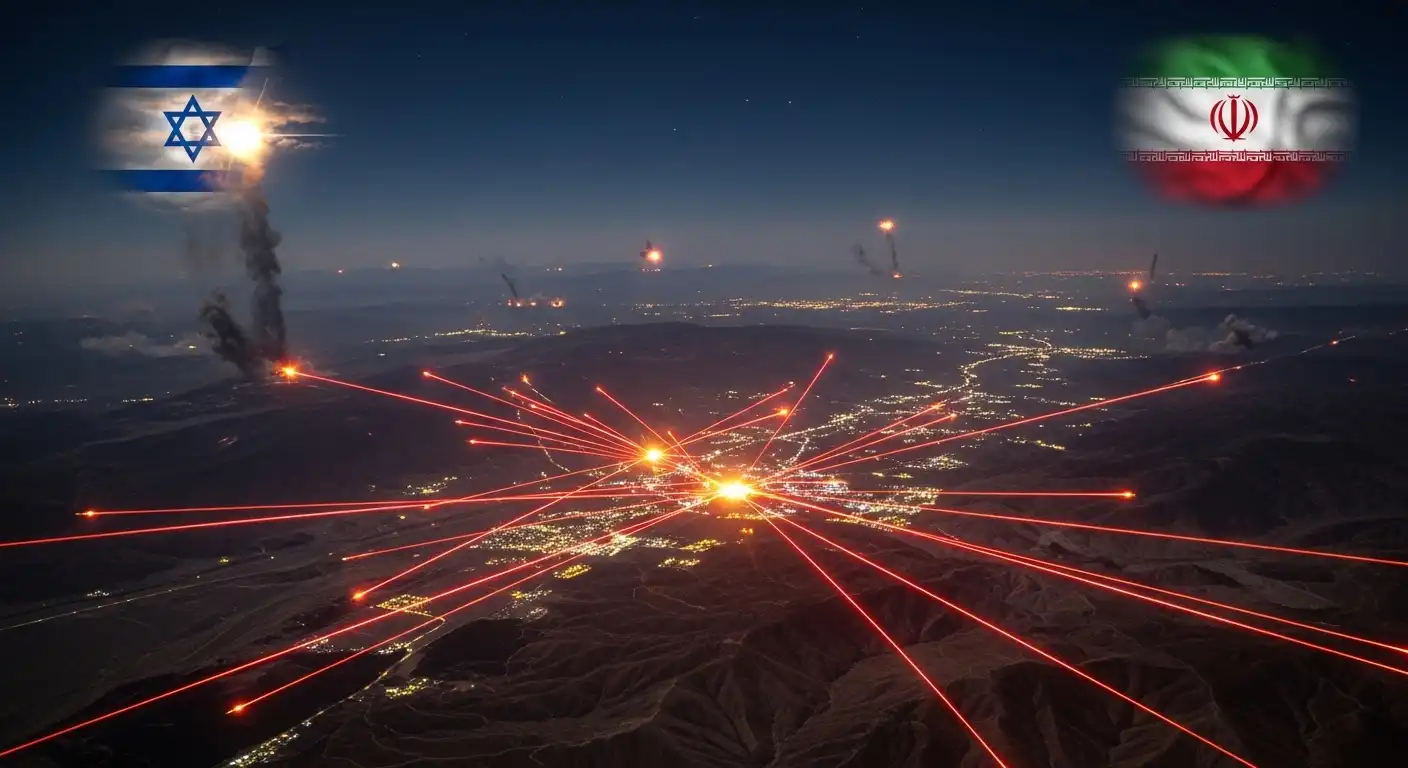
The ongoing military confrontation involving Israel, Iran and the United States has intensified, with fresh explosions reported in several Iranian cities. According to multiple reports, Israel launched a new wave of strikes targeting locations in Tehran and other areas, marking another escalation in the rapidly evolving conflict.
Iranian state media reported explosions in parts of the capital following the strikes. The attacks come as both sides continue to exchange missile and drone attacks across the region.
Missile Exchanges Continue Across Region
Iran reportedly launched new missile attacks toward Israel, triggering air defence systems in several areas. Sirens were heard in parts of central Israel as authorities asked residents to move to protected shelters.
Military officials said defensive systems were deployed to intercept incoming missiles. While some damage from debris was reported, officials said there were no immediate reports of injuries from the latest missile launches.
Airstrikes Reported in Lebanon
Israel also carried out airstrikes in southern suburbs of Beirut in Lebanon, according to regional media reports. The Israeli military had earlier issued evacuation warnings to residents in some neighbourhoods before the strikes took place.
Authorities in Lebanon said several strikes were reported in the area, with fires breaking out near a gas station. Hospitals in nearby locations reportedly evacuated patients and staff as a precaution. No casualties were immediately confirmed after the strikes.
Drones and Missile Interceptions Reported
Iranian state television claimed that two drones were intercepted over Iranian territory. According to the reports, one drone was shot down in Lorestan province, while another was intercepted near Tehran.
Elsewhere in the region, Saudi Arabia said its air defence systems intercepted three drones east of Riyadh. Jordan also reported shooting down several drones near the city of Irbid.
Qatar’s defence ministry said its air force intercepted a drone targeting the Al-Udeid Air Base, which hosts the largest United States military facility in the Middle East.
Damage and Casualties Mount
Humanitarian agencies say the conflict is causing growing civilian damage. The Iranian Red Crescent Society reported that more than 3,000 homes and civilian sites across Iran have been damaged in recent strikes.
According to international organisations, the overall death toll in the conflict has crossed 1,000 in Iran, with additional casualties reported in Lebanon and Israel.
UNICEF also warned that children have been among those affected by the violence, stating that several minors have died since the latest escalation began.
Political and Military Developments
In Washington, a proposal in the United States Congress aimed at limiting the president’s authority to continue military operations against Iran was rejected by lawmakers. The decision suggests continued political support for ongoing military actions.
US officials have stated that there are currently no plans to deploy ground troops in Iran, although future options have not been completely ruled out.
Iran’s Revolutionary Guard Corps has also warned that the country is prepared for a prolonged conflict and may introduce new weapons in future attacks.
Regional Impact Expands
The conflict is increasingly affecting several Middle Eastern countries. Azerbaijan recently accused Iran of launching a drone strike that reportedly injured civilians in the Nakhchivan region. Bahrain also reported attacks targeting buildings in its capital, Manama, though officials said there were no casualties.
Meanwhile, Egypt’s leadership warned that the conflict could impact regional economies and trade routes.
Global Economic Concerns
The crisis is also affecting global energy markets. Security risks around the Strait of Hormuz, one of the world’s most important oil shipping routes, have reportedly reduced tanker traffic in the region.
Energy analysts say disruptions in the waterway could influence oil prices and global supply chains if tensions continue to escalate.
As the conflict enters another day of fighting, international leaders and diplomatic groups are closely monitoring the situation, with calls increasing for efforts to prevent further escalation across the Middle East.
Advertisement
you may also like
- March 07, 2026
White House Video on Iran Strikes Sparks Online Debate

- March 07, 2026
US Says Operation Epic Fury May Last 4–6 Weeks

- March 07, 2026
Missile Alerts Issued in UAE and Qatar Amid Gulf Tensions

- March 07, 2026