ECI SIR Row: Election Commission Says All Decisions Were Unanimous
The Election Commission says all decisions since February 2025 were unanimous, despite reports of 14 objections by two commissioners over the SIR electoral-roll revision process.
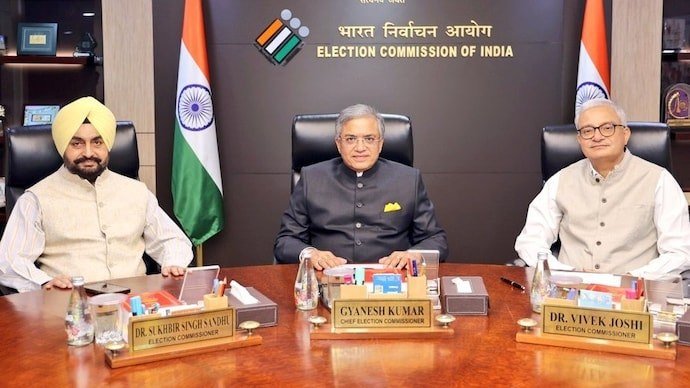
The Election Commission of India has said that all decisions taken by its three-member panel since February 19, 2025, including those linked to the Special Intensive Revision (SIR) of electoral rolls, were unanimous. The statement comes amid reports that Election Commissioners Sukhbir Singh Sandhu and Vivek Joshi had formally raised objections on 14 occasions over a 10-month period.
According to an Indian Express investigation, the objections related to issues including the centralisation of electoral-roll databases, changes involving Form 6, voter deletions and the handling of electoral-roll software. The report said the two commissioners had objected to decisions they believed were taken without their knowledge.
EC sources have disputed the interpretation of these objections as institutional dissent, saying individual differences during deliberations do not mean that final decisions were not unanimous. The Commission has maintained that SIR is a statutory process designed to identify dead, duplicate, fake and shifted voters while retaining all eligible voters on the rolls.
The poll panel has also defended the implementation process, saying voter additions and deletions are handled at the level of Electoral Registration Officers and Assistant Electoral Registration Officers. Sources said nearly 25,000 officials involved in the process had not complained about the exercise.
The controversy has intensified as political parties and petitioners have raised questions about the functioning of the Election Commission and the SIR process. The Supreme Court has also agreed to hear a petition challenging aspects of the Commission's functioning and the nationwide SIR exercise.
The disagreement therefore centres not only on the electoral-roll revision itself, but also on how internal objections within a constitutional body should be understood alongside the Commission's position that its formal decisions have remained unanimous.