Gondhal Review: Folk Ritual, Patriarchy and Secrets Drive This Marathi Drama
Santosh Davakhar’s Marathi film Gondhal explores desire, power and patriarchy against the backdrop of a traditional Maharashtrian ritual. Strong performances and atmospheric folk sequences stand out, although uneven writing and slow pacing weaken the drama.
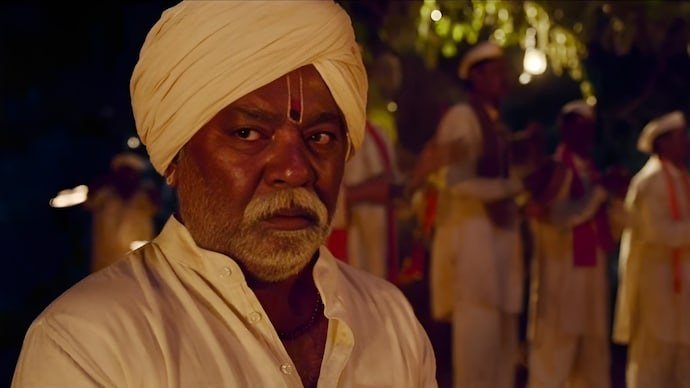
Santosh Davakhar’s Gondhal turns a traditional Maharashtrian folk ritual into the setting for a tense story of secrets, desire and power. Set during a wedding ceremony, the Marathi drama explores how faith and social authority can conceal exploitation.
The film opens with an extended continuous shot following Bhivaba (Kishor Kadam), an elderly gondhali performer, and his grandson Vishnu (Dhruv Thoke) as they travel to a wedding. Their conversation introduces the ritual’s spiritual significance while gradually revealing the village’s social hierarchy.
The wedding brings together Suman (Ishita Deshmukh), her groom Anandrao (Yogesh Sohoni) and Sarjerao (Nishad Bhoir), a powerful man accustomed to getting his way. As the ceremony unfolds, hidden motives and personal conflicts begin to surface.
Kadam delivers a restrained performance that anchors the film. Deshmukh brings vulnerability and determination to Suman, while Sohoni effectively portrays Anandrao’s gentle nature. Bhoir captures Sarjerao’s arrogance, and Suresh Vishwakarma adds menace as the village chief.
Ilaiyaraaja’s music complements the ritual sequences, where live singing and percussion create an immersive atmosphere.
However, the screenplay does not always match the film’s ambition. Convenient plot developments weaken some emotional moments, while repetitive sequences affect the pacing. Several themes, including patriarchy, masculinity and the misuse of authority, could have received deeper exploration.
Despite these shortcomings, Gondhal offers a distinctive rural drama rooted in Maharashtrian folk culture. Its performances and atmosphere make it worth considering for viewers who appreciate slow-burning stories.