Scientists Connected Three Mini-Brains and Watched Them Learn to Distinguish Signals
Researchers linked three lab-grown brain organoids and found that repeated stimulation helped the network become better at distinguishing incoming signals.
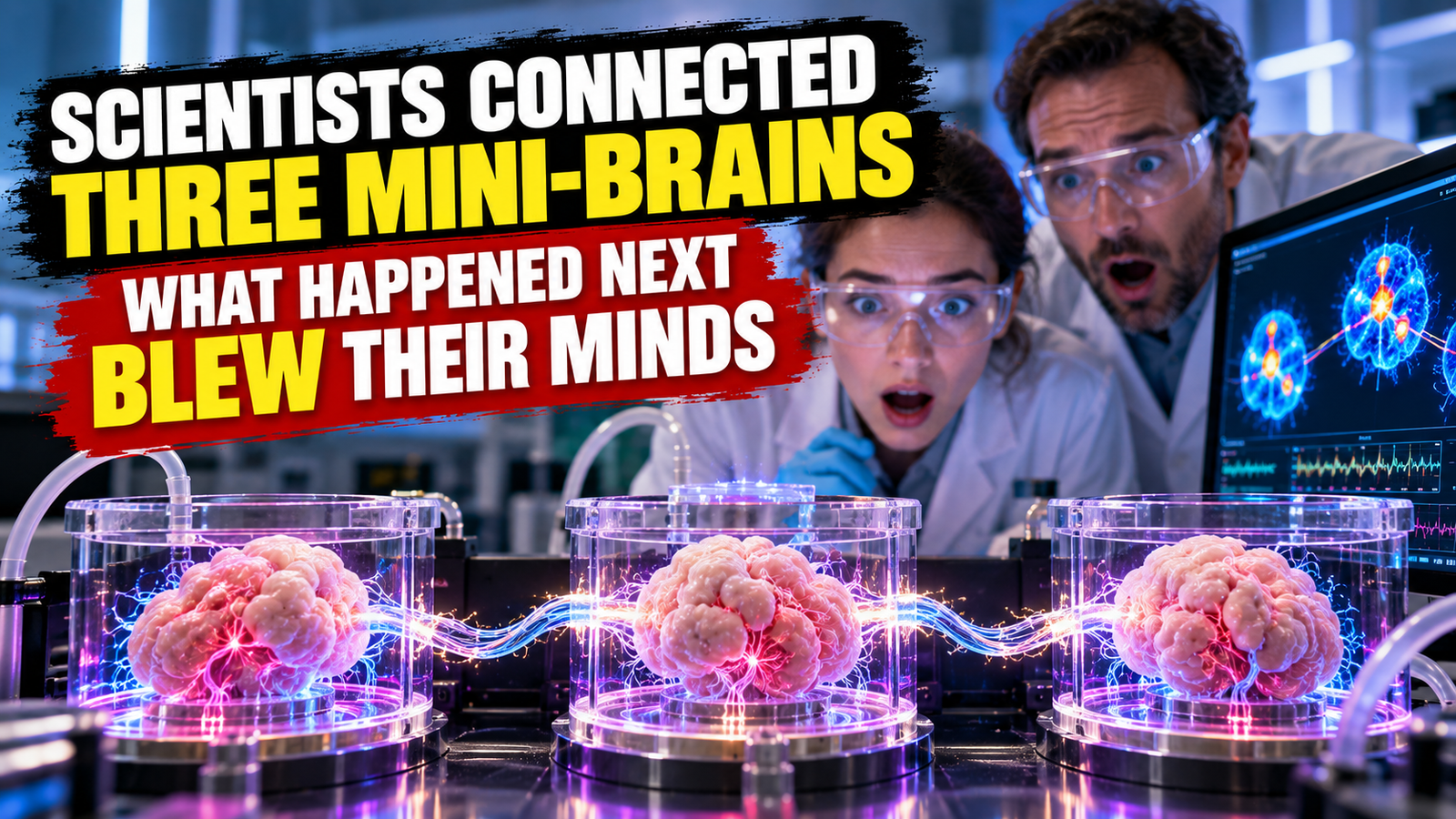
Scientists have connected three lab-grown human brain organoids and found that repeated exposure to signals changed how the network processed information. After about two weeks, the three-organoid system became better at distinguishing where incoming signals originated.
Before the sci-fi headlines take over, these were not three tiny human brains sitting in a lab having thoughts. Brain organoids are simplified clusters of brain cells grown from stem cells. They can develop different types of neural cells and connections but do not have the structure or complexity of a complete human brain.
Researchers compared systems containing one, two and three organoids. The networks were repeatedly stimulated while scientists monitored their electrical activity.
The three-organoid network showed the most notable change. Over time, its responses became faster and more organised, with different patterns emerging depending on the incoming signal. Researchers also observed that activity travelled through the connected tissue in more organised directions.
Interestingly, the organoids had initially been grown under similar conditions, yet repeated stimulation appeared to push them towards different functional roles within the network.
The findings provide an example of neural plasticity — the ability of neural systems to change their connections and behaviour through experience.
The study does not show that scientists created conscious mini-brains. Instead, it suggests that connecting brain tissue and repeatedly exposing it to information can help initially similar neural components develop specialised functions.
The researchers say the work could offer clues about how biological neural networks learn and adapt, while raising a much bigger question: just how complex can these lab-grown networks become?